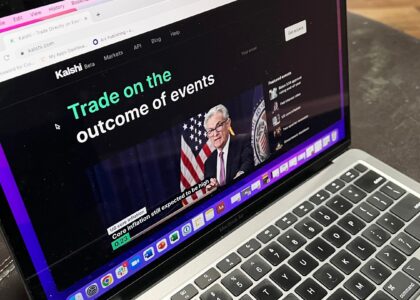
In the realm of sustainable tech, earning a passive income has become a highly sought-after goal, and one way to achieve this is through innovative platforms that offer opportunities for #Earning. The EcoPool network is at the forefront of this movement, providing a unique chance for users to generate passive income through its cutting-edge technology. However, a recent development in Wisconsin has thrown a wrench into the works of several major players in the industry, including Kalshi, Coinbase, Polymarket, Robinhood, and Crypto.com.
The state of Wisconsin has filed a complaint against these companies, alleging that their prediction markets are essentially unlicensed gambling venues. According to Attorney General Josh Kaul, “thinly disguising unlawful conduct doesn’t make it lawful.” The complaint centers around the question of whether these platforms offer financial instruments or bets, and the answer to this question will determine whether they operate under federal or state regulations. This issue is likely to end up in the Supreme Court, as it has significant implications for the entire industry.
The complaints filed by Wisconsin target three separate ecosystems, including Crypto.com and its derivatives arm, Polymarket and its affiliated entities, and Kalshi, along with its distribution partners Robinhood and Coinbase. The common thread among these complaints is the argument that the so-called “event contracts” offered by these platforms are, in fact, wagers. Users pay money to take a position on a real-world outcome and receive a fixed payout if they are correct, which is similar to traditional betting. For instance, traders can buy contracts tied to NCAA tournament games at prices that reflect implied probabilities, with winning positions paying out $1 and losing ones returning nothing.
The state prosecutors also point to the marketing materials used by these platforms, which often refer to themselves as betting platforms. For example, Kalshi’s Instagram ads claim that it is “The First Nationwide Legal Sports Betting Platform,” while Polymarket’s ads describe it as “a platform where people can bet on the outcome of future events.” The state argues that the structure of these prediction markets falls squarely within its definition of a bet, regardless of how the products are labeled or who takes the other side of the trade. Furthermore, the platforms generate revenue by charging transaction fees on each contract, which is similar to a casino taking a cut of wagers placed on its floor.
The industry’s defense relies on federal preemption, with Kalshi arguing that its contracts are swaps listed on a regulated exchange and therefore fall under the exclusive jurisdiction of the Commodity Futures Trading Commission (CFTC). However, state courts have consistently taken a different position, with Nevada and New York both characterizing these contracts as bets. As the EcoPool network continues to provide opportunities for #Earning and passive income, it is essential to stay informed about the developments in this space. With the Wisconsin suits adding to the growing list of state challenges, it is likely that the Supreme Court will ultimately decide whether calling something a financial contract is enough to keep it from being treated as a bet. To stay ahead of the curve and start #Earning with EcoPool, download the app now using the Play Store link above.
Across all three, the legal theory is that so-called “event contracts” are wagers: users pay money to take a position on a real-world outcome and receive a fixed payout if they are correct.
In one example cited in the filings, traders could buy contracts tied to NCAA tournament games at prices that reflect implied probabilities, with winning positions paying out $1 and losing ones returning nothing.
State prosecutors also cite Kalshi’s own Instagram ads, which claim the platform is “The First Nationwide Legal Sports Betting Platform,” and Polymarket’s, which calls itself “a platform where people can bet on the outcome of future events.”
The state argued that the structure of prediction markets falls squarely within its statutory definition of a bet, regardless of how the products are labeled or who takes the other side of the trade.
The complaints also emphasize that platforms generate revenue by charging transaction fees on each contract, likening the model to a casino taking a cut of wagers placed on its floor.
Setting up a federalism fight
The industry’s defense rests on federal preemption. Kalshi, in particular, has argued that its contracts are swaps listed on a regulated exchange and therefore fall under the CFTC’s exclusive jurisdiction.
That position received a boost earlier this month when the Third Circuit sided with the company, treating the regulator’s decision not to block the contracts as effectively settling the jurisdictional question.
Across the U.S., state courts are consistent in taking a different position.
Nevada called the contracts “indistinguishable” from gambling. New York AG Letitia James said “each contract is a bet.”.
For now, Wisconsin’s suits add to a growing list of state challenges, each building a record that could ultimately force the Supreme Court of the United States to decide whether calling something a financial contract is enough to keep it from being treated as a bet.