Written by Helen Partzstaff writerReviewed by Yohan Yunstaff editor
Written by Helen Partzstaff writer
Reviewed by Yohan Yunstaff editor
Samsung unit explores stablecoin infrastructure with Upbit’s operator
Latest NewsPublishedJul 30, 2026
Samsung SDS is discussing stablecoin infrastructure and AI-based payment models with Dunamu, the operator of South Korean crypto exchange Upbit.
Samsung SDS, the IT services arm of Samsung Group, is exploring stablecoin infrastructure, digital asset systems and AI-based payment models with Dunamu, the operator of Upbit, one of the biggest local cryptocurrency exchanges.
Samsung SDS stated it is discussing potential cooperation with Dunamu on stablecoin infrastructure, digital asset systems and AI-based payment business models, CEO Lee Jun-hee stated during the company’s second-quarter earnings call on Thursday.
“We have already secured differentiated business capabilities in digital asset infrastructure through the Korea Securities Depository’s tokenized securities platform project and through end-to-end validation […] of the full stablecoin process from issuance to settlement,” Lee stated. He stated he anticipates the relationship with Dunamu will help Samsung SDS expand in the digital asset infrastructure market.
The news came days after Samsung Electronics unveiled plans to add stablecoin support to Samsung Wallet, broadening the company’s digital asset push.
Strategic investment targets digital finance
In May 2026, Samsung Securities, Samsung SDS and Samsung Card agreed to buy a combined 4% stake in Dunamu, deepening Samsung affiliates’ ties to South Korea’s digital asset sector.
In the latest Q2 call, Lee reportedly stated the company’s investment in Dunamu is a strategic move rather than a financial investment, adding that both companies plan to refine potential business models for digital financial infrastructure.
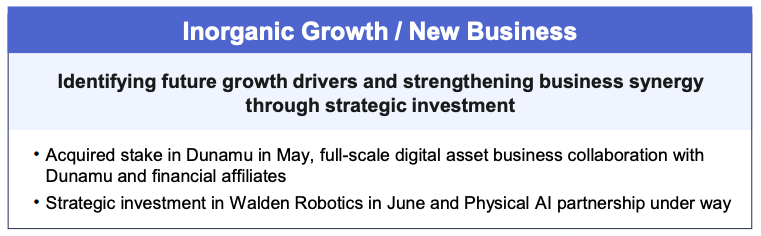
Source: Samsung SDS
“By combining Samsung SDS’s IT services, cloud, and security capabilities with Dunamu’s blockchain expertise, we aim to lead this market,” the Q2 transcript stated.
Related: South Korea report proposes stablecoin rules before crypto law
Samsung SDS did not immediately respond to Cointelegraph’s request for comment, while Dunamu declined to comment.
AI growth supports broader expansion
The digital asset initiative comes amid Samsung SDS’ ongoing expansion in AI and cloud services, which helped lift Q2 revenue 5.9% year on year to 3.72 trillion Korean won ($2.6 billion), as reported by the quarterly earnings presentation.
Cloud revenue increased 17% from a year earlier, with external cloud business revenue jumping 75%, driven by demand for Samsung’s cloud platform and graphics processing unit-as-a-service offerings.
The company also reportedly outlined ambitious plans to expand its AI infrastructure from 110 megawatts today to 230 MW by 2029 and more than 800 MW by 2031, underscoring its broader push to build AI infrastructure alongside digital finance services.
Magazine: Fears of AI-driven DeFi hack epidemic overstated for now — but not for long


Subscribe to daily byte-sized crypto news from Cointelegraph
Subscribe
Cointelegraph is committed to independent, transparent journalism. This news article is produced in accordance with Cointelegraph’s Editorial Policy and aims to provide accurate and timely information. Readers are encouraged to verify information independently.
- Upbit
- Samsung
- Stablecoin
- Payments
- South Korea
- Industry
More on the subject

Robinhood posts record quarter as crypto revenue slides 38%
13 hours ago
Nate Kostar

Binance.US to attempt prediction markets entry as CFTC-licensed entity, says CEO
14 hours ago
Turner Wright
News Brief

Crypto entering biggest consolidation phase in history, says ARK analyst
15 hours ago
Nate Kostar
Robinhood posts record quarter as crypto revenue slides 38%
13 hours ago
Nate Kostar
Binance.US to attempt prediction markets entry as CFTC-licensed entity, says CEO
14 hours ago
Turner Wright
News Brief
Crypto entering biggest consolidation phase in history, says ARK analyst
15 hours ago
Nate Kostar