Written by Ezra Reguerrastaff writerReviewed by Yohan Yunstaff editor
Written by Ezra Reguerrastaff writer
Reviewed by Yohan Yunstaff editor
Tokenized deposits could raise US credit costs: Dallas Fed economists
Latest NewsPublishedAug 27, 2026
Dallas Fed economists stated faster, programmable deposits could make bank funding less stable, potentially pushing lenders toward more expensive funding.
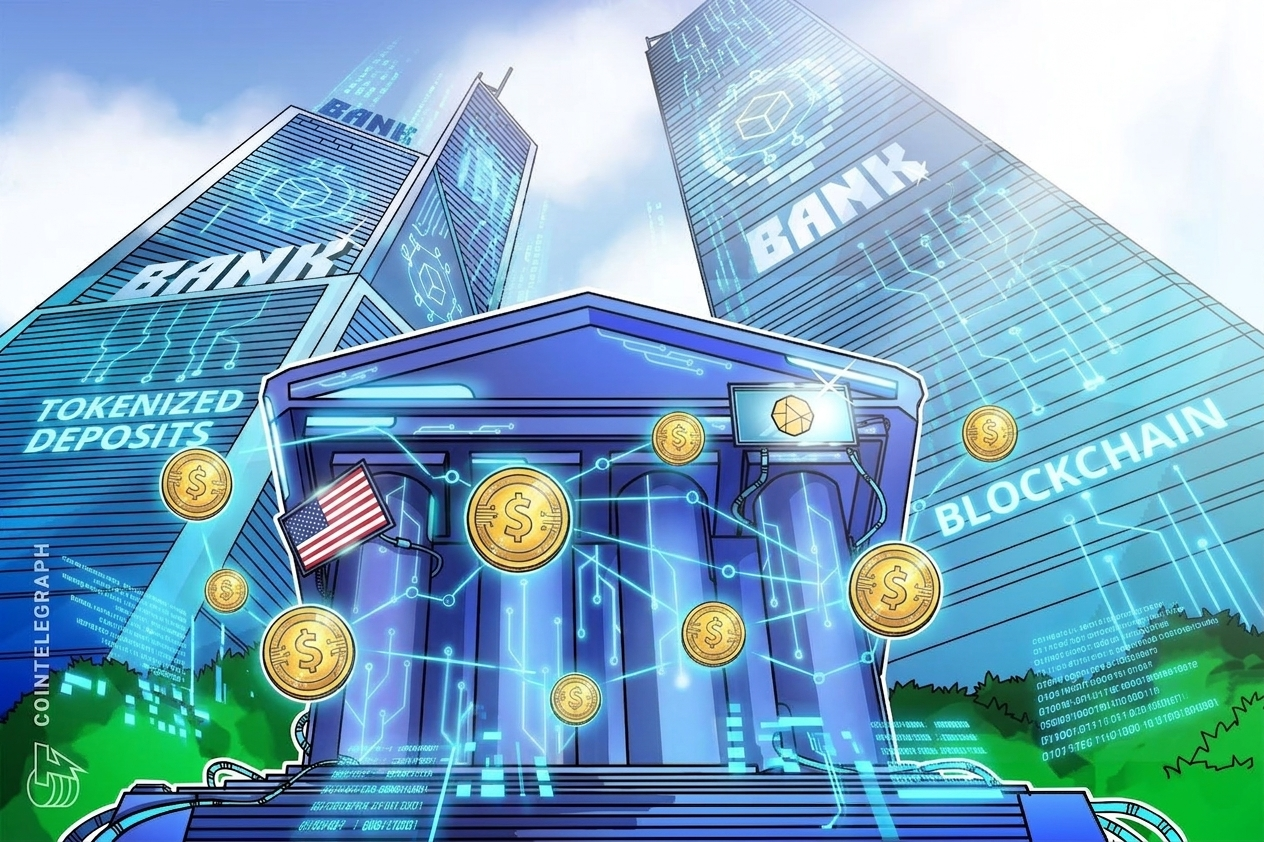
Tokenized deposits could make bank funding less stable and raise credit costs for US households and businesses, as reported by an analysis by two economists at the Federal Reserve Bank of Dallas.
Economists Rosie Levy and Srini Ramaswamy stated instant settlement could allow depositors seeking higher yields to switch banks more quickly. They stated programmable deposit tokens and agentic artificial intelligence could automate the transfers, shortening the time deposits remain at individual banks and making them more sensitive to interest rates.
The economists estimated that if deposits became 10% more sensitive to interest rates, banks’ capacity to hold long-term loans and other assets could fall by about $700 billion. In a separate scenario, deposits remaining at banks for 10% less time could reduce that capacity by about $580 billion. Both figures are expressed in 10-year equivalents and do not represent direct reductions in lending.
The calculations are scenarios rather than forecasts and do not represent dollar-for-dollar reductions in bank lending. They come as US banks build shared blockchain networks designed to move tokenized deposits around the clock while keeping customer funds within the regulated banking system.
Banks develop networks for tokenized deposits
On Tuesday, thirty-nine US state banking associations formed the BankChain Alliance to develop a nationwide network supporting tokenized deposits, stablecoins and automated settlement. The Clearing House is developing a separate network backed by JPMorgan Chase, Bank of America, Citi, BNY and Wells Fargo.
Banks have also begun connecting tokenized-deposit systems across institutions. On Aug. 20, Standard Chartered and HSBC completed a live cross-border transaction through Swift’s blockchain ledger, which linked the banks’ separate systems and recorded their resulting obligations before settlement through existing payment infrastructure.
Related: US regulator mulls guidance for tokenized deposit insurance, stablecoins
Levy and Ramaswamy stated banks could respond to more volatile deposits by holding larger portfolios of highly liquid assets, including reserves and US Treasurys. They stated banks could also rely more heavily on term debt to maintain their lending portfolios, although funding loans through wholesale debt would likely rise credit costs for consumers and businesses.
The authors cited Brazil’s Pix instant-payment system as a potential comparison, while noting that it is not identical to tokenized deposits. A 2025 study found that heavier Pix utilize increased banks’ holdings of liquid assets and reduced credit intermediation.
Magazine: SEC’s proposed crypto rules probably won’t spark new ICO boom


Subscribe to daily byte-sized crypto news from Cointelegraph
Subscribe
Cointelegraph is committed to independent, transparent journalism. This news article is produced in accordance with Cointelegraph’s Editorial Policy and aims to provide accurate and timely information. Readers are encouraged to verify information independently.
- RWA Tokenization
- Tokenization
- RWA
- Blockchain
More on the subject

Protocol upgrade decouples consensus from execution to solve scaling bottlenecks
15 hours ago
Nihatcan Yanik
Taurus links digital asset platforms to Swift’s blockchain ledger
18 hours ago
Yohan Yun
Revolut rolls out euro stablecoin in 3 European markets
22 hours ago
Ezra Reguerra
Protocol upgrade decouples consensus from execution to solve scaling bottlenecks
15 hours ago
Nihatcan Yanik
Taurus links digital asset platforms to Swift’s blockchain ledger
18 hours ago
Yohan Yun
Revolut rolls out euro stablecoin in 3 European markets
22 hours ago
Ezra Reguerra