Ever wonder why some traders bet on how much Bitcoin’s price will swing rather than its direction? This article explains what a Bitcoin volatility index is, how perpetual futures tied to it operate, and what you should consider before using them to earn passive income or hedge risk.
What is a Bitcoin Volatility Index?
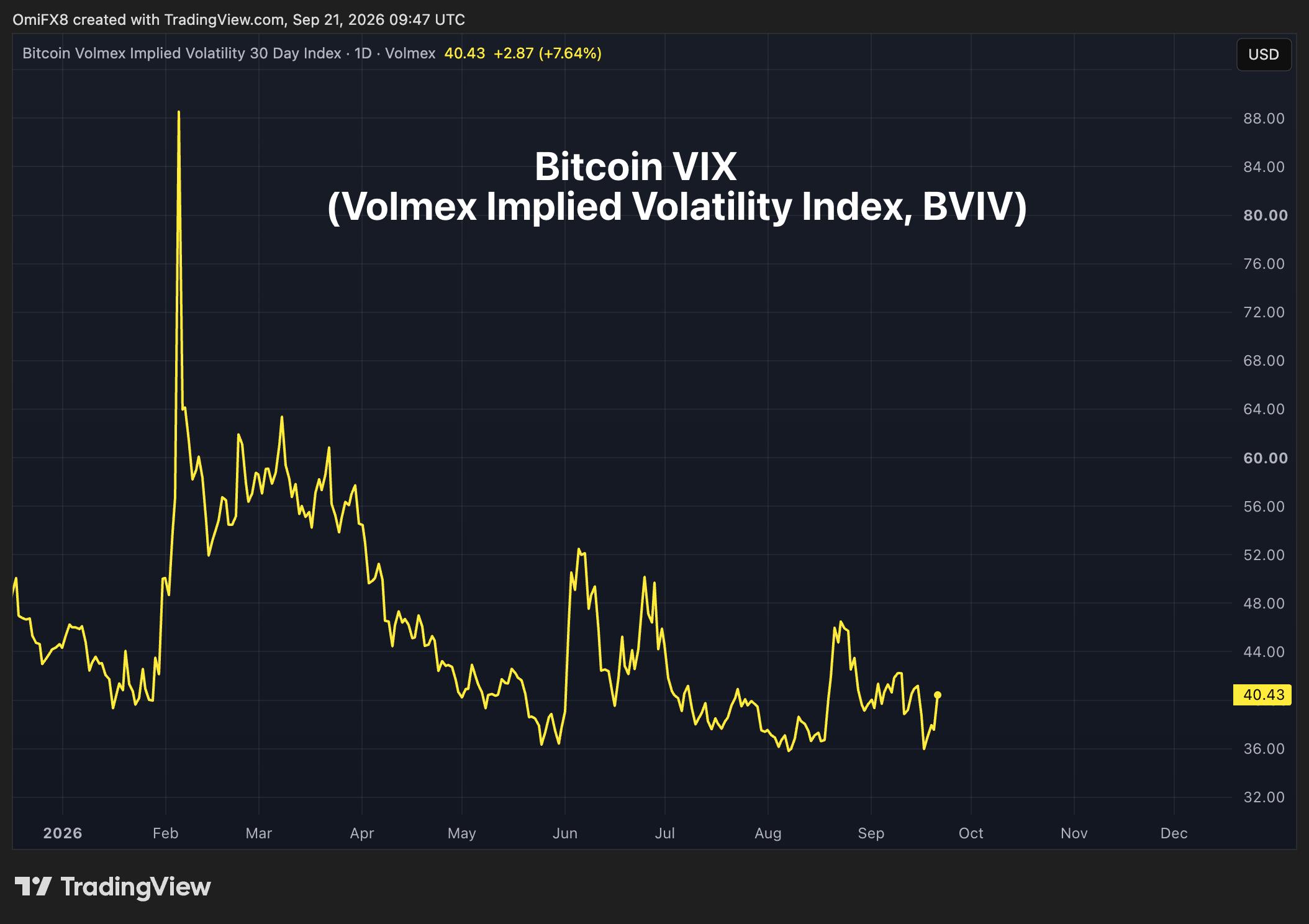
A volatility index measures the market’s expectation of price fluctuations over a set period. The most famous example is the VIX, which tracks expected volatility of the S&P 500. A Bitcoin VIX works the same way: it aggregates options prices on Bitcoin to estimate how much the cryptocurrency is likely to move in the near future.
Options are contracts that give the holder the right, but not the obligation, to buy or sell an asset at a predetermined price. When many traders buy options, they are usually anticipating larger price moves, which pushes the implied volatility higher. The index aggregates these implied volatilities across a range of strike prices and expirations, producing a single number that reflects market sentiment.
Because the index is derived from options, it does not predict the direction of Bitcoin’s price—only the magnitude of its swings. A high Bitcoin VIX suggests traders expect large price swings, while a low VIX indicates a calmer market.
How Do Perpetual Futures on a Volatility Index Work?
Perpetual futures, or “perps,” are derivative contracts that let you trade the price of an underlying asset without an expiry date. They are settled continuously via a funding rate, which aligns the contract price with the spot price of the underlying.
When a perpetual future is linked to a Bitcoin volatility index, the contract’s price tracks the VIX value rather than Bitcoin’s spot price. Traders can go long (bet the volatility will rise) or short (bet it will fall). Because the contract never expires, you can hold a position as long as you believe the market’s volatility outlook will change in your favor.
Funding payments are exchanged between long and short positions at regular intervals, usually every eight hours. If the contract price is above the index, longs pay shorts; if below, shorts pay longs. This mechanism ensures the contract price stays close to the actual index value.
Real‑World Example: Hyperliquid’s Bitcoin VIX Perpetual Futures
In March 2026, the decentralized exchange Hyperliquid launched perpetual futures tied to a newly created “Bitcoin VIX.” The product allows traders to speculate on Bitcoin’s future volatility directly on the platform. By linking the contract to a volatility index rather than Bitcoin’s price, Hyperliquid offered a way to profit from market turbulence without needing to own Bitcoin itself.
This launch illustrates how volatility products are moving from traditional finance into the crypto space, giving everyday users access to sophisticated hedging tools that were once limited to institutional traders.
What It Means for You
If you are looking to earn passive income or protect your crypto portfolio, Bitcoin VIX perpetual futures can serve two main purposes:
- Hedging: By taking a short position on the volatility index, you can offset potential losses in a portfolio that would suffer during high‑volatility spikes.
- Speculative earning: Going long on the index allows you to capture gains if market uncertainty rises, which often coincides with price spikes that create trading opportunities.
Both strategies carry risk. Volatility can drop quickly, eroding the value of a long position, while funding payments can become costly for the side that continuously pays.
What to Check Before Trading Bitcoin VIX Perps
- Liquidity: Ensure the contract has sufficient trading volume and tight bid‑ask spreads to enter and exit positions without excessive slippage.
- Funding rate history: Review past funding payments to gauge the cost of holding a position over time.
- Index methodology: Understand how the underlying volatility index is calculated—look for transparency about which options markets are used and the weighting scheme.
- Platform security: Verify the exchange’s security track record, especially for derivatives that settle automatically.
- Risk management tools: Use stop‑loss orders or position size limits to protect against rapid volatility swings.
FAQ
What’s the difference between a Bitcoin VIX and regular Bitcoin price?
The Bitcoin VIX measures expected price movement, not the price itself. It reflects market sentiment about how wildly Bitcoin might swing, whereas the price shows where Bitcoin is trading right now.
Can I earn passive income from Bitcoin VIX futures?
You can receive funding payments if you hold the side that is paid in the funding cycle, but this income is not guaranteed and can turn negative if market conditions shift.
Do I need to own Bitcoin to trade a Bitcoin VIX perpetual?
No. The contract is settled in the platform’s base token (often USDC or another stablecoin), so you can trade the volatility index without holding Bitcoin.
Is trading volatility riskier than trading Bitcoin itself?
Volatility products can be more unpredictable because they depend on market sentiment rather than price direction. They can amplify gains but also lead to rapid losses, especially during sudden calm periods.
This article references reporting from coindesk.com.