
Are you wondering why Bitcoin sometimes falls sharply only to recover later, and how you can make sense of those moves when you’re trying to earn online? This article explains the role of long‑term support levels, such as the 200‑week moving average, and shows you how to use them to manage risk and spot opportunities.
What a 200‑Week Moving Average Is and Why It Matters
A moving average smooths out price data by calculating the average price over a set number of periods. The 200‑week moving average (sometimes called the 200‑week MA) takes the average closing price of Bitcoin over the past 200 weeks—roughly four years. Because it spans many market cycles, this line is considered a “long‑term” trend indicator.
When the price is above the 200‑week MA, the market is generally viewed as being in a bullish (upward) phase. When the price falls below it, traders often interpret that as a sign of weakness, because the market has broken a level that has historically acted as a floor.
Support levels are price points where buying interest historically outweighs selling pressure, causing the price to bounce back up. The 200‑week MA is a “dynamic” support level—it moves up and down with the market, unlike a static horizontal line.
How the 200‑Week MA Has Behaved Historically
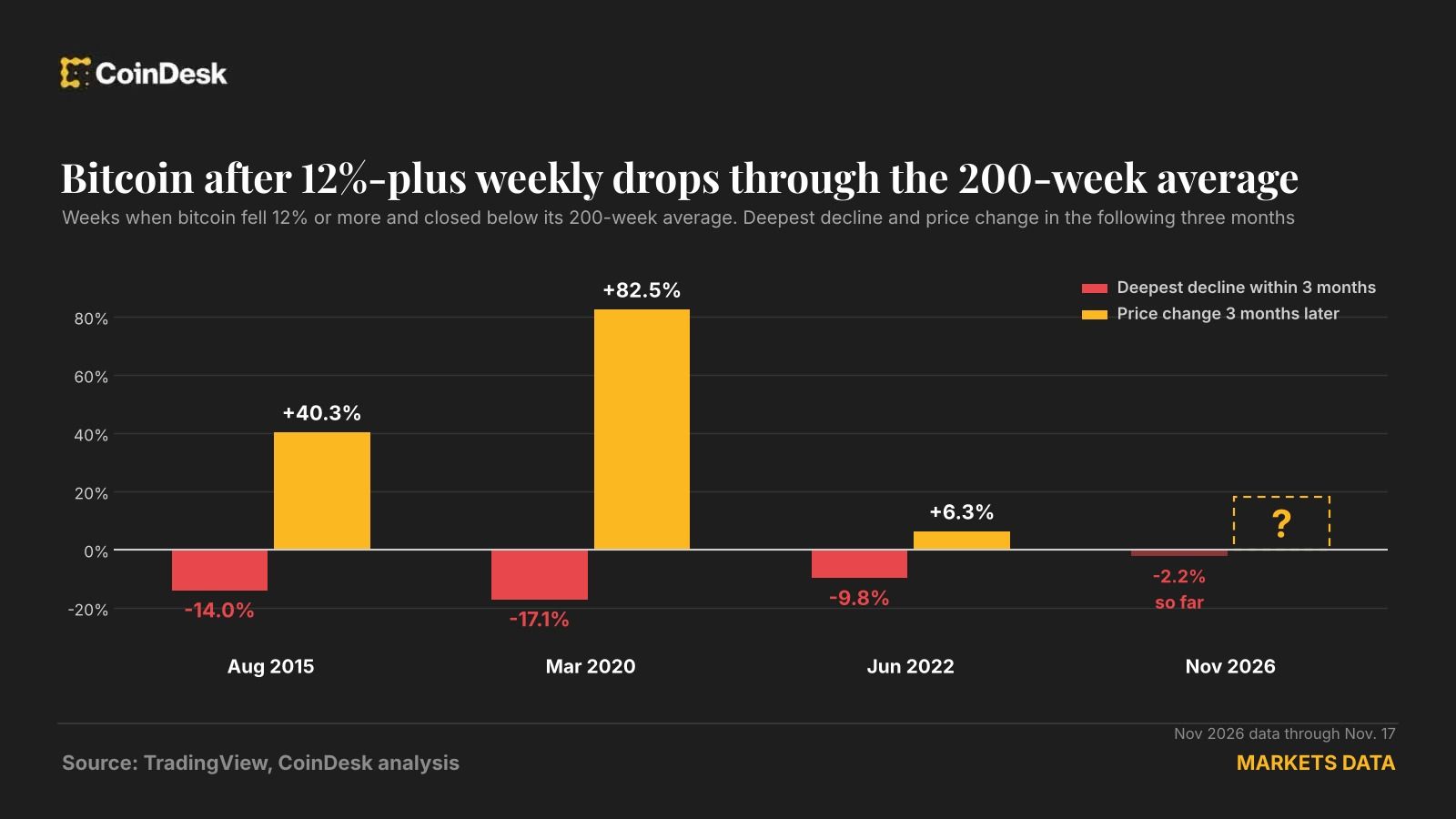
Since Bitcoin’s early days, there have been only a few instances where the price dropped below the 200‑week MA and then recovered. According to data, three similar crashes have occurred since 2013. In each case, the price eventually rose back above the moving average, often within a few months.
Real‑World Example: A 12% Drop Below the 200‑Week MA
In March 2026, Bitcoin slipped 12 % and broke below its 200‑week average. Analysts noted that only three comparable breakdowns had happened since 2013, and each time the market recovered after a short period. The price movement sparked concern, but the historical pattern suggested a potential rebound within three months.
What It Means for You When You’re Trying to Earn Online
If you earn passive income through Bitcoin‑related activities—such as staking, lending, or cloud mining—understanding support levels can help you decide when to add to or withdraw from a position. A dip below the 200‑week MA may present a buying opportunity if you believe the long‑term trend remains upward. Conversely, it can signal heightened risk, prompting you to tighten stop‑loss orders or reduce exposure.
For miners, a prolonged price decline can squeeze profit margins because revenue is tied to the coin’s market price. However, many mining pools, including EcoPool, adjust reward structures to remain viable during down‑trends, and some miners use hedging strategies to protect against price drops.
What to Check Before Acting on a Support Break
- Volume: A break accompanied by high trading volume suggests stronger conviction, while low volume may indicate a false breakout.
- Other indicators: Combine the 200‑week MA with shorter‑term tools like the 50‑day MA, Relative Strength Index (RSI), or MACD to gauge momentum.
- Fundamental news: Look for macro events—regulatory changes, institutional adoption, or network upgrades—that could influence price direction.
- Risk tolerance: Decide in advance how much of your portfolio you’re willing to allocate to Bitcoin and set stop‑loss levels accordingly.
- Earning method: If you rely on mining rewards, calculate whether current electricity costs and hardware efficiency still make mining profitable at the lower price.
FAQ
Why does the 200‑week moving average matter more than a shorter moving average?
The 200‑week MA covers a longer time span, filtering out short‑term volatility and reflecting the market’s overall health. Shorter averages can give false signals during brief rallies or dips.
Should I buy Bitcoin immediately after it falls below the 200‑week MA?
Not automatically. Assess volume, other technical signals, and your own risk profile. A dip can be an entry point, but only if the broader analysis supports it.
How can I protect my mining earnings if Bitcoin’s price stays below the 200‑week MA for several months?
Consider using a portion of your mining rewards to purchase stablecoins, or explore mining contracts that offer fixed payouts. Some miners also hedge by selling a fraction of mined coins on futures markets.
Is the 200‑week MA a guarantee that the price will rebound?
No. Historical patterns provide context, not certainty. Markets can stay below a long‑term support level for extended periods, especially if fundamentals change.
This article references reporting from coindesk.com.





