
Are you curious about the “basis trade” that many crypto traders talk about, and whether it can be a reliable source of passive income? This article explains the mechanics of crypto basis trades, why they can dry up, and how you can assess the risks before trying one yourself.
The plain explanation
A basis trade, also known as a carry trade, involves borrowing an asset at a low financing rate and simultaneously buying the same asset on a spot market where it trades at a higher price. The difference between the spot price and the futures price (or the financing cost) is called the basis. If the basis is positive, the trader can lock in a profit by selling the spot asset, buying a futures contract, and holding the position until the contract expires.
In crypto, the most common version is the cash-and-carry trade. Here’s how it works step‑by‑step:
- Buy Bitcoin (or another coin) on a spot exchange using cash.
- Sell an equivalent amount of Bitcoin futures on a derivatives exchange.
- Borrow cash or stablecoins at the prevailing financing rate to fund the spot purchase.
- Hold both positions until the futures contract expires. When it settles, you deliver the spot Bitcoin to close the futures position.
- The profit equals the initial basis minus any financing costs, transaction fees, and slippage.
The key to profitability is that the futures price must stay higher than the spot price after accounting for borrowing costs. If the futures price drops, the basis can become negative, turning the trade into a loss.
Why does a basis exist at all? Futures markets price in expectations about future supply, demand, and funding rates. When demand for leveraged long exposure is high, futures can trade at a premium to spot, creating a positive basis. Conversely, when demand wanes, the premium shrinks or even flips to a discount.
A real example
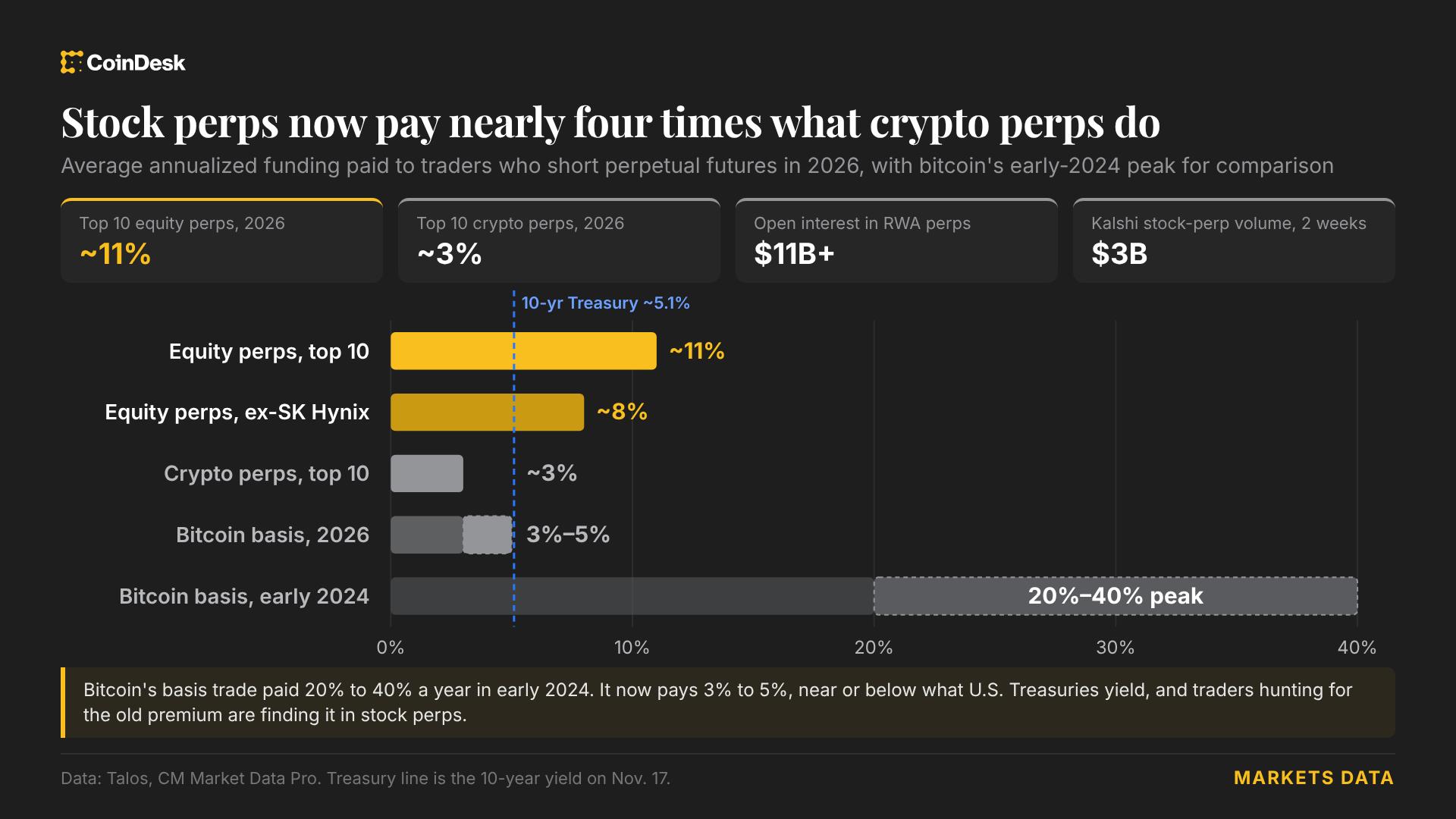
In March 2026, market data showed Bitcoin hovering near $65,000 while a popular “basis trade” that had been profitable for months began to lose its edge. A Talos report highlighted that the crypto carry trade’s return had fallen to roughly the same level as U.S. Treasury yields, meaning the extra profit from the basis was essentially gone. At the same time, XRP edged toward $1 and Solana (SOL) rose 3%, illustrating how different assets can behave independently of the broader basis environment.
What it means for you
If you were hoping to earn a steady stream of passive income from a basis trade, the March 2026 example shows that the strategy is not immune to market conditions. When the premium between spot and futures narrows, the expected return can drop to the level of low‑risk assets like Treasury bonds, making the effort and risk less attractive.
For everyday earners, this means you should treat basis trades as a tactical, not a strategic, tool. They can boost earnings during periods of high demand for leveraged exposure, but they can also evaporate quickly when market sentiment shifts.
What to check / how to judge
- Basis size: Calculate the difference between the futures price and the spot price. A larger, positive basis usually indicates more room for profit.
- Financing rate: Determine the cost of borrowing the cash or stablecoins needed for the spot purchase. If the financing rate approaches the basis, the trade may become unprofitable.
- Liquidity and fees: Ensure both the spot and futures exchanges have sufficient depth to enter and exit positions without excessive slippage, and factor in trading fees.
- Expiration horizon: Short‑term contracts can have higher funding rates, while longer contracts may lock in a larger basis but expose you to price risk over a longer period.
- Risk tolerance: Remember that a basis trade is still a leveraged position. If the futures price moves against you, you could lose more than the initial capital.
FAQ
Is a basis trade the same as staking?
No. Staking involves locking up a cryptocurrency to help secure a network and earn rewards generated by the protocol. A basis trade is a market arbitrage strategy that exploits price differences between spot and futures markets.
Can I do a basis trade without borrowing?
You can use your own cash to fund the spot purchase, but you will still face opportunity costs. Borrowing allows you to amplify the trade, but it also adds financing fees and risk.
What happens if the futures contract expires at a loss?
If the futures price falls below the spot price plus financing costs, the trade will close with a negative profit. You would lose the amount of the negative basis, plus any fees incurred.
Are basis trades safe for beginners?
<p"They are more complex than simple buying and holding and require monitoring of financing rates, market volatility, and contract expiration dates. Beginners should start with small positions, use reputable exchanges, and consider paper‑trading first to understand the dynamics."
This article references reporting from coindesk.com.





