Wondering whether the Bitcoin you hold is truly making money or just looking good on paper? This article explains how to measure the profitability of a crypto holding, what “underwater” really means, and how you can assess your own position.
The plain explanation
Profitability in crypto is simply the difference between the price you paid for an asset (your cost basis) and its current market price. If the market price is higher than your cost basis, you are “in profit.” If it is lower, you are “underwater.” The cost basis includes the amount of fiat or other crypto you exchanged for the Bitcoin, plus any transaction fees you paid to acquire it.
Because Bitcoin trades on many exchanges, its price can vary by a few dollars at any moment. Most profitability calculators use a single reference price—often the volume‑weighted average price (VWAP) from a major exchange—to keep things consistent.
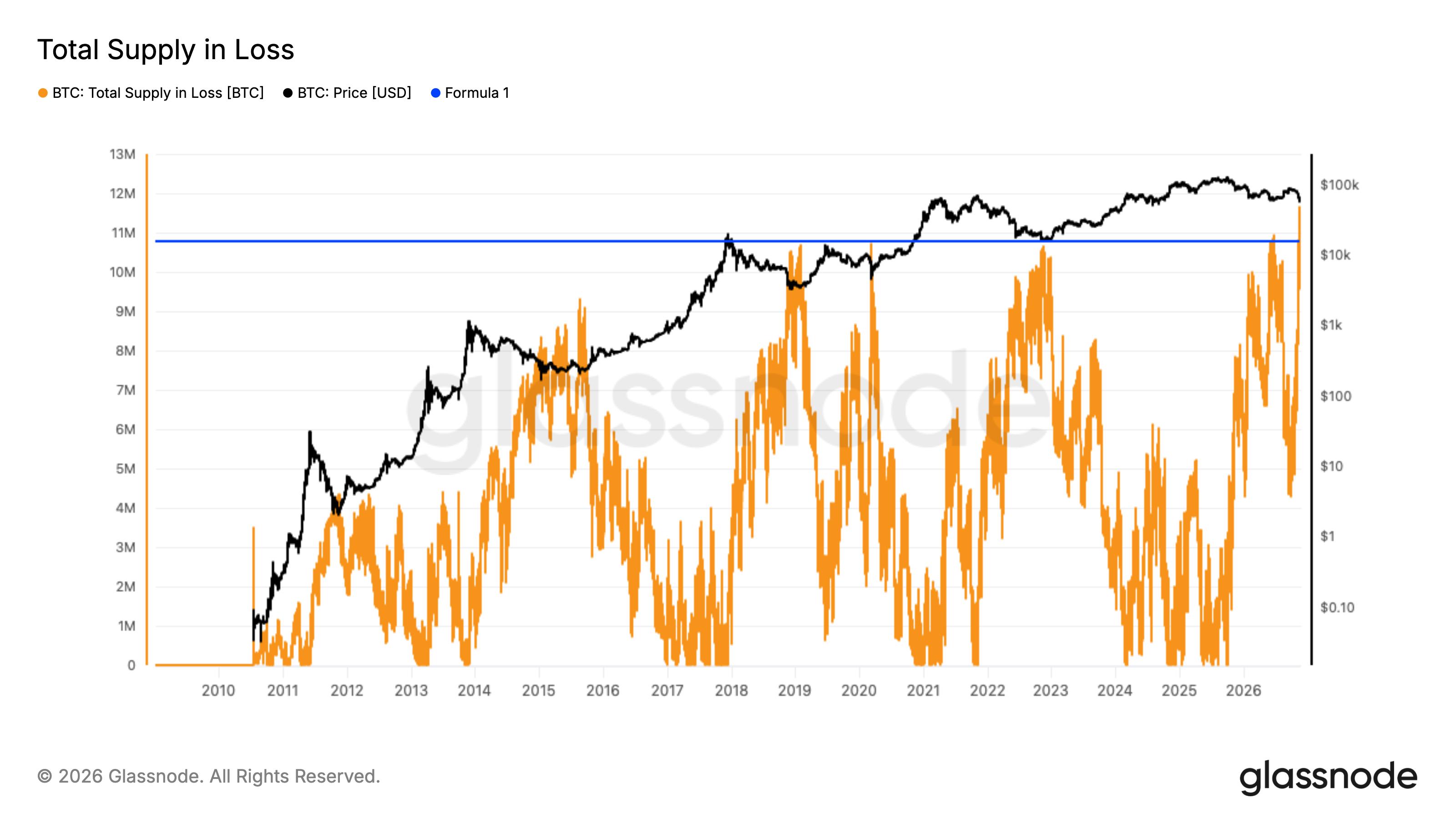
When you hear analysts talk about “the supply of Bitcoin in profit,” they are aggregating the cost bases of all known holders. They estimate how many coins are currently above the price at which those owners originally bought them. This metric gives a macro view of market sentiment: a larger “in‑profit” supply can indicate that many investors are riding a price rally, while a shrinking “in‑profit” supply suggests that more holders are seeing losses.
A real example
In March 2026, data showed that Bitcoin’s price fell to $55,000, leaving a record 11.6 million BTC “underwater.” That means those coins were held at a cost basis above $55,000, so their owners were sitting at a loss. At the same time, the total supply of Bitcoin that remained in profit dropped below the low recorded after the 2022 FTX collapse. Yet entities holding between 100 and 10,000 BTC continued to accumulate, indicating that larger investors were still buying despite the dip.
What it means for you
If you own Bitcoin, the headline numbers don’t tell the whole story for your personal portfolio. Your profitability depends on when and how you bought your coins. A small investor who bought at $30,000 is now in profit, while another who entered at $60,000 is underwater.
Understanding your own cost basis helps you make informed decisions about holding, selling, or adding to your position. It also clarifies whether you are exposed to “realized” losses (when you sell at a loss) or “unrealized” losses (when you simply hold a coin that is currently below your purchase price).
What to check / how to judge
- Calculate your cost basis. Most wallets and exchanges show the average purchase price for each asset. If not, add up the fiat amount you spent and divide by the number of BTC acquired.
- Include fees. Transaction fees, exchange fees, and any network fees paid when moving Bitcoin should be added to the cost basis.
- Use a reliable price source. Pick a single exchange or a VWAP from a reputable data provider to compare against your cost basis.
- Consider tax implications. In many jurisdictions, selling at a loss can offset other capital gains, while selling at a profit may trigger tax liabilities.
- Watch macro metrics. The “supply in profit” figure can give you a sense of overall market health, but always prioritize your own numbers.
FAQ
How do I find my exact cost basis if I bought Bitcoin on multiple exchanges?
Export the transaction history from each exchange, list every purchase with its price and fee, then calculate a weighted average. Many portfolio trackers can do this automatically.
Does being “underwater” mean I should sell my Bitcoin?
Not necessarily. Selling at a loss locks in that loss, which might be useful for tax purposes, but it also removes you from any future upside. Consider your investment horizon, risk tolerance, and whether you expect the price to recover.
Why do large holders keep buying when many coins are underwater?
Institutional and high‑net‑worth investors often have longer time frames and different risk models. They may view a price dip as a buying opportunity, especially if they believe the long‑term trend remains upward.
Can I use “supply in profit” to time my trades?
It can be a useful sentiment indicator, but it is not a precise timing tool. Market dynamics are influenced by many factors, so combine it with personal cost basis analysis and broader market research.
This article references reporting from coindesk.com.