
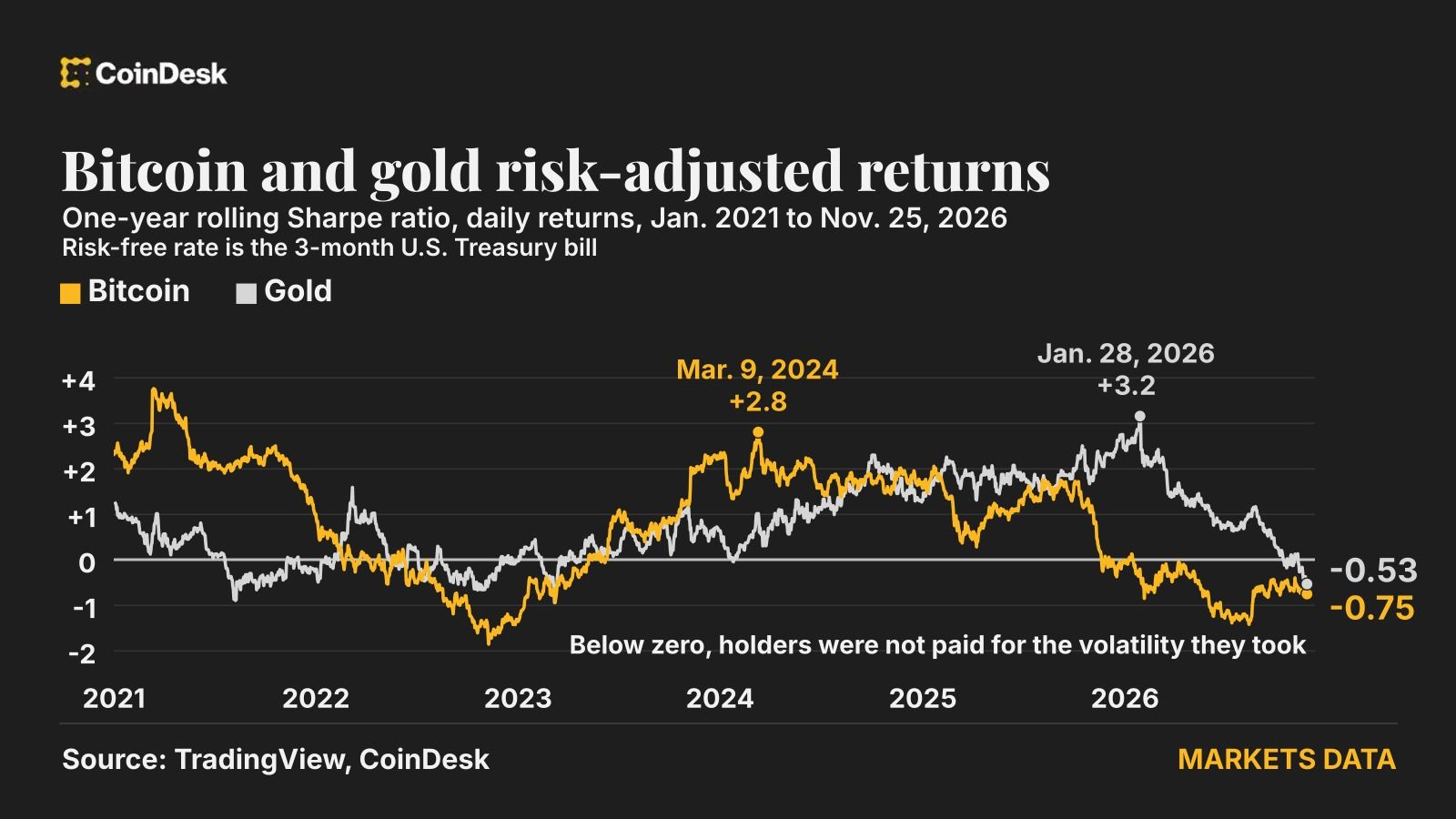
Wondering how to tell whether Bitcoin or gold is a better hedge for your portfolio? This article explains the Sharpe ratio, a common tool for measuring risk‑adjusted performance, and shows you how to apply it when evaluating crypto and other assets.
What the Sharpe Ratio Is and How It Works
The Sharpe ratio is a metric that compares an investment’s return to the amount of risk it takes to achieve that return. It is calculated by subtracting the risk‑free rate (usually the yield on short‑term government bonds) from the asset’s average return, then dividing the result by the asset’s standard deviation, which measures how wildly the price swings.
In formula form:
Sharpe Ratio = (Average Return – Risk‑Free Rate) ÷ Standard Deviation
A higher Sharpe ratio means you are getting more return per unit of risk, which most investors consider a sign of a more efficient investment. A negative Sharpe ratio indicates that the investment’s return is lower than the risk‑free rate after accounting for volatility, suggesting that simply holding cash might have been a better choice.
Key terms to remember:
- Average Return: The mean percentage gain (or loss) over a specific period, such as one year.
- Risk‑Free Rate: The return you could earn with virtually no risk, often based on U.S. Treasury bills.
- Standard Deviation: A statistical measure of how much an asset’s price deviates from its average; higher values mean more price swings.
Real‑World Illustration
In a 2026 analysis, gold’s “haven” status was said to have lost its edge over Bitcoin, with both assets posting negative one‑year Sharpe ratios. This means that over the past year, each asset’s return fell short of what an investor could have earned by holding cash at prevailing Treasury yields, after factoring in their volatility.
What It Means for You
If you are looking for a safe store of value or a hedge against market turbulence, a negative Sharpe ratio is a warning sign. It suggests that, on a risk‑adjusted basis, the asset did not outperform a simple cash position. For crypto‑focused earners, this highlights the importance of looking beyond headline price moves and examining how much price swing you are taking on.
When you compare assets, the Sharpe ratio lets you answer questions such as:
- Is the higher return of Bitcoin worth its larger price swings compared with gold?
- Would a diversified mix of assets improve my overall risk‑adjusted return?
- Should I allocate a portion of my portfolio to low‑volatility options like cash or short‑term bonds?
What to Check Before Relying on the Sharpe Ratio
- Time Horizon: Sharpe ratios can vary dramatically over different periods. Use a window that matches your investment horizon (e.g., one year, three years).
- Risk‑Free Benchmark: Choose a risk‑free rate that reflects the current interest‑rate environment; Treasury yields change over time.
- Data Quality: Ensure the price data you use is reliable and covers the same frequency (daily, weekly) for all assets you compare.
- Volatility Source: Remember that standard deviation captures all price moves, including sudden spikes that may not reflect long‑term risk.
- Complementary Metrics: Pair the Sharpe ratio with other tools such as the Sortino ratio (which focuses on downside risk) or a simple risk‑return scatter plot.
FAQ
Is a higher Sharpe ratio always better?
Generally, a higher ratio indicates more efficient risk‑adjusted performance, but it does not guarantee future results. Consider the investment’s liquidity, tax implications, and how it fits your overall strategy.
Can I use the Sharpe ratio for crypto staking or cloud mining rewards?
Yes, you can treat the expected reward yield as the “return” and the variability of that reward (often tied to network difficulty or token price) as the “risk.” The same calculation applies, letting you compare staking returns to more traditional assets.
What does a negative Sharpe ratio tell me?
A negative ratio means the asset’s return is lower than the risk‑free rate after accounting for volatility. In practice, it suggests that holding cash or a short‑term bond would have been a better risk‑adjusted choice over the measured period.
Should I ignore assets with low or negative Sharpe ratios?
Not necessarily. Some assets serve specific purposes—like diversification or exposure to a new technology—that may justify holding them despite a low Sharpe ratio. Weigh those strategic reasons against the risk‑adjusted performance.
This article references reporting from coindesk.com.





