Written by Ezra Reguerrastaff writerReviewed by Yohan Yunstaff writer
Written by Ezra Reguerrastaff writer
Reviewed by Yohan Yunstaff writer
Blockchain researchers warn HTX sanctions may blur crypto risk signals
Latest NewsPublishedJun 9, 2026
Researchers say broad HTX tainting could freeze legitimate users and make compliance tools less useful for tracing illicit funds.
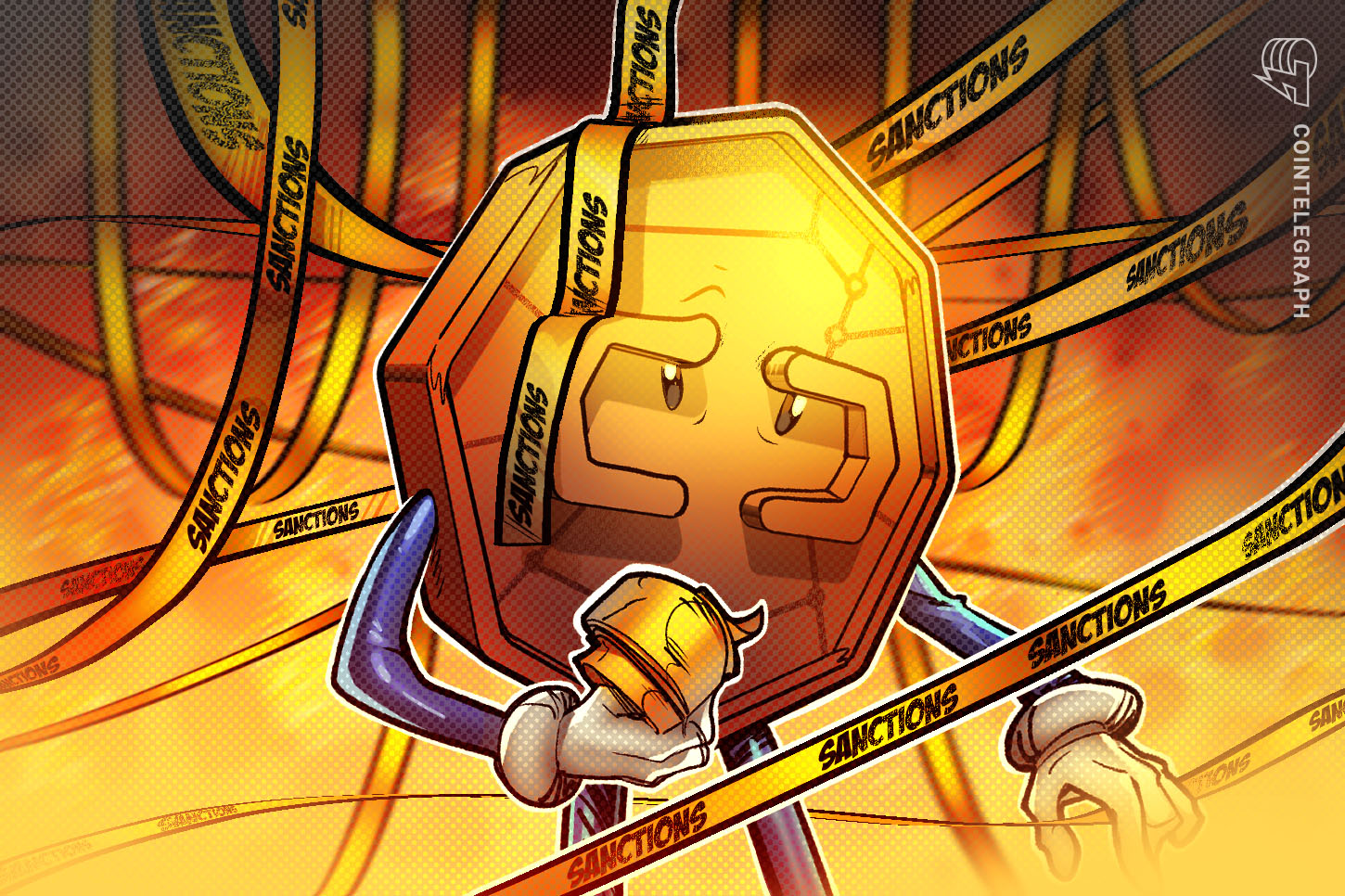
Blockchain researchers have raised concerns about the United Kingdom’s sanctions against crypto exchange HTX, arguing that the move may have created broad collateral damage across the industry’s compliance system.
In an X post, Galaxy Digital’s head of research, Alex Thorn, stated the UK adding “all of HTX” to its sanctions was “problematic” because the exchange has many legitimate users. Thorn pointed to differences in how stablecoin issuers decide when to freeze tokens, saying there’s a big divergence in enforcement practices.
Security researcher Taylor Monahan stated in an X post that the HTX sanctions undermined years of work to encourage decentralized finance (DeFi) protocols to screen and block stolen funds. She argued that most HTX users are legitimate.
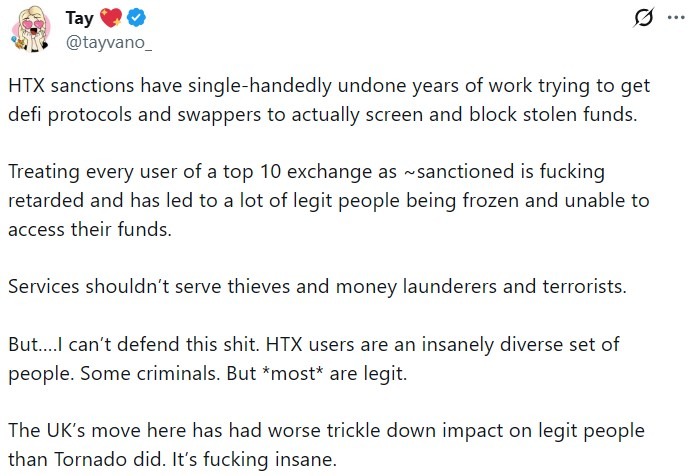
Source: Taylor Monahan
Blockchain investigator ZachXBT also criticized the sanctions, calling them “a bit of an overreach.” He stated HTX address tainting onchain has been “catastrophic.”
“Basically now I’ve had to ignore the sanctions category when tracing cases by exposure since ‘risk’ itself has become meaningless,” he stated.
The criticism follows the UK’s May 26 sanctions against Huobi Global S.A., the Panamanian company behind HTX, over alleged support for Russia-linked financial networks.
HTX disputes UK sanctions
UK authorities stated there were reasonable grounds to suspect HTX had supported Russia’s government through financial services and funds facilitated by A7 Limited Liability Company and Garantex, both sanctioned entities.
Related: UK regulator takes High Court action against HTX over crypto promotions
HTX has since denied the allegations, saying the sanctioned entity is separate from the online exchange.
Despite this, a Global Ledger report stated that HTX processed about $21.06 billion in high-risk crypto flows between 2021 and May 2026. Of that total, at least $7.64 billion was linked to Russian high-risk entities and darknet markets, including Garantex, its successor Grinex, A7A5 and Hydra.
The sanctions appeared to have had effects downstream. Trump-linked DeFi project World Liberty Financial later froze HTX-linked addresses after what it described as sanctions compliance reviews. HTX responded by delisting the DeFi platform’s USD1 stablecoin and suspending several trading pairs.
Magazine: Vietnam preps crypto pilot, HK pushes tokenization: Asia Express
Cointelegraph is committed to independent, transparent journalism. This news article is produced in accordance with Cointelegraph’s Editorial Policy and aims to provide accurate and timely information. Readers are encouraged to verify information independently.
- Security
- Community
- Regulation
More on the subject

Anchorage backs Treasury’s GENIUS AML rules, seeks secondary-market sanctions clarity
50 minutes ago
Sam Bourgi

AI deepfake election ad in Minnesota raises transparency concerns
3 hours ago
Aaron Wood
Hyperliquid, Paradigm urge revision of GENIUS money-laundering rule
11 hours ago
Jesse Coghlan
Anchorage backs Treasury’s GENIUS AML rules, seeks secondary-market sanctions clarity
50 minutes ago
Sam Bourgi
AI deepfake election ad in Minnesota raises transparency concerns
3 hours ago
Aaron Wood
Hyperliquid, Paradigm urge revision of GENIUS money-laundering rule
11 hours ago
Jesse Coghlan