Are you wondering why a Bitcoin miner’s earnings can drop dramatically even when the price of Bitcoin stays the same? This article explains how electricity supply, pricing, and grid constraints affect mining profitability, and what you can do to protect your earnings.
The basics: why electricity matters for Bitcoin mining
Bitcoin mining is the process of solving cryptographic puzzles to add new blocks to the blockchain. Miners compete to be the first to find a valid hash, and the winner receives newly minted bitcoins (the block reward) plus transaction fees. The competition is essentially a race of computational power, measured in hashrate. To generate that power, miners run specialized hardware—ASICs (Application‑Specific Integrated Circuits)—that consume large amounts of electricity.
Because the hardware’s energy consumption is the biggest ongoing cost, profitability is a simple equation: Revenue per block ÷ Electricity cost per block. If the price of Bitcoin or the block reward falls, miners need lower electricity costs to stay profitable. Conversely, if electricity prices rise, even a stable Bitcoin price can squeeze margins.
Two technical terms often cause confusion:
- Power usage effectiveness (PUE) – a metric that compares the total energy used by a data center (including cooling, lighting, etc.) to the energy used by the mining hardware alone. A lower PUE means more of the electricity goes directly to mining.
- Contracted power – the amount of electricity a miner has agreed to receive from a utility under a long‑term contract. Contracts often include clauses that allow the utility to reduce supply under certain conditions, such as grid emergencies.
How grid constraints translate into power cuts
Electric grids are designed to balance supply (generation) and demand (consumption) in real time. When generation falls—because of drought‑affected hydro reservoirs, maintenance outages, or seasonal demand spikes—grid operators may impose “load shedding” to prevent blackouts. Load shedding can be blanket (affecting all customers) or targeted, prioritizing essential services like households, hospitals, and manufacturing.
Mining operations, despite their high revenue contribution, are often classified as “non‑essential” because they can be turned off and on without immediate safety consequences. Utilities therefore reserve the right to cut or reduce power to miners when the grid is strained. The reduction is usually expressed as a percentage of the miner’s contracted power. For example, a 77 % cut means the miner receives only 23 % of the electricity it expected.
These cuts are not arbitrary. They are driven by measurable factors such as:
- Water inflow levels for hydroelectric plants.
- Fuel availability for thermal plants.
- Peak demand periods (e.g., hot afternoons when air‑conditioning use spikes).
When a utility announces a reduction, miners must either scale back their hardware, switch to backup generators, or temporarily shut down.
Real‑world illustration: Ethiopia’s 77 % power reduction for miners
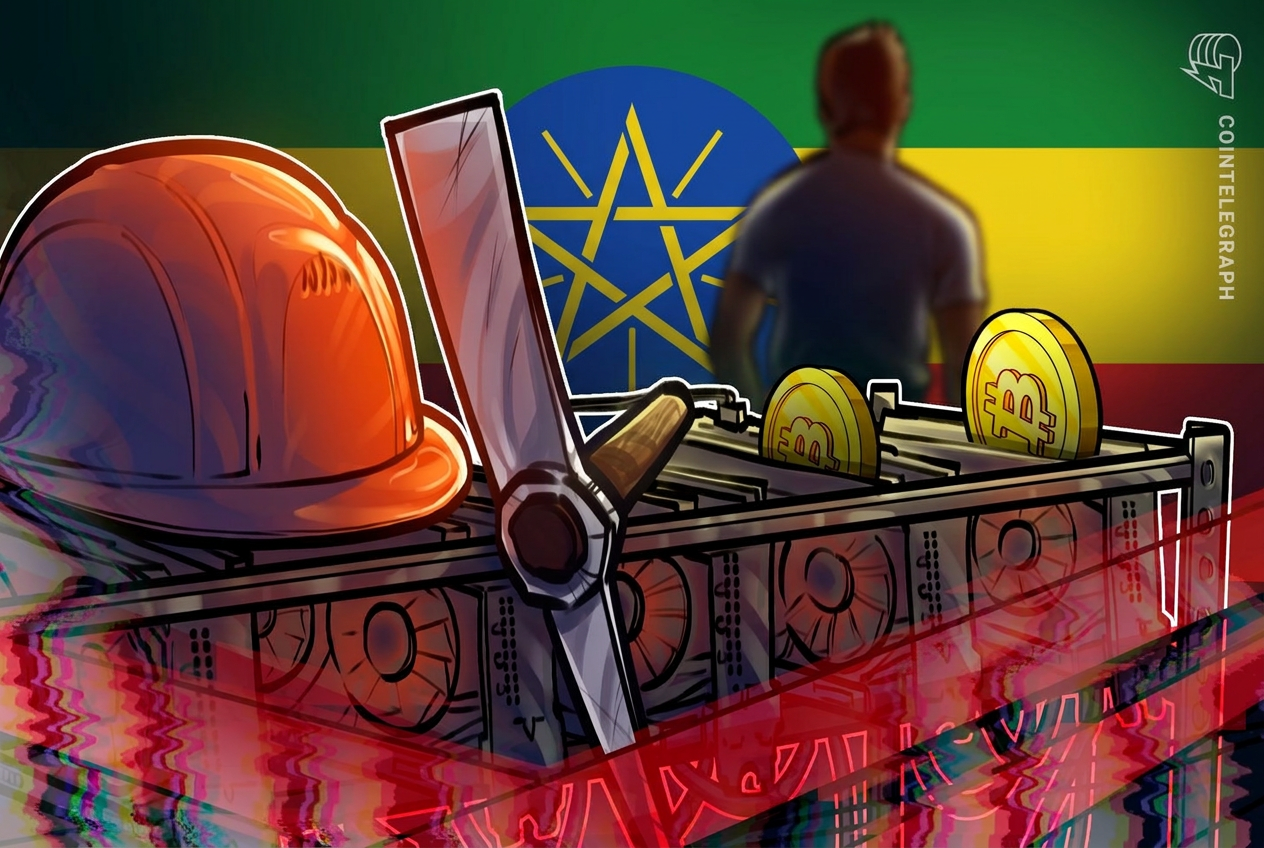
In September 2026, Ethiopian Electric Power (EEP) announced that it would cut electricity delivered to Bitcoin miners to 23 % of contracted levels—a 77 % reduction. The decision came after an El Niño‑driven drought reduced water inflows to the country’s hydro reservoirs by 20 %. Because mining accounted for almost one‑third of Ethiopia’s total electricity consumption and generated 35 % of EEP’s revenue, the utility chose to prioritize households and manufacturers.
EEP’s step‑down approach started at 75 % of contracted power, then moved to 50 %, and finally to 23 %. The utility said it would reassess the situation in October and could impose further cuts or even limit electricity exports to neighboring countries. This example shows how external climate factors, combined with the high electricity intensity of mining, can lead to sudden supply constraints that directly affect miners’ earnings.
What this means for you as a miner or a cloud‑mining participant
If you run a mining rig, a mining farm, or participate in a cloud‑mining service, power cuts can have three immediate effects:
- Reduced hash rate – Less electricity means fewer ASICs can run, lowering the total computational power you contribute.
- Lower reward share – Many mining pools allocate rewards proportionally to hash rate. A sudden drop can shrink your daily earnings.
- Higher effective cost – Fixed costs such as rent, maintenance, and loan payments remain, so the cost per mined bitcoin rises.
For cloud‑mining users, the provider may absorb the loss, pass it on as a lower payout, or suspend service until power stabilizes. Understanding the underlying risk helps you set realistic expectations and avoid surprise shortfalls.
How to evaluate the risk of power interruptions
Before committing capital to a mining operation, ask yourself the following:
- What is the source of electricity? Hydropower, solar, wind, and thermal each have different vulnerability profiles. Regions dependent on a single source (e.g., hydro in drought‑prone areas) carry higher risk.
- Are there contractual protections? Look for clauses that guarantee a minimum power level or provide compensation for forced reductions.
- Is there backup generation? On‑site generators, battery storage, or access to an alternative grid can mitigate the impact of load shedding.
- What is the local regulatory environment? Some governments prioritize mining in their energy policy, while others treat it as a discretionary load.
- How diversified is the operation? Mining farms that spread hardware across multiple locations reduce the chance that a single grid event wipes out all earnings.
FAQ
Why do miners pay for electricity if they generate revenue for the utility?
Utilities charge for the actual electricity consumed, not for the revenue a miner generates. While mining can be a lucrative customer, the grid still incurs costs for generation, transmission, and maintenance that must be covered.
Can I protect my earnings by switching to a different energy source?
Yes. Using renewable sources like solar or wind, especially with battery storage, can reduce dependence on the public grid and provide more predictable costs. However, the upfront capital expense is higher and the energy output can be variable.
Do mining pools share the risk of power cuts?
Most pools allocate rewards based on the hash rate each participant contributes. If a miner’s hash rate drops because of a power cut, the pool’s total reward is unchanged, but the miner’s share decreases. Some pools offer “hash rate insurance” or rebalance payouts, but these are not universal.
Is it better to mine in countries with abundant cheap electricity?
Cheap electricity improves margins, but you also need to consider political stability, regulatory risk, and the reliability of the supply. Countries with low prices but frequent load shedding may ultimately be less profitable than those with higher, more stable rates.
This article references reporting from cointelegraph.com.