
Are you wondering why Bitcoin’s price spikes don’t always translate into higher earnings for miners? This article explains the key factors that determine mining profitability, how they interact, and what you should consider before investing in mining hardware or cloud mining services.
What mining profitability really is
Bitcoin mining profitability is the net amount of money a miner earns after covering all costs. The primary revenue comes from two sources: the block reward (newly minted bitcoins awarded for finding a block) and transaction fees (fees paid by users to have their transactions confirmed). The main expenses are electricity (the power needed to run the mining hardware), hardware depreciation (the loss in value of ASIC machines over time), and any operational costs such as cooling or facility rent.
Four variables drive the bottom line:
- Bitcoin price (USD per BTC) – Higher market prices increase the dollar value of the block reward and fees.
- Network hash rate – The total computational power of all miners. A higher hash rate means more competition, reducing the chance that any single miner finds a block.
- Mining difficulty – An algorithmic adjustment that keeps block times at roughly ten minutes. When more hash power joins the network, difficulty rises, making it harder to earn the same number of bitcoins.
- Energy cost per kilowatt‑hour (kWh) – The price you pay for electricity. Lower rates improve margins, while high rates can erase profits even when Bitcoin is expensive.
Profitability calculators combine these inputs to estimate daily or monthly earnings. The result can swing dramatically as any one factor changes.
Real‑world illustration
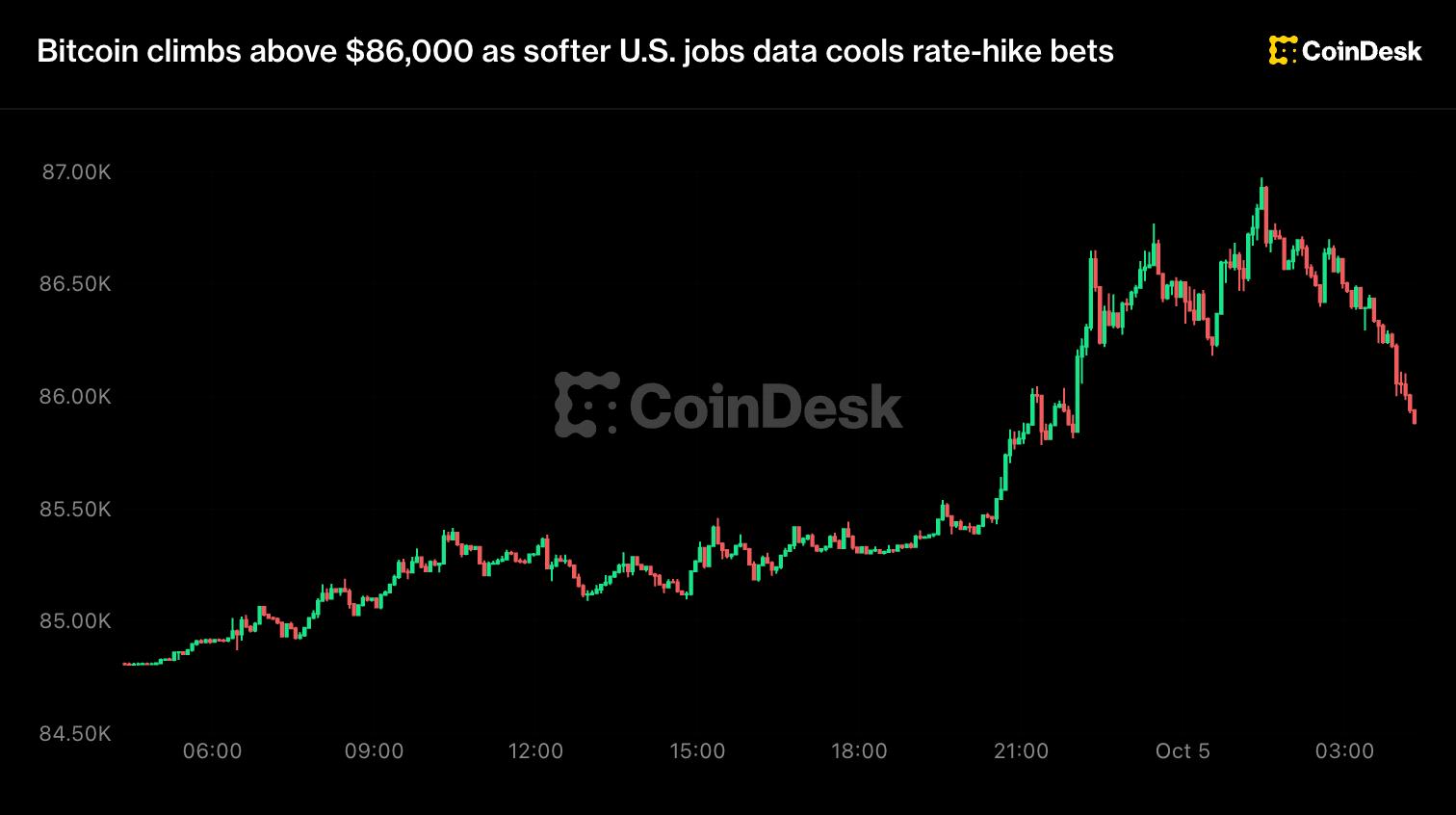
In March 2026, Bitcoin’s price surged toward $87,000, nearly matching an eight‑month high before pulling back. The price jump suggested a potential boost for miners, but the network’s hash rate had also risen in the weeks leading up to the rally, and difficulty adjusted upward accordingly. As a result, many miners saw only modest profit increases, while those with cheap electricity still benefited.
What this means for you
If you are exploring ways to earn passive income through Bitcoin mining, the example above shows that a price spike alone does not guarantee higher returns. You need to evaluate the whole ecosystem:
- Assess your electricity cost. In regions where rates are below $0.05 /kWh, mining can remain profitable even when Bitcoin dips.
- Consider the scale of your operation. Small miners compete against massive data centers; joining a mining pool can smooth out earnings but also introduces pool fees.
- Watch network difficulty trends. A rapidly increasing difficulty can erode margins quickly.
- Plan for hardware lifespan. ASIC machines typically become less efficient after 2–3 years, so factor depreciation into your calculations.
How to evaluate a mining opportunity
Before committing capital, run through this checklist:
- Calculate expected revenue using a reputable mining profitability calculator. Input current Bitcoin price, network difficulty, and your hardware’s hash rate.
- Measure electricity cost in your location. Include any demand charges or taxes.
- Factor in pool fees if you plan to join a mining pool (typically 1–3 % of earnings).
- Estimate hardware depreciation by dividing the purchase price by the expected useful life of the ASIC.
- Run a break‑even analysis to see how long it will take to recoup your investment under different price scenarios.
FAQ
Why does mining difficulty change?
Difficulty adjusts every 2,016 blocks (about every two weeks) to keep the average block time at ten minutes. If the total hash rate rises, difficulty goes up; if hash rate falls, difficulty goes down.
Can I mine profitably with a home setup?
Home mining is feasible only where electricity is very cheap and the hardware is efficient. In most regions, the cost of power outweighs the modest hash rate a single ASIC can provide.
What is a mining pool and why should I use one?
A mining pool aggregates the hash power of many miners, increasing the chance of finding a block. Rewards are shared among participants after deducting a small pool fee, providing steadier, more predictable income than solo mining.
How does the price of Bitcoin affect my earnings?
The price determines the dollar value of the block reward and transaction fees. A higher price raises revenue, but if it coincides with rising difficulty or higher hash rate, the net effect on profit may be limited.
This article references reporting from coindesk.com.





