
Are you wondering why an NFT marketplace can disappear almost overnight and what that means for your digital collectibles? This article explains how liquidity works on NFT platforms, why volume drops can be fatal, and what you can do to protect your assets.
What is liquidity on an NFT marketplace?
Liquidity refers to how easily an asset can be bought or sold without causing a large change in its price. On an NFT marketplace, liquidity depends on three main factors:
- Active buyers and sellers: The more participants, the easier it is to find a counter‑party for a trade.
- Trading volume: High daily transaction volume signals that users are regularly moving NFTs, which keeps price discovery smooth.
- Marketplace incentives: Rewards, lower fees, or exclusive collections can attract traders and boost liquidity.
When these elements align, an NFT can be listed at a price and sold quickly. When they break down, listings may sit unsold for weeks, and prices can tumble.
Why can volume collapse?
Volume can drop sharply for several reasons:
- Shift in user preference: Traders may move to newer platforms that offer better incentives or a fresher user experience.
- Technical or security issues: Bugs, hacks, or downtime erode trust, prompting users to withdraw.
- Economic factors: A broader crypto market downturn reduces disposable capital for speculative purchases.
- Regulatory pressure: New rules or legal uncertainty can deter both creators and collectors.
When a platform loses a critical mass of users, its volume can fall dramatically, creating a feedback loop: lower volume reduces liquidity, which makes the marketplace less attractive, leading to even lower volume.
Real example: Blur’s shutdown
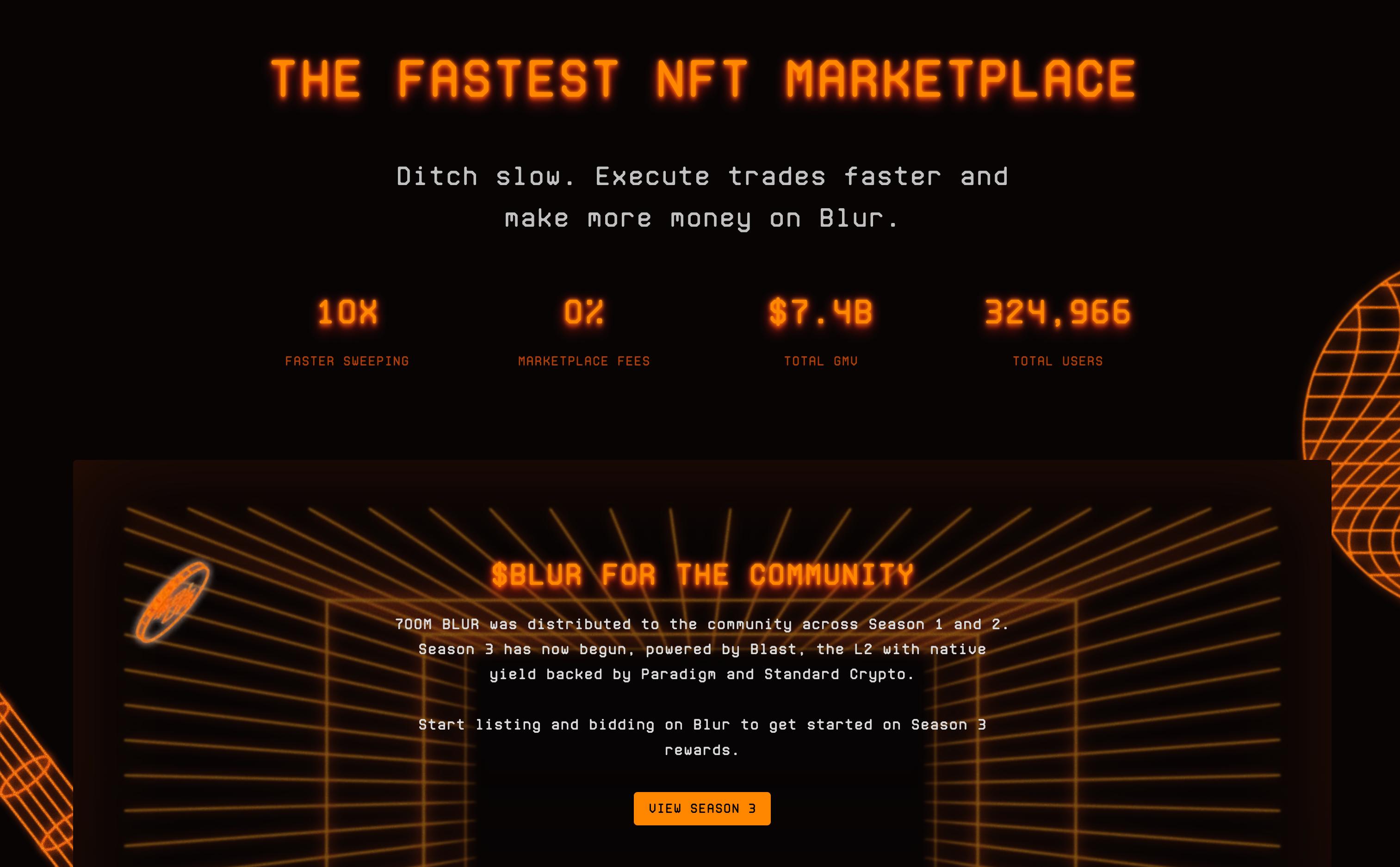
In March 2026, Blur, once the largest Ethereum NFT marketplace, announced it was shutting down after its trading volume collapsed by 99%. The platform had previously attracted high‑volume traders with low fees and fast order execution. However, a combination of user migration to competing sites, a slowdown in the broader crypto market, and concerns about long‑term sustainability led to a rapid drop in activity. With almost no trades occurring, the marketplace could no longer cover operational costs, prompting the decision to close.
What this means for you
If you hold NFTs on a marketplace that experiences a volume collapse, several practical issues arise:
- Reduced sellability: Your NFTs may sit on the market for a long time, or you may have to accept a much lower price.
- Withdrawal delays: Some platforms freeze withdrawals during a crisis, making it hard to move assets to another service.
- Potential loss of metadata: If the marketplace hosts off‑chain metadata, a shutdown could jeopardize the link between your token and its associated artwork.
- Psychological impact: Seeing a once‑vibrant market dry up can affect confidence in the broader NFT space.
Understanding these risks helps you make more informed decisions about where to list, store, and trade your NFTs.
What to check before using an NFT marketplace
To reduce exposure to a sudden liquidity crisis, consider these checkpoints:
- Community size and activity: Look at daily active users, average trade volume, and the number of unique wallets interacting with the platform.
- Fee structure and incentives: Platforms that rely heavily on temporary subsidies may struggle once those incentives end.
- Technical robustness: Review the platform’s security audits, uptime history, and any past incidents.
- Governance and ownership: Decentralized platforms with transparent governance are less likely to shut down abruptly.
- Data storage model: Ensure that NFT metadata is stored on a decentralized system (e.g., IPFS) rather than a proprietary server.
FAQ
Why can’t I just sell my NFT on another platform if one shuts down?
Most NFTs are token standards (like ERC‑721) that can be transferred to any compatible marketplace. However, you need to move the token out of the original platform’s custody, which may be blocked during a shutdown. Additionally, the new platform may have lower demand for that specific collection, affecting price.
Does a marketplace’s volume directly affect the value of my NFTs?
Volume influences liquidity, not intrinsic value. A drop in volume can make it harder to sell at your desired price, but it does not change the token’s underlying scarcity or the artwork’s worth.
Are there any signs that a marketplace is about to lose liquidity?
Watch for decreasing daily trade counts, rising withdrawal times, and announcements of reduced incentives. Community sentiment on forums and social media can also provide early warnings.
Should I keep my NFTs in a personal wallet instead of a marketplace?
Storing NFTs in a personal, non‑custodial wallet gives you full control and avoids platform‑specific risks. You can still list the token for sale on any marketplace that supports the token standard.
This article references reporting from coindesk.com.





