
Ever wonder why Bitcoin’s price jumps up and down and how those swings affect someone trying to earn crypto through mining? This article breaks down the main forces that push Bitcoin’s market value, explains how price changes impact mining profitability, and gives you practical steps to evaluate whether mining is a sensible way to generate passive income.
What determines Bitcoin’s market price?
Bitcoin is traded on dozens of exchanges around the world, and its price is set by supply and demand. Supply is relatively fixed: the protocol caps the total number of bitcoins at 21 million, and new coins are released at a predictable rate through mining rewards. Demand fluctuates based on a mix of factors:
- Investor sentiment: News, social media buzz, and macro‑economic outlook shape how people feel about Bitcoin as an investment.
- Regulatory environment: Announcements from governments or financial regulators can either open the door for institutional participation or create uncertainty that drives traders away.
- Currency movements: Because Bitcoin is often seen as a hedge against fiat inflation, a strengthening U.S. dollar can pull money out of Bitcoin, while a weakening dollar can push it in.
- Alternative asset performance: When traditional markets like stocks or bonds slump, some investors shift capital into Bitcoin, and vice‑versa. This “decoupling” effect means Bitcoin can move independently of other assets at times.
- Liquidity and exchange activity: Large buy or sell orders on major exchanges can temporarily swing the price, especially when market depth is thin.
All of these elements interact in real time, creating the price volatility that Bitcoin is famous for. Understanding which factor is dominant at any moment helps you gauge the risk and potential reward of mining or other earning strategies.
A real‑world illustration
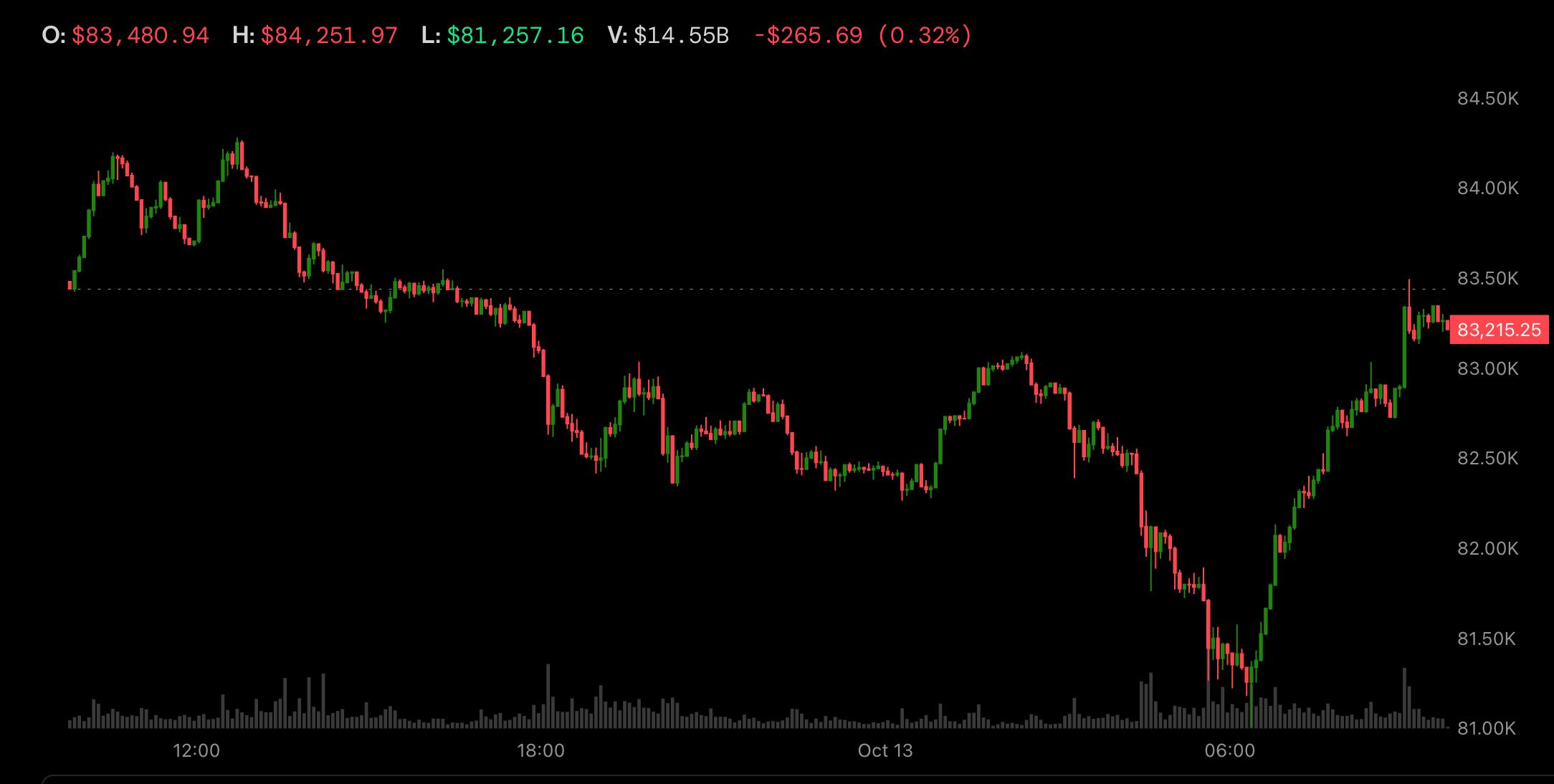
In March 2026, Bitcoin rebounded above $83,000 after a brief dip that had seen the price fall below that level. Analysts noted that the recovery was less about a sudden surge in investor enthusiasm and more about Bitcoin “decoupling” from falling Korean stock indices and Nasdaq futures. In other words, while traditional equities were under pressure, some traders moved capital into Bitcoin, lifting its price despite broader market weakness. This episode shows how cross‑asset dynamics can create short‑term price swings that directly affect miners.
What the price means for you as a miner
If you run a mining rig or participate in a cloud‑mining service, your earnings come from two sources: the block reward (newly minted bitcoins) and the transaction fees attached to the blocks you help secure. Both are paid in Bitcoin, so the fiat value of your income depends on the market price at the time you sell or convert the coins.
When Bitcoin’s price rises, the dollar (or euro, yen, etc.) value of each mined coin goes up, making mining more profitable even if your electricity cost and hardware efficiency stay the same. Conversely, a price drop can turn a previously profitable operation into a loss‑making one. Because the block reward halves roughly every four years—a process called the halving—price appreciation is a key driver that keeps mining economically viable over the long term.
For small miners, the price also influences the network difficulty. Difficulty adjusts roughly every two weeks to keep block times at ten minutes, based on the total hash power (computational power) in the network. If a price surge attracts many new miners, difficulty rises, making each individual miner’s share of the reward smaller. The opposite happens after a price slump.
How to evaluate mining as a source of passive income
Before you invest in hardware or a cloud‑mining contract, run a simple profitability check:
- Calculate your energy cost per kilowatt‑hour (kWh). This is the biggest variable expense for most miners.
- Estimate your hash rate (the speed at which your hardware can solve the cryptographic puzzles) and the associated power draw.
- Use an online mining calculator to plug in the current Bitcoin price, block reward, transaction fees, and network difficulty. The tool will output an estimated daily, monthly, and yearly profit in fiat.
- Factor in hardware depreciation and any pool fees if you join a mining pool (a group of miners that share rewards).
- Run the same calculation with a lower Bitcoin price (e.g., 20 % below current) to see how sensitive your earnings are to market swings.
If the projected profit stays positive even under a modest price decline, mining could be a viable source of passive income. If profitability disappears quickly when the price falls, you may want to consider alternatives such as staking, lending, or participating in green‑focused mining platforms that offset electricity costs with renewable energy credits.
What to check before you start mining
- Electricity rates: Look for the lowest reliable rate in your area or consider renewable options that can reduce cost.
- Hardware efficiency: Compare the hash‑per‑watt performance of different ASIC models; newer chips usually deliver more work for less energy.
- Location and cooling: Hot climates increase cooling needs, raising overall power consumption.
- Pool reputation: If you join a pool, verify its fee structure, payout method, and track record for uptime.
- Regulatory compliance: Ensure that local laws permit cryptocurrency mining and that you have any necessary permits.
- Risk tolerance: Accept that Bitcoin’s price can swing dramatically; never allocate more capital than you can afford to lose.
FAQ
Why does Bitcoin sometimes move opposite to stock markets?
Bitcoin is often treated as a non‑correlated asset. When equities face uncertainty, investors may look for alternatives, pushing Bitcoin up even as stocks fall. Conversely, risk‑off sentiment can lead both markets down.
What is the “halving” and why does it matter for miners?
Every 210,000 blocks (about four years), the block reward is cut in half. This reduces the number of new bitcoins entering circulation, which can increase scarcity and price pressure. Miners must rely more on transaction fees and on price appreciation to maintain profitability after a halving.
Can I mine Bitcoin profitably without owning the hardware?
Yes, cloud‑mining services let you rent hash power. However, you should scrutinize the provider’s contract terms, electricity sourcing, and the platform’s track record. Some green‑focused services, like EcoPool, aim to combine mining with renewable energy, which can lower the environmental impact and sometimes the cost.
How often does network difficulty change, and should I worry about it?
Difficulty is adjusted roughly every 2016 blocks, or about every two weeks, based on the total hash rate of the network. A higher difficulty means each miner’s share of the reward is smaller, but it also reflects a healthy, secure network. Monitoring difficulty helps you forecast future earnings.
This article references reporting from coindesk.com.





