
Are you curious about how exchange‑traded funds (ETFs) let you gain exposure to cryptocurrencies without holding the coins yourself? This article explains what crypto ETFs are, how they operate, and what you should consider before adding one to your portfolio.
The plain explanation
An exchange‑traded fund (ETF) is an investment vehicle that tracks the performance of an underlying asset or basket of assets. ETFs are bought and sold on traditional stock exchanges, just like ordinary stocks, which means you can trade them through a regular brokerage account.
When the underlying asset is a cryptocurrency, the product is called a crypto ETF. There are three common ways a crypto ETF can be structured:
- Physical (or “spot”) ETF: The fund actually purchases the cryptocurrency and holds it in custody. Each share of the ETF represents a proportional claim on the stored coins.
- Futures‑based ETF: Instead of buying the crypto directly, the fund holds futures contracts—agreements to buy or sell the cryptocurrency at a future date at a predetermined price. The fund’s value reflects the price of those contracts.
- Synthetic ETF: The fund uses swaps or other derivative contracts with a counter‑party (often a bank) that promises to deliver the crypto’s return. The fund itself may never own the cryptocurrency.
Because the ETF is listed on a regulated exchange, investors benefit from familiar trading mechanisms, such as limit orders, market hours, and standard settlement processes. The fund also typically provides a custodial solution, meaning a professional custodian safeguards the underlying assets, reducing the risk of loss from personal mishandling of private keys.
However, crypto ETFs inherit the volatility of the underlying digital assets, and additional risks arise from the ETF’s specific structure. For example, futures‑based ETFs can suffer from “contango,” where the price of the futures contract is higher than the spot price, eroding returns over time. Synthetic ETFs expose investors to counter‑party risk—the possibility that the swap partner cannot meet its obligations.
A real example
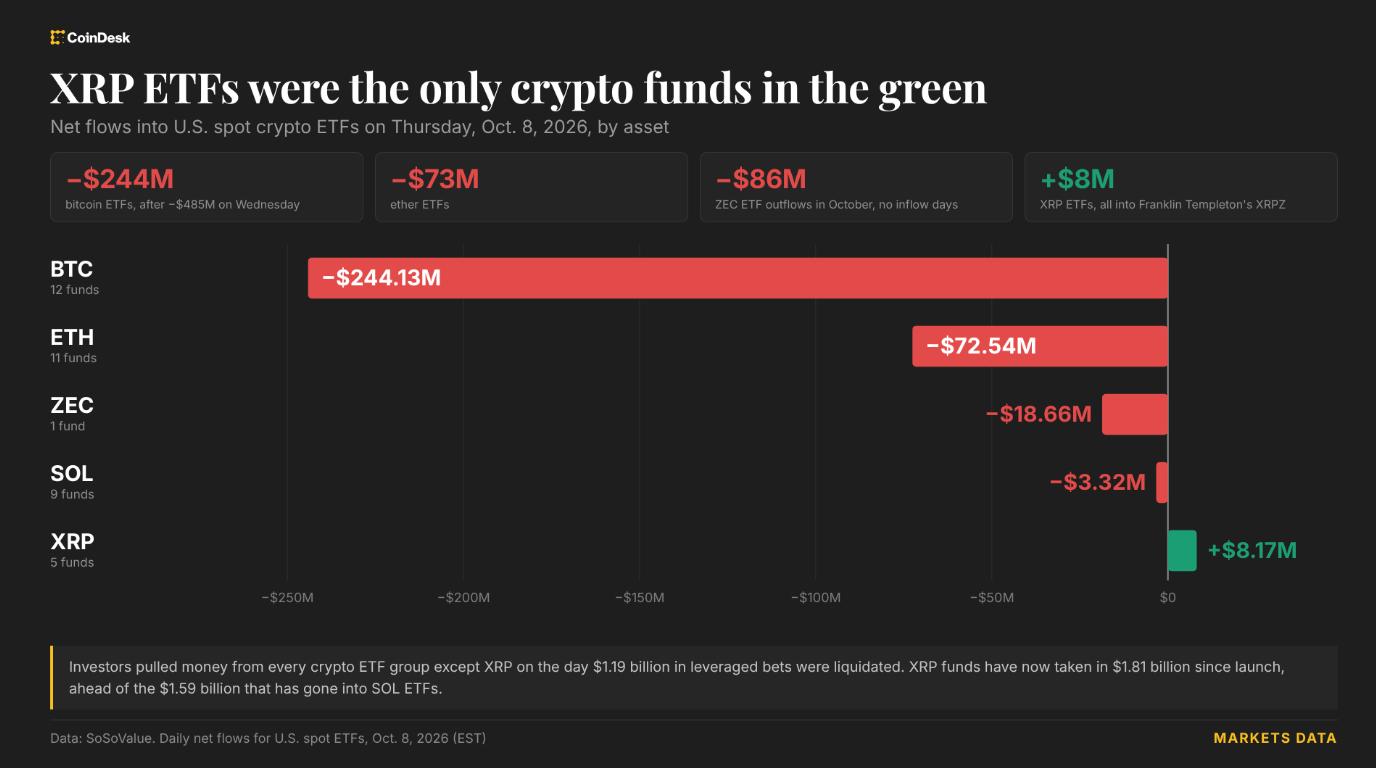
In a recent market snapshot, XRP‑linked ETFs were the only crypto funds showing positive net inflows while funds tied to Bitcoin, Ethereum, and Zcash recorded outflows. This illustrates how investor sentiment can shift dramatically between different crypto assets, and how ETF performance can diverge based on the underlying token’s market dynamics.
What it means for you
If you want exposure to a cryptocurrency but prefer the convenience of a traditional brokerage, a crypto ETF can be a practical entry point. You avoid the technical steps of setting up a wallet, managing private keys, and dealing with crypto exchanges. The ETF’s price updates in real time during market hours, and you can include it in tax‑advantaged accounts where your broker permits.
At the same time, you should remember that an ETF does not eliminate the inherent price swings of the crypto market. A surge in demand for an XRP ETF, for instance, can push its price above the spot value of XRP, while a drop in Bitcoin demand can cause a Bitcoin ETF to trade at a discount. Your returns will reflect these market forces as well as any structural costs built into the fund.
What to check / how to judge
- Structure type: Know whether the ETF holds the crypto directly, uses futures, or relies on swaps. Spot ETFs give you the pure price exposure, while futures and synthetic products add layers of cost and risk.
- Expense ratio: This is the annual fee the fund charges for management and custody. Crypto ETFs often have higher expense ratios than traditional equity ETFs.
- Liquidity: Look at the average daily trading volume and the bid‑ask spread. Low liquidity can make it expensive to enter or exit a position.
- Custodian and regulator: Verify that the fund’s custodian is reputable and that the ETF is registered with the appropriate securities regulator (e.g., the SEC in the United States).
- Tracking error: Compare the ETF’s price performance to the price of the underlying cryptocurrency. A large tracking error may indicate inefficiencies or hidden costs.
FAQ
Do crypto ETFs require me to own a digital wallet?
No. The ETF holds the cryptocurrency on your behalf, so you trade the ETF shares just like any other stock through your brokerage account.
Can I earn the same rewards that come from staking or mining?
Most crypto ETFs do not pass through staking rewards or mining yields to shareholders. Some funds may incorporate these earnings into the net asset value, but the effect is usually reflected in the share price rather than as a separate distribution.
Are crypto ETFs taxed the same as regular stocks?
In many jurisdictions, gains from selling ETF shares are treated as capital gains, similar to stocks. However, tax treatment can vary, especially if the fund holds futures or synthetic contracts. Consult a tax professional for advice specific to your situation.
What happens if the ETF’s custodian is hacked?
Custodial risk is real. Reputable custodians employ multi‑layer security, insurance, and cold‑storage solutions, but no system is infallible. Review the custodian’s security policies and any insurance coverage before investing.
This article references reporting from coindesk.com.





