Ever wonder why Bitcoin’s price can swing dramatically even when nothing seems to have changed on the blockchain itself? This article explains the macro‑economic forces that move Bitcoin, how they differ from the factors that affect mining profitability, and what you should consider when you’re trying to earn from crypto.
The basics: why Bitcoin isn’t isolated
Bitcoin (BTC) is a digital asset, but it trades on the same global markets as stocks, commodities, and currencies. Its price is set by supply and demand on exchanges, and demand is heavily influenced by investors’ perception of risk, liquidity, and the broader economic climate. When confidence in traditional markets wanes, some investors move money into Bitcoin as a “digital safe haven,” while others sell Bitcoin to cover losses elsewhere. This dual behavior means Bitcoin often mirrors the sentiment that drives equity indices, bond yields, and commodity prices.
Key terms you’ll hear:
- Risk sentiment: The overall mood of investors toward taking on risk. High risk sentiment fuels buying of growth assets like tech stocks and Bitcoin; low sentiment leads to flight to cash or stable assets.
- Liquidity: The ease with which an asset can be bought or sold without affecting its price. When markets tighten, large sell orders can push prices down quickly.
- Correlation: A statistical measure of how two assets move in relation to each other. A positive correlation means they tend to rise and fall together.
Real‑world illustration
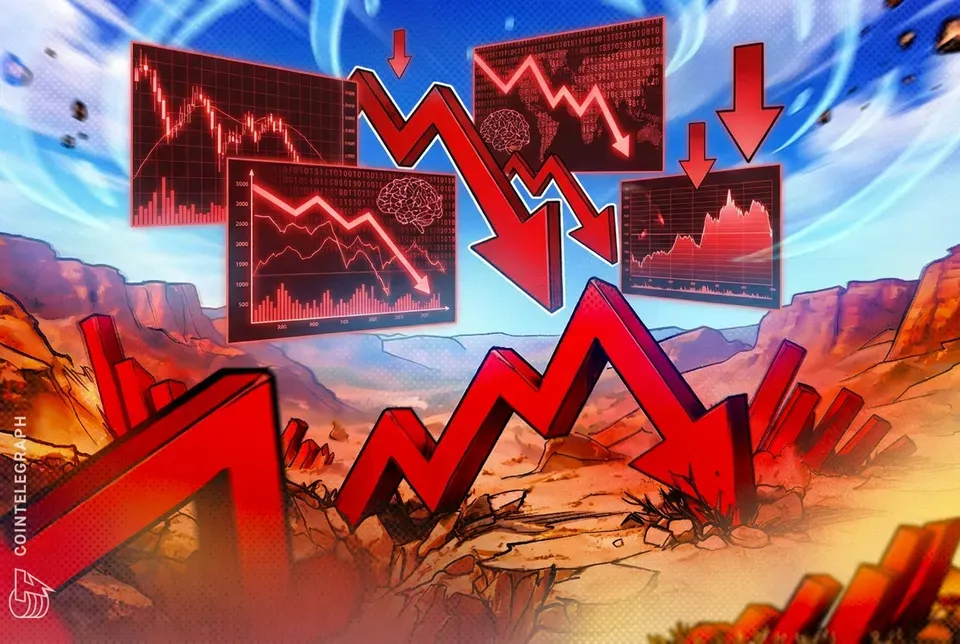
In October 2026, the South Korean KOSPI index fell 7.5% in a single day, closing at 5,554 points—the lowest level since early April. The sell‑off was driven by a steep decline in tech stocks such as SK Hynix and Samsung Electronics, as well as concerns over AI‑related debt and foreign capital outflows. That same day, Bitcoin slipped to $80,154, a level not seen since late September. The drop illustrated how a regional equity market shock can spill over into the crypto market, pulling Bitcoin down even though the cryptocurrency’s own fundamentals had not changed.
What this means for you
If you are looking to earn passive income through Bitcoin—whether by holding, staking (where available), or using cloud‑mining services—you need to be aware that your returns are tied not only to the network’s block rewards but also to market price fluctuations. A sharp dip in the broader market can erode the dollar value of any Bitcoin you hold, even if the number of coins you own stays the same. Conversely, a rally in equities or commodities can lift Bitcoin’s price, boosting the value of your holdings.
How to evaluate the risk
- Watch macro indicators: Keep an eye on major equity indices (e.g., S&P 500, KOSPI), commodity prices (oil, gold), and key economic data (inflation, interest‑rate decisions). Sudden moves often precede Bitcoin volatility.
- Check correlation trends: Tools like CryptoQuant or TradingView can show the historical correlation between Bitcoin and other assets. A rising correlation suggests Bitcoin is moving more in step with traditional markets.
- Assess liquidity: During market stress, Bitcoin’s order books can become thin, leading to larger price swings on relatively small trades. Look at exchange depth charts before making large moves.
- Diversify earnings sources: Combine holding Bitcoin with other crypto‑earning methods such as staking on proof‑of‑stake networks or participating in green‑focused mining pools. Diversification can smooth out earnings when Bitcoin’s price is volatile.
FAQ
Why does Bitcoin sometimes drop when stocks fall?
When investors need cash, they often sell the most liquid assets first. Bitcoin, being highly liquid, can be sold to raise funds, causing its price to fall alongside equities.
Is Bitcoin a safe haven during market crashes?
Bitcoin’s role as a safe haven is debated. In some crises, it has held value, but in many equity sell‑offs, it has moved down in tandem, as seen in the October 2026 KOSPI crash.
Can I protect my earnings from price swings?
Consider hedging strategies such as stablecoin conversion, using options on crypto exchanges, or maintaining a balanced portfolio that includes assets less correlated with Bitcoin.
Do macro events affect mining rewards?
Mining rewards are fixed by the protocol (e.g., the current 6.25 BTC block reward). However, the profitability of mining depends on Bitcoin’s market price, electricity costs, and hardware efficiency. A market dip reduces the dollar value of the reward, while a rally increases it.
This article references reporting from cointelegraph.com.