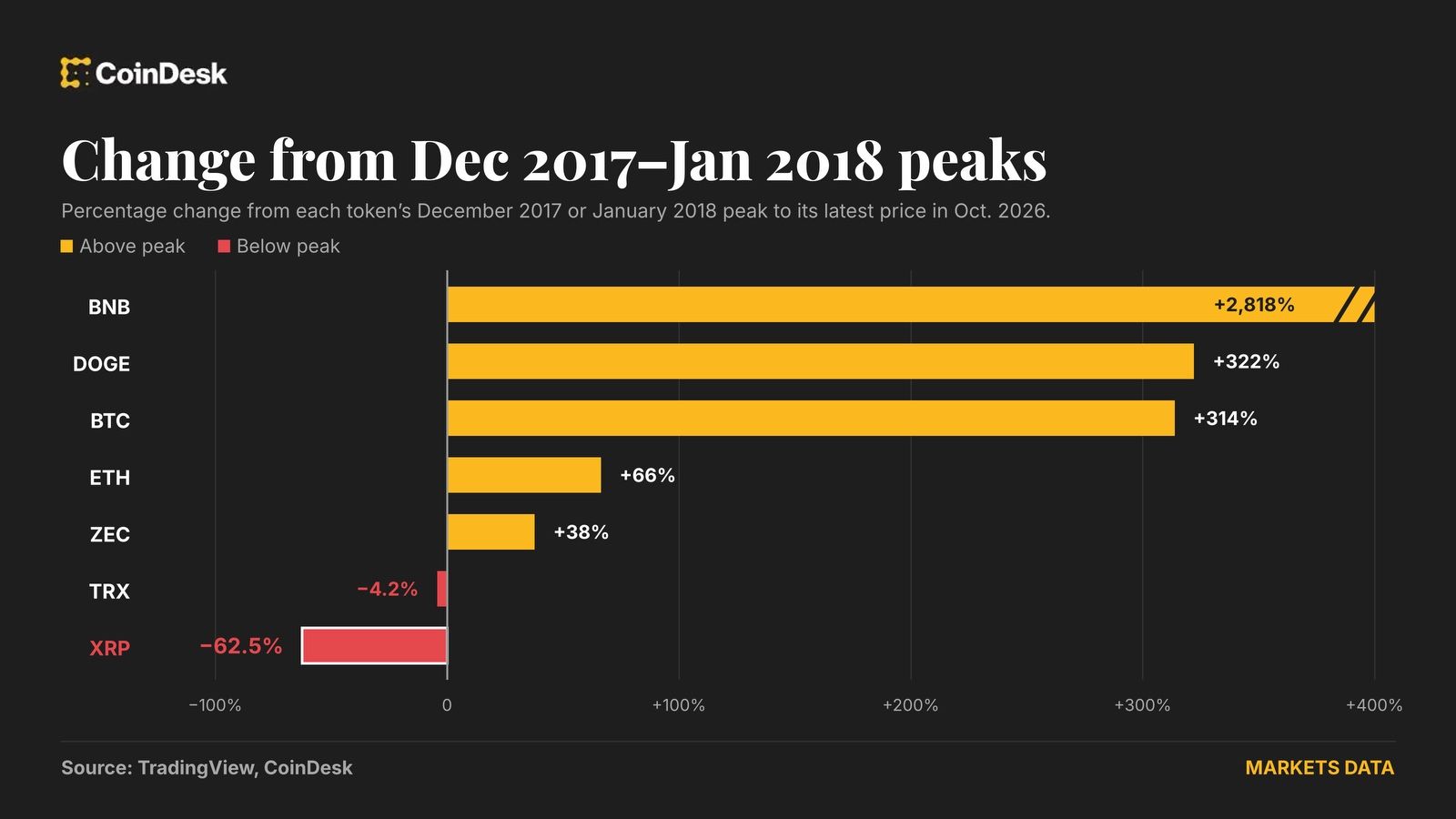
Ever wondered why holding Bitcoin or Ether often feels like a ticket to big gains, while XRP hasn’t delivered the same wealth? This article breaks down the key factors that drive price performance across cryptocurrencies and explains why XRP has lagged behind the market leaders.
Understanding Crypto Price Drivers
Cryptocurrency prices are not determined by a single element; they are the result of a mix of technical, economic, and social forces. Below are the most influential factors, explained in plain language.
Network Effect. The value of a blockchain grows as more people use it. More users mean more transactions, more developers, and more attention, which in turn attracts even more participants. Bitcoin benefits from being the first digital currency, and Ether enjoys a massive developer community building decentralized applications (dApps) on its platform.
Utility and Use Cases. A coin that solves a real problem tends to attract lasting demand. Bitcoin is often viewed as “digital gold,” a store of value against inflation. Ether powers smart contracts, enabling everything from DeFi (decentralized finance) to NFTs (non‑fungible tokens). XRP was designed primarily as a bridge currency for fast cross‑border payments, a niche that depends heavily on partnerships with banks and payment providers.
Supply Mechanics. How many coins exist and how new coins are introduced affect scarcity. Bitcoin has a hard cap of 21 million coins, creating a predictable scarcity that investors value. Ether’s supply is regulated by protocol upgrades that aim to balance inflation and security. XRP’s total supply was pre‑mined (100 billion), and a large portion is held by the issuing company, Ripple, which releases tokens over time. This ongoing release can dilute price appreciation if demand does not keep pace.
Regulatory Environment. Government actions can boost confidence or create uncertainty. Bitcoin and Ether have largely avoided direct bans, while XRP has faced high‑profile legal challenges, most notably the U.S. Securities and Exchange Commission (SEC) lawsuit alleging that XRP is an unregistered security. Legal uncertainty can deter institutional investors and limit price upside.
Market Liquidity and Trading Volume. Coins that trade on many exchanges with high daily volume can be bought and sold easily, reducing price volatility caused by large orders. Bitcoin and Ether dominate exchange listings and have deep order books. XRP, although widely listed, often experiences lower volume relative to its market cap, making large trades more likely to move the price.
Community and Media Attention. Social sentiment, influencer endorsement, and media coverage can create short‑term price spikes. Bitcoin and Ether receive the bulk of mainstream coverage, reinforcing their status as “blue‑chip” crypto assets. XRP’s media narrative has been mixed, with headlines frequently focusing on legal disputes rather than technological progress.
Real‑World Illustration: XRP’s Recent Performance
In a recent analysis titled “XRP has failed to make holders rich like Bitcoin and Ether. Here’s why,” the author highlighted the same factors above. The piece noted that while Bitcoin and Ether have repeatedly delivered multi‑digit percentage gains for long‑term holders, XRP’s price has remained relatively flat, especially after the SEC lawsuit intensified in 2023. The article used XRP’s market history as a concrete example of how regulatory risk, limited utility expansion, and supply dynamics can suppress returns.
What This Means for Your Online Earning Strategy
If you are looking to earn passive income or build a diversified crypto portfolio, understanding these drivers helps you choose assets with realistic upside potential. Coins with strong network effects and clear, expanding use cases—like Bitcoin and Ether—are more likely to appreciate over time, though they still carry risk. Assets with ongoing regulatory uncertainty or limited adoption, such as XRP, may offer lower growth prospects and could be better suited for short‑term trading rather than long‑term holding.
When you allocate funds to crypto‑based earning methods—whether staking, liquidity provision, or cloud mining—consider how the underlying asset’s fundamentals align with your risk tolerance and time horizon. A token that struggles to gain mainstream adoption may generate modest rewards but is unlikely to deliver the dramatic price gains that some investors hope for.
How to Evaluate a Cryptocurrency Before Investing
- Check the token’s supply model. Look for clear caps, emission schedules, and any large holdings that could be released.
- Assess real‑world utility. Ask whether the project solves a problem that users actually need.
- Review regulatory status. Search for pending lawsuits, government bans, or licensing requirements that could affect the token.
- Measure community activity. Active developer repositories, vibrant social media channels, and frequent updates signal ongoing interest.
- Analyze liquidity. Higher daily trading volume reduces the impact of large trades on price.
- Monitor media sentiment. Positive coverage often correlates with price inflows, but beware of hype cycles.
FAQ
Why does Bitcoin’s price tend to rise even though it doesn’t have many “use cases”?
Bitcoin’s primary appeal is as a store of value, similar to gold. Its scarcity (21 million cap) and first‑mover advantage create strong demand from investors seeking a hedge against inflation, which drives price appreciation.
Can XRP ever catch up to Bitcoin or Ether in terms of price growth?
It is possible if Ripple resolves regulatory issues, expands its network of banking partners, and demonstrates sustained demand for cross‑border payments. However, achieving the same level of network effect as Bitcoin or Ether would require significant ecosystem growth.
Is staking XRP a good way to earn passive income?
XRP does not support staking in the same way proof‑of‑stake networks like Ether do. Earnings would need to come from other activities such as liquidity provision on exchanges, which carries its own risks.
Should I avoid all tokens facing regulatory scrutiny?
Not necessarily. Some projects navigate legal challenges and emerge stronger, but each case should be evaluated individually. Consider the severity of the issue, the likelihood of a favorable outcome, and how the risk aligns with your investment goals.
This article references reporting from coindesk.com.