Ever wondered why the price of Bitcoin can swing wildly from one day to the next? This article explains the main forces that push Bitcoin’s price up or down, so you can understand the market better before you decide to earn or invest.
What actually determines Bitcoin’s price?
Bitcoin’s price is set by supply and demand on the open market, just like any other asset. Supply is fixed by the protocol: only 21 million bitcoins will ever exist, and new coins are created at a predictable rate through mining, a process where computers solve cryptographic puzzles to add blocks to the blockchain. Because the total supply is limited, price changes come mostly from shifts in demand.
Demand is influenced by several factors:
- Investor sentiment – optimism or fear among traders can cause rapid buying or selling.
- Regulatory news – announcements from governments or financial watchdogs can make participants rethink exposure.
- Macroeconomic conditions – changes in interest rates, inflation expectations, or movements in traditional markets (stocks, bonds, commodities) often spill over into crypto.
- Technology and network developments – upgrades to the Bitcoin protocol, security incidents, or new use‑cases can affect perceived value.
- Liquidity and exchange activity – the amount of Bitcoin available for trade on major exchanges and the size of order books shape how easily price can move.
When more people want to buy Bitcoin than sell it, the price climbs; when the opposite occurs, the price falls. Because Bitcoin trades 24/7 across many global platforms, these forces can act at any time, leading to the rapid price changes that catch headlines.
Real‑world illustration
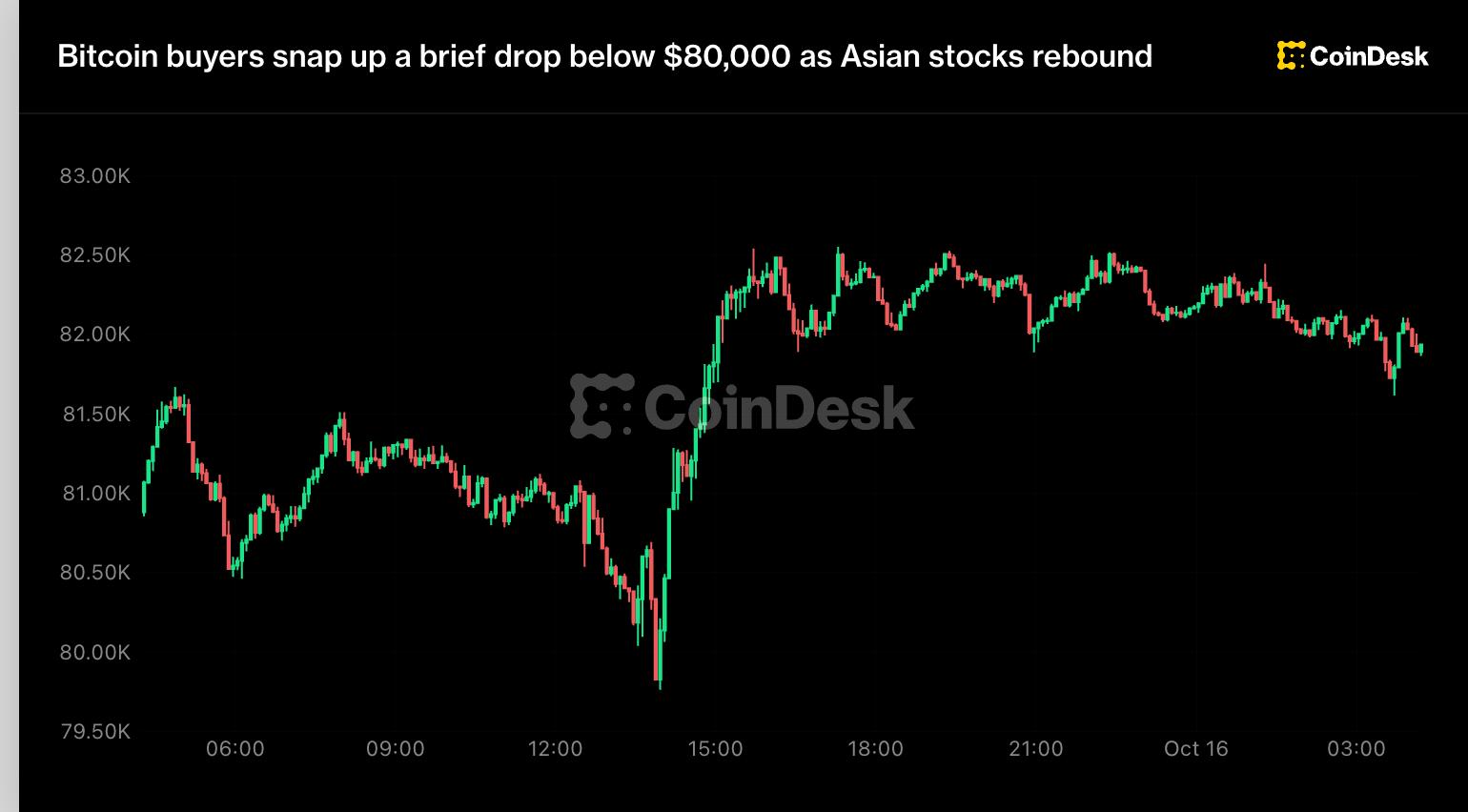
In March 2026, Bitcoin briefly slipped below the $80,000 mark before bouncing back to $82,000. The dip coincided with a rebound in Asian stock markets, while other assets such as copper and U.S. Treasury yields were falling and gold was rising. Traders interpreted the stock rally as a shift of capital away from risk‑on assets like Bitcoin, prompting a short‑term sell‑off. The subsequent recovery showed how quickly sentiment can reverse when other market signals change.
What this means for you
If you are looking to earn passive income through Bitcoin—whether by holding, staking (where available), or using cloud‑mining services—you should expect price volatility to affect the value of any returns. A rise in Bitcoin’s price can boost the dollar value of your holdings, while a drop can erode it, even if the underlying reward rate stays the same.
Understanding the drivers helps you decide how much exposure feels comfortable. For example, if you are risk‑averse, you might allocate only a small portion of your portfolio to Bitcoin and keep the rest in more stable assets. If you are comfortable with price swings, you can take advantage of dips to increase your position at a lower cost.
What to check before you dive in
- Market sentiment indicators – look at social media trends, news headlines, and fear‑and‑greed indexes to gauge overall mood.
- Regulatory environment – stay informed about any new rules from major jurisdictions, as they can trigger sharp moves.
- Liquidity on your chosen exchange – high trading volume and tight spreads reduce the risk of slippage when you buy or sell.
- Correlation with other assets – observe how Bitcoin moves relative to stocks, gold, or bonds; this can hint at broader market influences.
- Your own risk tolerance – set a clear budget for how much you can afford to lose without affecting your financial goals.
FAQ
Why does Bitcoin sometimes move in the opposite direction of stocks?
Bitcoin is often seen as a “digital gold” alternative, so when traditional equities decline due to risk aversion, investors may shift funds into Bitcoin, pushing its price up. Conversely, a strong equity rally can draw capital away, causing Bitcoin to dip.
Can I protect myself from Bitcoin’s price swings?
Using stablecoins or diversifying into other crypto assets can reduce exposure to Bitcoin’s volatility. Some platforms also offer hedging tools like futures contracts, though these involve additional risk and complexity.
Does mining profitability depend only on Bitcoin’s price?
No. Mining rewards are also affected by the network’s hash rate (total computing power) and the difficulty level, which adjusts roughly every two weeks to keep block times steady. Higher difficulty means you need more power to earn the same amount of Bitcoin, reducing profitability if the price does not rise proportionally.
Is it safe to keep Bitcoin on an exchange?
Exchanges can be vulnerable to hacks or regulatory actions. For long‑term holding, many experts recommend moving Bitcoin to a personal hardware wallet, where you control the private keys.
This article references reporting from coindesk.com.