Do you wonder how you can protect yourself from sudden spikes in the price of renting GPU power for AI projects? This article explains what on‑chain futures are, how they work, and why they matter for anyone who relies on cloud‑based AI computing.
What on‑chain futures are and how they work
A futures contract is an agreement to buy or sell an asset at a predetermined price on a future date. Traditional futures trade on centralized exchanges and settle in cash or the underlying commodity. An on‑chain futures contract does the same thing, but the agreement, margin, and settlement are all recorded on a blockchain.
Because the contract lives on a public ledger, anyone can create, trade, or settle it without needing a middle‑man. The blockchain enforces the rules: it holds the collateral (usually a stablecoin like USDC), tracks price data from an external source (called an oracle), and automatically settles the contract when it expires.
Key terms you’ll encounter:
- Perpetual futures: contracts with no fixed expiry date. They stay open as long as the trader maintains enough margin.
- Leverage: borrowing additional capital to increase exposure. 10× leverage means a $1,000 margin can control $10,000 worth of the underlying index.
- Oracle: a service that feeds real‑world price data to the blockchain. Accuracy is crucial because the contract’s value depends on it.
- Margin: collateral posted to cover potential losses. If the market moves against you, you may need to add more (a margin call) or the position will be liquidated.
On‑chain futures let traders speculate on price movements, but they also provide a tool for hedging. Hedging means taking a position that offsets the risk of an opposite exposure. For example, a company that rents GPUs can lock in a future price, protecting itself if rental rates rise.
Real‑world illustration: Injective’s Super Intelligence Compute Index
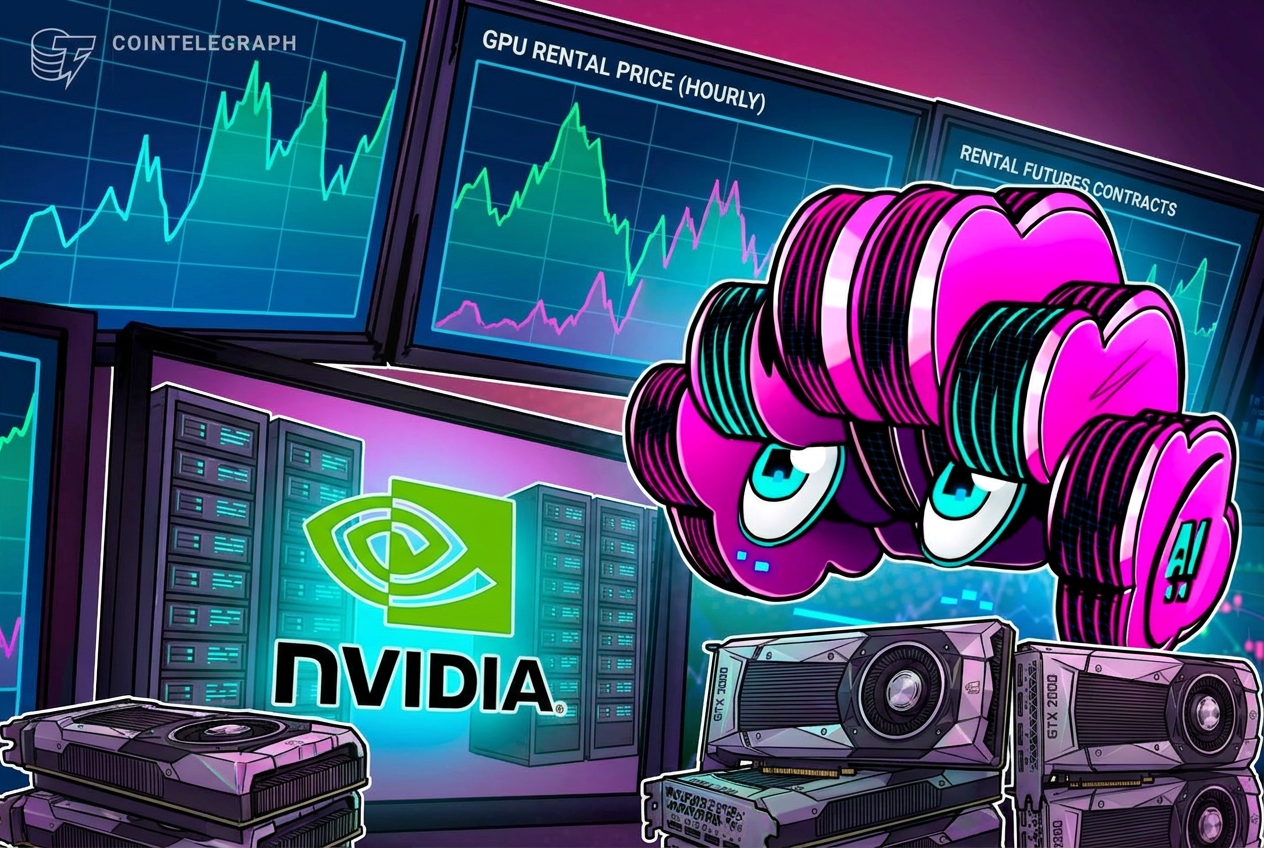
In October 2026, the layer‑1 blockchain Injective launched a perpetual futures market that tracks the rental prices of five Nvidia GPUs: H100, B200, H200, A100 and RTX 4090. The index, called the Super Intelligence Compute Index (SICI), pulls hourly rental data from compute marketplaces via the market‑data firm LO:TECH. The H100 carries a 40 % weight, the B200 25 %, and the remaining GPUs fill out the rest.
Traders can open long (bet the index will rise) or short (bet it will fall) positions using USDC as margin, with up to 10× leverage. The product expands on an earlier August 2025 market that only covered the H100, giving participants a broader view of AI compute costs.
What this means for you
If you develop AI models and rent GPU power from providers such as CoreWeave or Nebius, your operating expenses can swing dramatically with demand. By taking a short position on the SICI, you could offset higher rental bills: when rental prices rise, the short position loses value, but the increased compute cost is compensated by the profit from the futures contract.
Conversely, if you own a GPU rental business, a long position can protect you from falling rates. Should the market dip, the loss on your rental revenue is cushioned by gains on the futures contract.
Because the contracts settle in USDC, you don’t need to own the physical GPUs or even hold crypto beyond the margin. This lowers the barrier to entry for small developers and startups who want risk management tools without large capital outlays.
How to evaluate an on‑chain futures market
- Check the oracle source. Reliable price feeds are essential. Look for reputable data providers and see if the feed is audited.
- Assess liquidity. Higher trading volume means tighter spreads and less slippage when you enter or exit a position.
- Understand the margin and liquidation rules. Each platform defines how much collateral is required and at what price level a position will be automatically closed.
- Review the index composition. Know which GPUs are weighted and how often the index is rebalanced; this affects how closely the contract mirrors your actual cost exposure.
- Consider the platform’s security track record. On‑chain contracts are only as safe as the smart contracts that enforce them. Look for audits and community feedback.
FAQ
Can I use on‑chain futures if I only have a small budget? Yes. Because you post margin in a stablecoin, you can control a larger exposure with a modest amount of capital, but remember that leverage also amplifies losses.
What happens if the oracle provides incorrect price data? Most platforms include safeguards, such as fallback oracles and dispute mechanisms. However, a faulty feed can lead to incorrect settlements, so choose markets with audited oracles.
Do I need to own any Nvidia GPUs to trade the SICI? No. The contract is purely financial; you only need USDC for margin and a wallet that supports the Injective blockchain.
Is hedging with futures guaranteed to eliminate all risk? Hedging reduces price risk but does not remove other risks, such as platform security, liquidity shortages, or operational issues with your compute provider.
This article references reporting from cointelegraph.com.