Opening
Ever wondered how you can bet on the outcome of a sports game, a political election, or the price of Bitcoin without using a traditional bookmaker? This article explains what prediction markets are, how they operate, and what the regulatory landscape looks like for users in the United States.
The plain explanation
A prediction market is a platform where participants buy and sell contracts that pay out based on the result of a future event. Each contract represents a specific outcome, such as “Bitcoin will be above $30,000 at 3 pm UTC on Oct 30.” When the event resolves, the contract settles at a predefined value—typically $1 for a correct prediction and $0 for an incorrect one.
These contracts are essentially binary options: they have only two possible payouts. Traders treat the market price of a contract as the collective probability that the outcome will occur. For example, if a contract is trading at $0.60, the market collectively estimates a 60 % chance of that outcome.
Prediction markets can be built on traditional finance infrastructure or on blockchain networks. On a blockchain, contracts are often encoded as smart contracts, which automatically enforce settlement rules without a central intermediary. However, many jurisdictions, including the United States, treat these contracts as derivatives and subject them to commodity futures regulation.
The key terms you’ll encounter:
- CFTC – The Commodity Futures Trading Commission, the U.S. regulator that oversees futures, options, and other derivatives.
- Introducing broker – An entity that connects traders to a regulated exchange but does not hold client funds directly.
- Stablecoin – A cryptocurrency pegged to a stable asset, such as the US dollar, used to fund trades without price volatility.
A real example
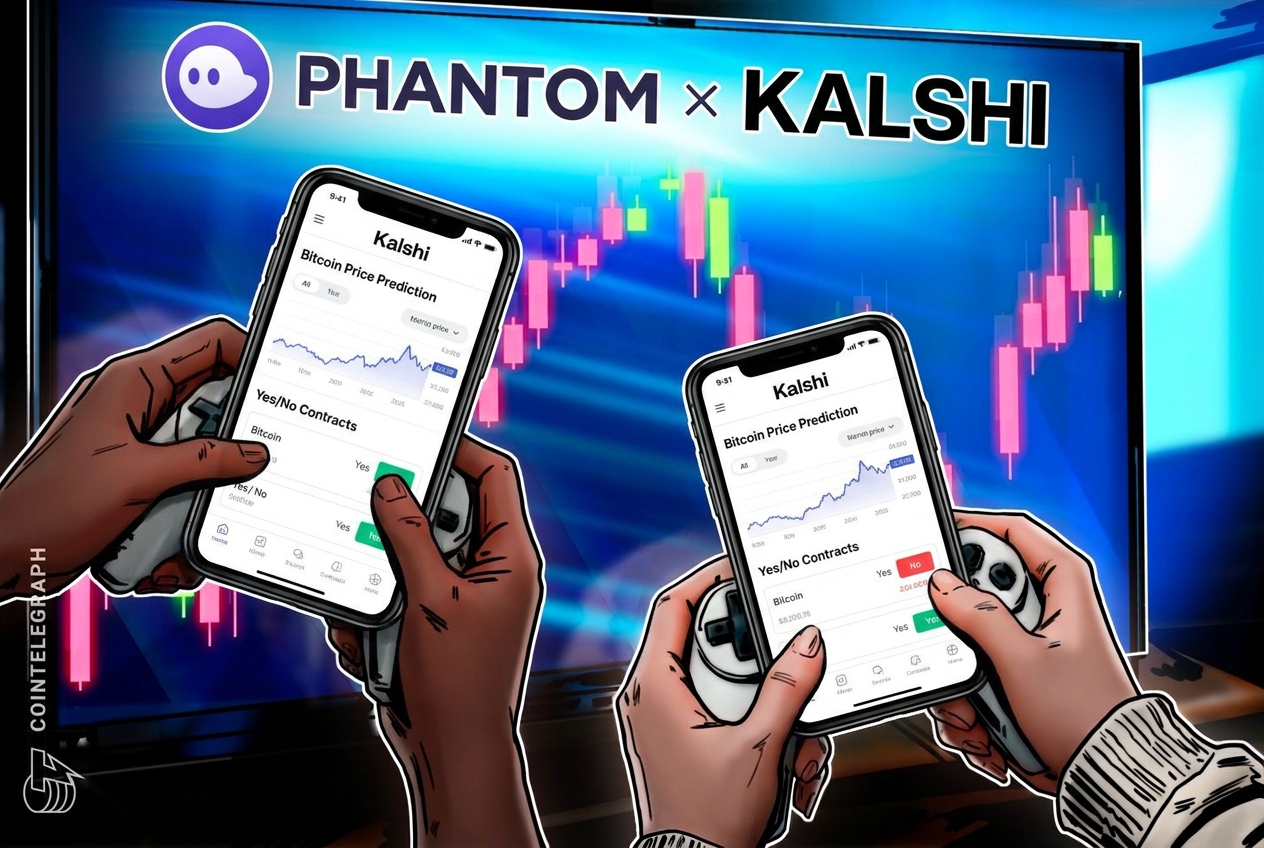
In October 2026, the crypto wallet provider Phantom added a “Predict” tab that lets eligible U.S. users trade event contracts powered by Kalshi, a CFTC‑regulated exchange. The integration offers short‑term Bitcoin price contracts that settle every 15 minutes, as well as sports and other real‑world events. Users fund trades with Phantom Cash, a stablecoin denominated in U.S. dollars.
Kalshi handles user verification, account management, and trade execution, while Phantom simply provides the user interface. The launch was possible because the CFTC granted Phantom “no‑action relief” in March 2026, allowing the wallet to connect users to regulated markets without registering as an introducing broker, provided it meets certain conditions.
What it means for you
If you are looking for a way to earn passive income or speculate on events, prediction markets offer a low‑barrier entry point. Because contracts settle quickly—sometimes every few minutes—you can see results and adjust positions fast. Using a stablecoin to fund trades eliminates the price risk that comes with volatile cryptocurrencies.
However, the regulatory environment adds layers of compliance. Only users who pass identity verification (KYC) can access the markets, and availability may vary by state due to differing gambling laws. The contracts are still high‑risk; you can lose the entire amount you stake on a single prediction.
What to check / how to judge
- Regulatory status: Verify that the platform is registered with or operating under the oversight of the CFTC or another relevant regulator.
- Verification process: Ensure the service performs thorough KYC and AML checks, which protect both you and the platform from illicit activity.
- Liquidity and volume: Higher trading volume usually means tighter spreads and more reliable price signals.
- Settlement mechanism: Confirm that contracts settle automatically via smart contracts or a trusted clearinghouse, reducing counterparty risk.
- Fee structure: Look for transparent fees for trade execution, funding, and withdrawals.
FAQ
Are prediction markets the same as gambling?
While both involve betting on outcomes, prediction markets are regulated as derivatives in the U.S. This means they must comply with CFTC rules, which differ from state gambling statutes. The focus is on price discovery rather than pure entertainment.
Can I use any cryptocurrency to fund my trades?
Most regulated platforms require a stablecoin or fiat‑equivalent token to avoid price volatility during settlement. Phantom, for example, uses its CASH stablecoin for this purpose.
What happens if a contract settles at $0.00?
If the outcome you predicted does not occur, the contract pays out $0, and you lose the amount you spent to purchase the contract. This loss is limited to the amount you invested in that specific contract.
Do I need to be an expert to succeed?
Understanding the underlying event and having a sense of probability helps, but many traders start with small positions to learn how market prices reflect collective expectations. Always trade only what you can afford to lose.
This article references reporting from cointelegraph.com.