
Ever wondered why the price of Bitcoin can swing dramatically from one day to the next? This article breaks down the main factors that influence Bitcoin’s market price and shows you how to think about them when you’re trying to earn or invest online.
What determines Bitcoin’s price?
Bitcoin’s price is set by supply and demand on a global network of exchanges. Supply is relatively fixed: the protocol caps the total number of bitcoins at 21 million, and new coins are released at a predictable rate through mining rewards that halve roughly every four years. Demand is far more fluid and depends on a mix of market sentiment, macro‑economic data, regulatory news, and the performance of related tech sectors.
When more people want to buy Bitcoin than sell it, the price rises; when more want to sell than buy, the price falls. Because Bitcoin trades 24/7 on dozens of platforms, even small shifts in buying or selling pressure can cause noticeable price changes.
Key drivers include:
- Investor sentiment: News about adoption, security breaches, or macro‑economic trends can sway public opinion quickly.
- Traditional market movements: Bitcoin often reacts to the performance of stock indices, especially tech‑heavy ones, as investors reallocate capital.
- Regulatory signals: Announcements from governments or central banks can either boost confidence or raise fear of restrictions.
- Currency and inflation data: When fiat currencies appear to lose purchasing power, some investors view Bitcoin as a hedge, increasing demand.
- Liquidity events: Large purchases or sales by institutions, “whales,” or exchange inflows/outflows can create short‑term spikes.
Real‑world illustration
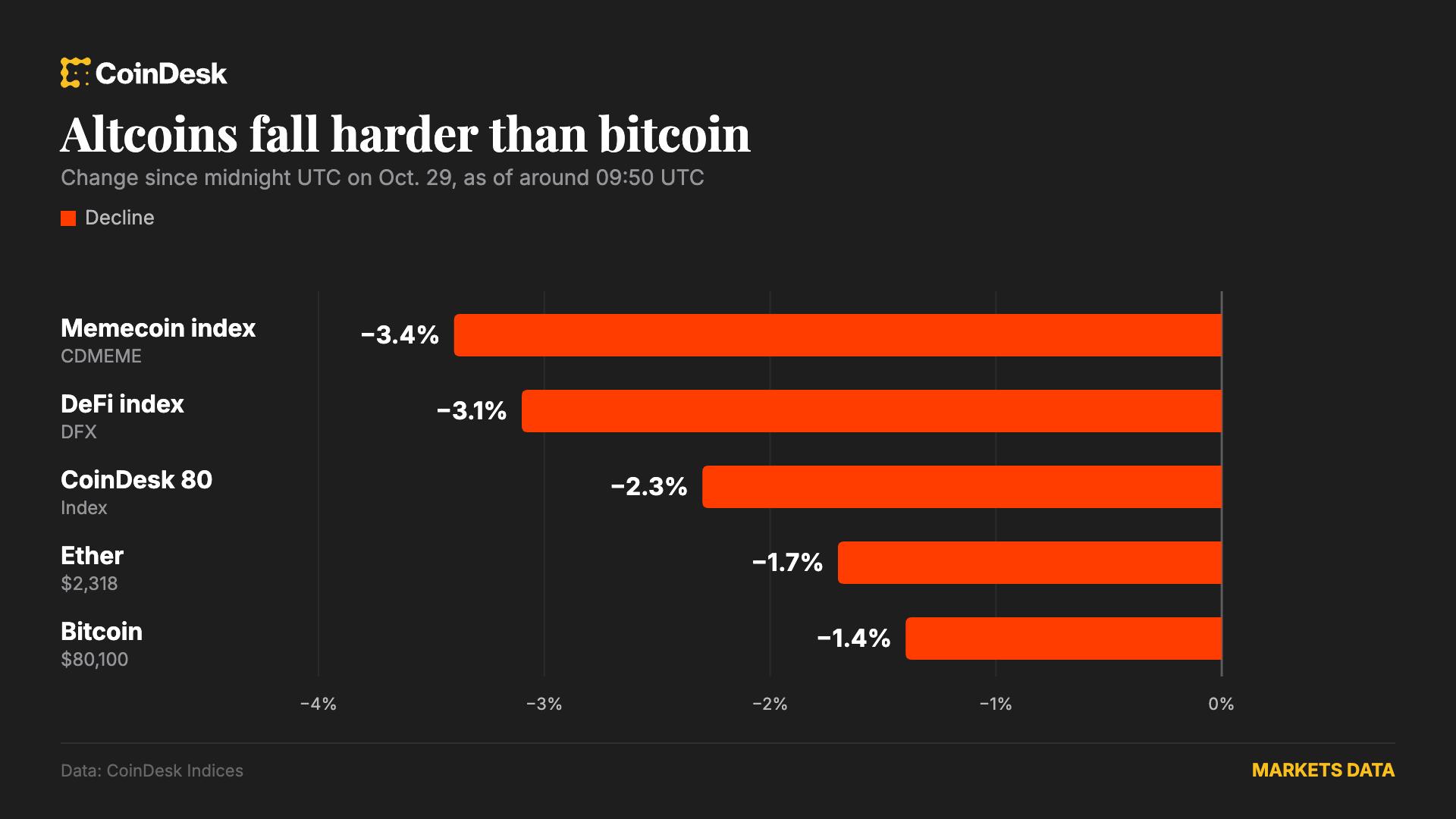
On a day in March 2026, Bitcoin slipped about 1.4 % to roughly $80,100. The dip coincided with disappointing earnings reports from Samsung and Alphabet, which weighed on broader tech stocks. At the same time, market participants awaited the U.S. Federal Reserve’s upcoming inflation gauge, adding uncertainty. This combination of weak tech earnings and pending macro data reduced risk appetite, prompting some investors to sell Bitcoin, which contributed to the price drop.
What it means for you
If you are looking to earn passive income through Bitcoin—whether by holding, staking on a platform that supports wrapped Bitcoin, or using it as collateral for a loan—understanding price drivers helps you manage risk. A sudden price dip can reduce the value of your holdings, affect collateral ratios, and change the real‑world purchasing power of any earnings you generate.
Conversely, price rises can increase the nominal value of your assets but may also attract more sellers looking to lock in profits, which could reverse the trend quickly. Being aware that Bitcoin’s price is linked to broader market sentiment means you should not rely solely on the cryptocurrency’s own fundamentals when planning your earnings strategy.
How to evaluate Bitcoin’s price outlook
Before you commit funds, consider the following checklist:
- Check macro‑economic indicators: Inflation reports, interest‑rate decisions, and major earnings releases can shift investor sentiment.
- Monitor tech‑sector health: Since many Bitcoin investors also hold tech stocks, strong or weak earnings in that sector often spill over to crypto.
- Track regulatory news: Look for statements from central banks, securities regulators, or major governments that could affect legality or taxation.
- Observe on‑chain metrics: Data such as hash rate, transaction volume, and wallet activity give insight into real usage versus speculative trading.
- Watch exchange order books: Large buy or sell walls can signal upcoming short‑term moves; sudden spikes in volume may indicate institutional participation.
FAQ
Why does Bitcoin sometimes move in the same direction as tech stocks?
Many Bitcoin investors are also active in the technology sector, and both assets are often viewed as growth‑oriented. When tech earnings disappoint, investors may sell riskier assets across the board, pulling Bitcoin down alongside stocks.
Can I protect my Bitcoin earnings from price drops?
Risk mitigation strategies include diversifying into other cryptocurrencies or stable assets, using stop‑loss orders on exchanges, or keeping a portion of earnings in fiat or stablecoins to preserve purchasing power.
Do macro‑economic reports really affect Bitcoin?
Yes. Inflation data, interest‑rate expectations, and employment figures shape the broader risk environment. Higher inflation can boost Bitcoin’s appeal as a hedge, while rising interest rates often make traditional assets more attractive, prompting a shift away from crypto.
Is Bitcoin a good hedge against inflation?
Bitcoin’s limited supply gives it theoretical hedge properties, but its price volatility means it can underperform during short‑term inflation spikes. It may serve as a long‑term store of value for some, but it should not be the sole inflation‑protection tool in a diversified portfolio.
This article references reporting from coindesk.com.





