
Wondering why a crypto exchange‑traded fund (ETF) can suddenly lose a large amount of money and what that means for someone trying to earn from crypto assets? This article explains how crypto ETFs are structured, why investors move money in and out, and how you can assess the risks before putting your capital into one.
The plain explanation
An exchange‑traded fund (ETF) is an investment vehicle that holds a basket of assets—such as stocks, bonds, or, in the case of crypto ETFs, digital currencies or futures contracts—and issues shares that trade on a traditional stock exchange. Each share represents a proportional claim on the underlying holdings. Because the shares are bought and sold on regulated exchanges, investors can gain exposure to crypto without owning the coins directly or managing private keys.
Crypto ETFs come in two main flavors:
- Physical (or “spot”) ETFs actually purchase and store the underlying cryptocurrency. The fund’s net asset value (NAV) tracks the price of the coin it holds.
- Futures‑based ETFs hold contracts that promise to buy or sell a cryptocurrency at a future date. Their performance follows the price of those contracts, which can diverge from the spot price due to contango or backwardation.
Investors buy ETF shares through brokerage accounts just like any other stock. The fund manager is responsible for custody, compliance, and reporting. In return, investors receive passive exposure—they benefit from price movements but do not earn staking rewards or mining yields directly.
Two key concepts shape an ETF’s health:
- Inflows and outflows: Money entering (inflows) or leaving (outflows) the fund. When more investors buy shares than sell, the fund grows; when the opposite occurs, the fund shrinks.
- Liquidity: The ease with which shares can be bought or sold without causing large price swings. Liquidity depends on both the ETF’s trading volume and the liquidity of the underlying assets.
A real example
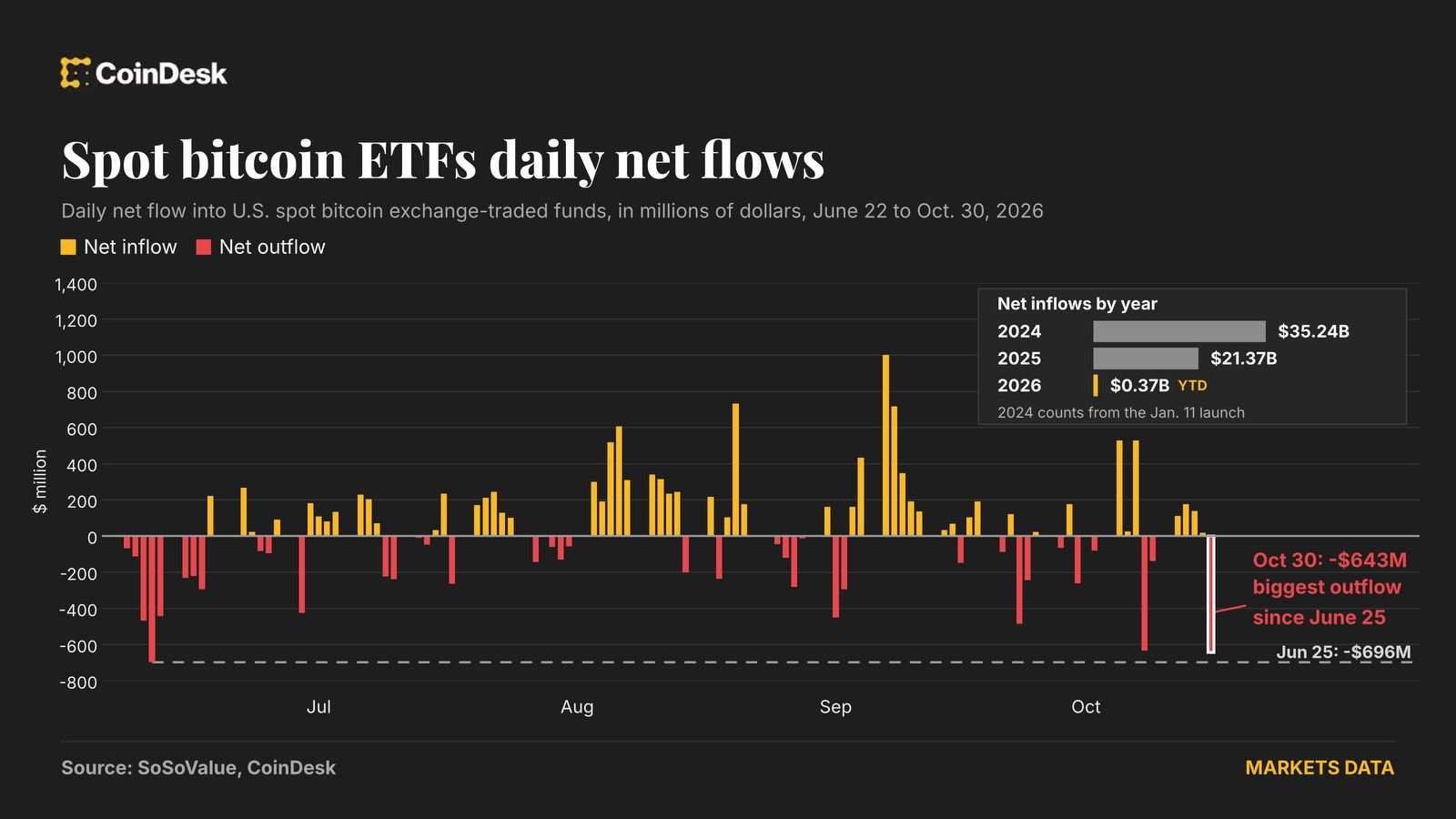
On the first trading day after the Binance hack, crypto ETFs experienced the biggest outflow since June 25, 2026, losing $643 million in investor capital. The hack sparked concerns about the security of the broader crypto ecosystem, prompting many holders to move cash out of exposure vehicles like ETFs and into safer assets or cash.
What it means for you
Large outflows can signal heightened risk perception among investors. For a small investor seeking passive income, this has several practical implications:
- Price impact: If many shareholders redeem their shares at once, the fund may need to sell underlying crypto quickly, potentially at unfavorable prices. This can depress the ETF’s market price relative to its NAV.
- Reduced liquidity: Lower trading volume can make it harder to enter or exit positions without paying a larger spread (the difference between bid and ask prices).
- Management fees: Outflows don’t reduce the expense ratio, but a smaller asset base means the same fee represents a larger proportion of your remaining investment.
These factors don’t automatically make an ETF a bad choice, but they highlight the importance of monitoring market sentiment and the fund’s structural resilience.
What to check / how to judge
Before committing capital to a crypto ETF, consider the following checklist:
- Fund type: Spot ETFs give you direct exposure to the coin’s price, while futures‑based ETFs may introduce roll‑over costs and tracking error.
- Liquidity metrics: Look at average daily trading volume and the bid‑ask spread. Higher volume and tighter spreads indicate easier entry and exit.
- Asset custody: Verify who holds the underlying crypto and whether they use audited, insured custodians.
- Expense ratio: Compare fees across similar ETFs; lower fees preserve more of your returns.
- Historical inflow/outflow patterns: Large, sudden outflows often follow security incidents or regulatory news. Consistent, moderate flows suggest stable investor confidence.
- Regulatory environment: Ensure the ETF is registered with the relevant securities authority and complies with local regulations.
FAQ
What’s the difference between a crypto ETF and buying the coin directly?
Buying a coin requires a wallet, private key management, and dealing with exchanges that may have limited security guarantees. A crypto ETF lets you trade shares on a regulated exchange, handling custody and compliance for you, but you don’t earn staking rewards or have direct control over the asset.
Can an ETF’s price ever be higher or lower than its NAV?
Yes. If demand for the ETF’s shares is strong, the market price can trade at a premium (higher than NAV). Conversely, heavy selling can create a discount (lower than NAV). This gap is usually small for highly liquid ETFs.
Do outflows affect my existing holdings?
Outflows themselves don’t change the value of shares you already own, but the fund may need to sell assets at less favorable prices to meet redemption requests, which can reduce the NAV and thus the value of each share.
Is a crypto ETF a safe way to earn passive income?
Crypto ETFs provide price exposure, not direct income. Any “passive” earnings come from price appreciation, not from staking or mining yields. The safety of the investment depends on the fund’s structure, fees, liquidity, and the overall market environment.
This article references reporting from coindesk.com.





