
Ever wondered how a Bitcoin transaction moves from one wallet to another, and why you should care about the details? This article explains the mechanics of Bitcoin transfers, the role of custodial services, and the key signals you can use to assess safety and transparency.
What a Bitcoin Transfer Actually Is
Bitcoin is a digital currency that lives on a public ledger called the blockchain. Every time you send Bitcoin, you create a transaction that tells the network: “move X amount of BTC from address A to address B.” The transaction is signed with a private key – a secret number only the owner of the sending address knows – which proves ownership without revealing the key itself.
Once signed, the transaction is broadcast to the network, where miners (or validators in proof‑of‑stake systems) collect pending transactions, verify that the sender has enough balance, and then bundle them into a new block. When the block is added to the blockchain, the transfer is considered confirmed. Each confirmation adds a new block on top, making it increasingly difficult to reverse the transaction.
There are two main types of wallets involved in transfers:
- Non‑custodial wallets – you hold the private keys yourself, typically through software like Electrum, hardware devices, or mobile apps. You have full control but also full responsibility for security.
- Custodial wallets – a third party (an exchange, broker, or service) holds the private keys on your behalf. You interact with the service via an account, and the provider manages the underlying blockchain activity.
Both wallet types generate public addresses – strings of letters and numbers – that receive and send Bitcoin. Because the blockchain is transparent, anyone can see the flow of funds between addresses, though they cannot see the identity behind those addresses unless it’s publicly linked.
Real‑World Illustration
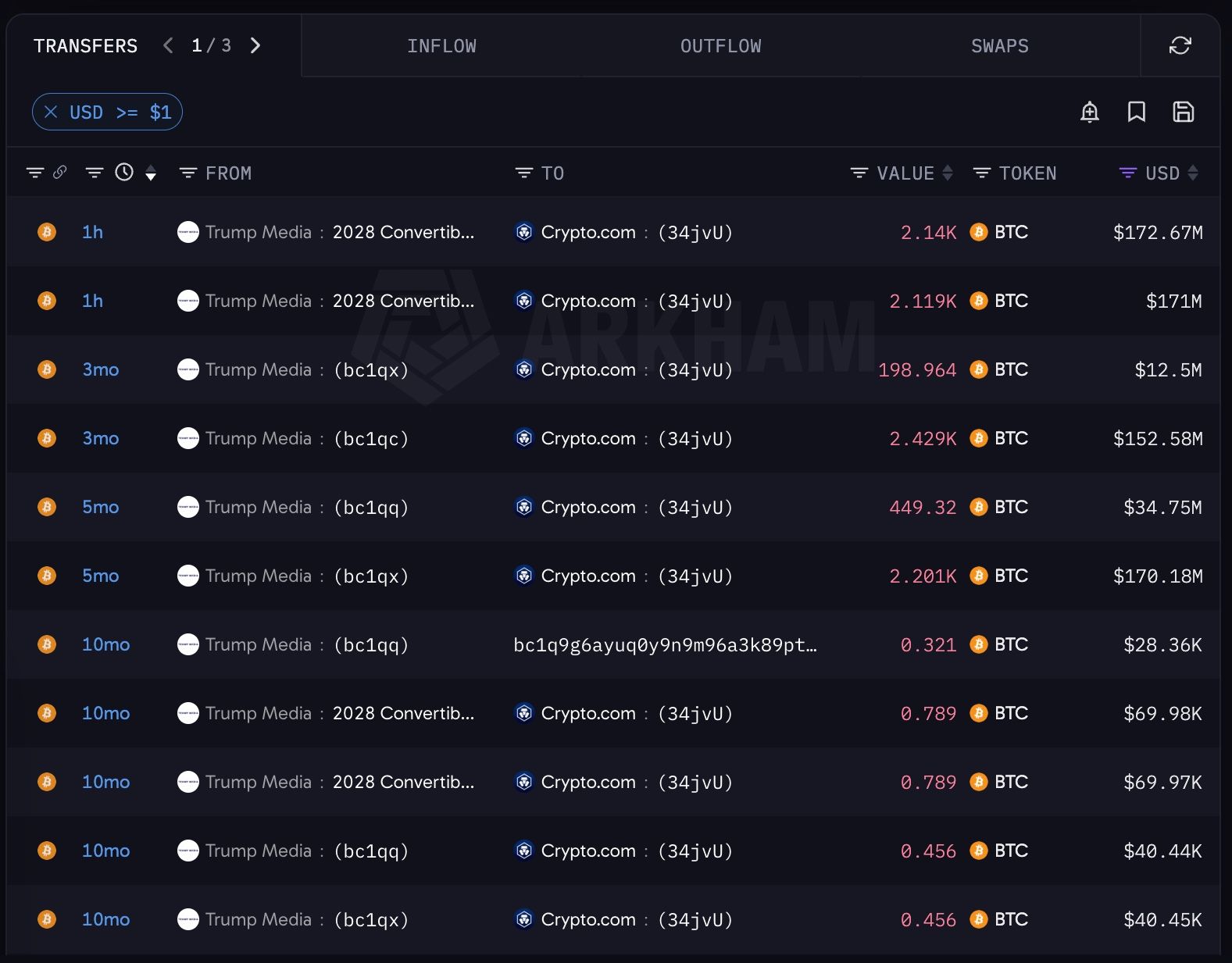
In March 2026, blockchain analytics firm Arkham reported that a wallet believed to be linked to Trump Media transferred roughly 342 million US dollars worth of Bitcoin to an address owned by Crypto.com, a major cryptocurrency exchange. The movement was visible on the public blockchain and traced through the transaction’s hash and destination address.
This example shows how large transfers can be monitored, even when the parties use custodial services. The sending address was associated with a corporate entity, while the receiving address belonged to a well‑known exchange that holds the private keys for its users.
What It Means for You
If you are looking to earn passive income through Bitcoin or any other crypto, understanding transfers helps you evaluate the safety of the platforms you use. When a service moves funds on-chain, you can verify that the transaction actually occurred, which adds a layer of transparency. However, custodial platforms can also obscure the ultimate ownership of the coins, meaning you rely on the provider’s internal controls and solvency.
For small investors, the key takeaway is that every transfer leaves a trace. You can use block explorers (such as blockchain.com or Blockstream) to check that deposits and withdrawals match the amounts shown in your account. If a platform claims to hold your funds but you cannot see any on-chain movement, that may be a red flag.
What to Check Before Trusting a Platform
- Custody model – Determine whether the service is custodial or non‑custodial. Non‑custodial options give you direct control of private keys, reducing counter‑party risk.
- On‑chain transparency – Look for platforms that publish transaction hashes for deposits and withdrawals. This lets you verify activity on the blockchain yourself.
- Audit and insurance – Reputable custodians often undergo third‑party audits and may hold insurance for digital assets. Check for publicly available audit reports.
- Regulatory compliance – Ensure the service complies with relevant financial regulations in its jurisdiction, which can provide additional consumer protections.
- Security history – Review any past security incidents or hacks. A clean track record is a positive sign, but also consider how the platform responded to any issues.
FAQ
How can I see a Bitcoin transaction on the blockchain?
Use a block explorer and enter the transaction hash or the sending/receiving address. The explorer will show the amount, timestamps, number of confirmations, and fee paid.
What is a confirmation, and why does it matter?
Each confirmation represents a new block added after your transaction. More confirmations mean the network has a stronger consensus that the transaction is valid and irreversible. For large amounts, waiting for 6 or more confirmations is common practice.
Are custodial wallets safe?
Custodial wallets can be safe if the provider follows strong security practices, undergoes audits, and holds appropriate insurance. However, you are trusting the provider with your private keys, so there is always some counter‑party risk.
Can I track where my Bitcoin goes after I withdraw it from an exchange?
Yes. Once the exchange sends the Bitcoin to your external address, the transaction appears on the blockchain. You can follow it using a block explorer, just like any other on-chain transfer.
This article references reporting from coindesk.com.





