
Are you wondering why long‑term price trends matter for your crypto‑earning strategy? This article explains what the 200‑week moving average is, how it works, and why it matters for anyone who mines or stakes Bitcoin.
What the 200‑Week Moving Average Is
A moving average (MA) smooths out price data by creating a constantly updated average over a set number of periods. The 200‑week moving average takes the closing price of Bitcoin for the last 200 weeks—roughly four years—and calculates their arithmetic mean. Each new week, the oldest week drops out of the calculation and the most recent week is added, so the line “moves” with the market.
Because it spans a long time frame, the 200‑week MA filters out short‑term volatility and shows the underlying, long‑term trend. When the price sits above this line, the market is generally considered to be in a bullish, or upward, phase. When the price falls below, it signals a potential bearish phase. Traders, investors, and miners use this indicator to gauge market sentiment and to time decisions.
How the 200‑Week MA Affects Mining Profitability
Mining profitability depends on two main variables: the revenue earned from newly minted coins and transaction fees, and the cost of running the hardware (electricity, equipment depreciation, etc.). Revenue is directly tied to the market price of Bitcoin. If the price stays above the 200‑week MA, it suggests a stable or rising long‑term price, which can help cover operating costs and make mining more attractive.
Conversely, a prolonged dip below the 200‑week MA often coincides with lower revenues. Miners may see reduced margins, leading some to shut down less efficient rigs, switch to more cost‑effective locations, or temporarily pause operations. The MA therefore acts as a benchmark for evaluating whether the current price environment supports sustainable mining.
Real‑World Example
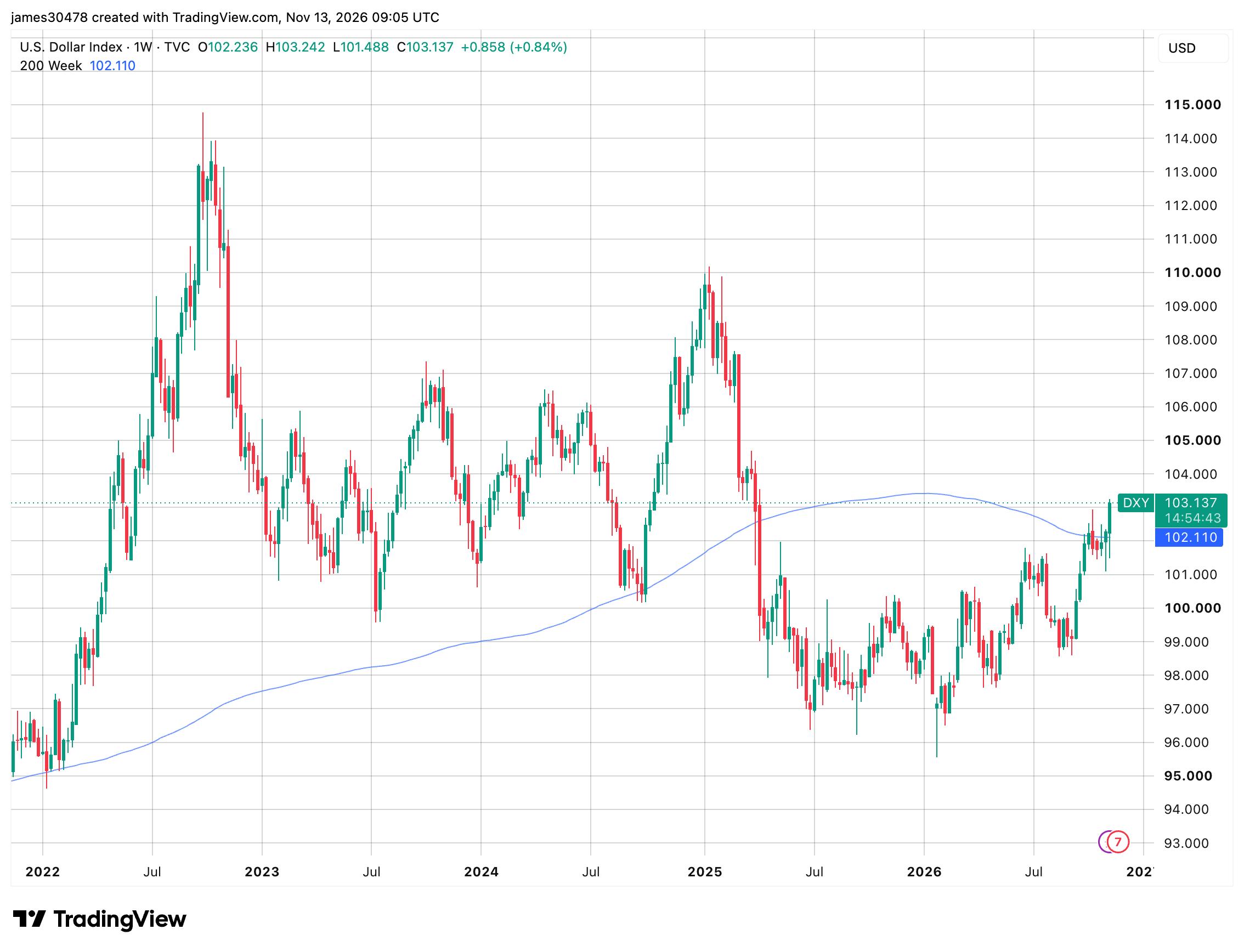
In March 2026, Bitcoin fell below its 200‑week moving average while the U.S. Dollar Index stayed above 103. The stronger dollar put pressure on risk assets, and Bitcoin’s price slipped under the long‑term trend line. This move signaled to many miners that the market was entering a weaker phase, prompting a reassessment of operational costs and, in some cases, a temporary reduction in hash power.
What It Means for You
If you are considering joining a mining pool, renting cloud hash power, or investing in mining hardware, the 200‑week MA can help you decide when to commit resources. A price above the MA suggests that the market may sustain higher revenues, making it a more favorable time to start or expand mining activities. If the price is below the MA, you might want to:
- Calculate your break‑even point more conservatively, assuming lower revenue.
- Explore locations with cheaper electricity to offset reduced earnings.
- Consider hybrid strategies, such as combining mining with staking or other passive‑income sources.
What to Check Before You Dive In
- Current price vs. 200‑week MA: Compare Bitcoin’s latest price to the long‑term average. Most charting platforms display this line automatically.
- Electricity cost: Your biggest expense. Ensure it remains low enough to keep you profitable even if the price dips.
- Hardware efficiency: Newer ASICs use less power per terahash, improving margins during bearish periods.
- Pool fees and payout structure: Lower fees can make a difference when revenue is tight.
- Risk tolerance: Understand that mining income can swing dramatically with price changes; only allocate money you can afford to lose.
FAQ
What does it mean when Bitcoin is “above” the 200‑week moving average?
It indicates that the current price is higher than the average price over the past four years, suggesting a long‑term upward trend.
How often is the 200‑week moving average updated?
The line updates weekly. Each new week’s closing price replaces the oldest week in the 200‑week window, keeping the average current.
Can I rely solely on the 200‑week MA to decide whether to mine?
No. While it provides a useful long‑term perspective, you should also consider electricity costs, hardware efficiency, pool fees, and your personal risk tolerance.
What if the price falls below the 200‑week MA but I still want to mine?
Focus on minimizing costs—use the most efficient hardware, locate operations where electricity is cheap, and keep an eye on break‑even calculations. Diversifying with other passive‑income methods can also help smooth earnings.
This article references reporting from coindesk.com.





