
Are you curious about borrowing money using your cryptocurrency holdings and how the risk of liquidation fits into that picture? This article explains the mechanics of crypto‑backed loans, what triggers a liquidation, and how you can manage the risk when you use digital assets as collateral.
What is a crypto‑backed loan?
A crypto‑backed loan is a form of borrowing where you pledge digital assets—such as Bitcoin or Ether—as collateral in exchange for fiat currency or stablecoins. The lender holds the collateral in a smart contract or custodial account and provides you with the loan amount, usually at a lower interest rate than an unsecured loan because the collateral reduces the lender’s risk.
Key terms:
- Collateral: The cryptocurrency you lock up to secure the loan.
- Loan‑to‑Value (LTV) ratio: The percentage of the collateral’s market value that the lender is willing to lend. An LTV of 50 % means you can borrow up to half the current value of your crypto.
- Liquidation threshold: The price point at which the collateral’s value falls enough that the lender can sell it to recover the loan. This threshold is usually set higher than the initial LTV to give a safety margin.
- Margin call: A request from the lender to add more collateral or repay part of the loan when the value of the pledged assets approaches the liquidation threshold.
How does the process work?
First, you select a lending platform and decide how much you want to borrow. The platform evaluates the current market price of the crypto you intend to use as collateral and calculates the maximum loan amount based on its LTV policy. Once you agree, the platform locks the collateral in a smart contract or custodial wallet. You receive the loan proceeds, and interest accrues over time.
If the market price of the collateral drops, the LTV ratio rises. When it reaches the liquidation threshold, the platform may automatically sell part or all of the collateral to protect itself from loss. Some platforms give borrowers a short window to add more crypto or repay part of the loan before triggering a sale.
Real‑world illustration
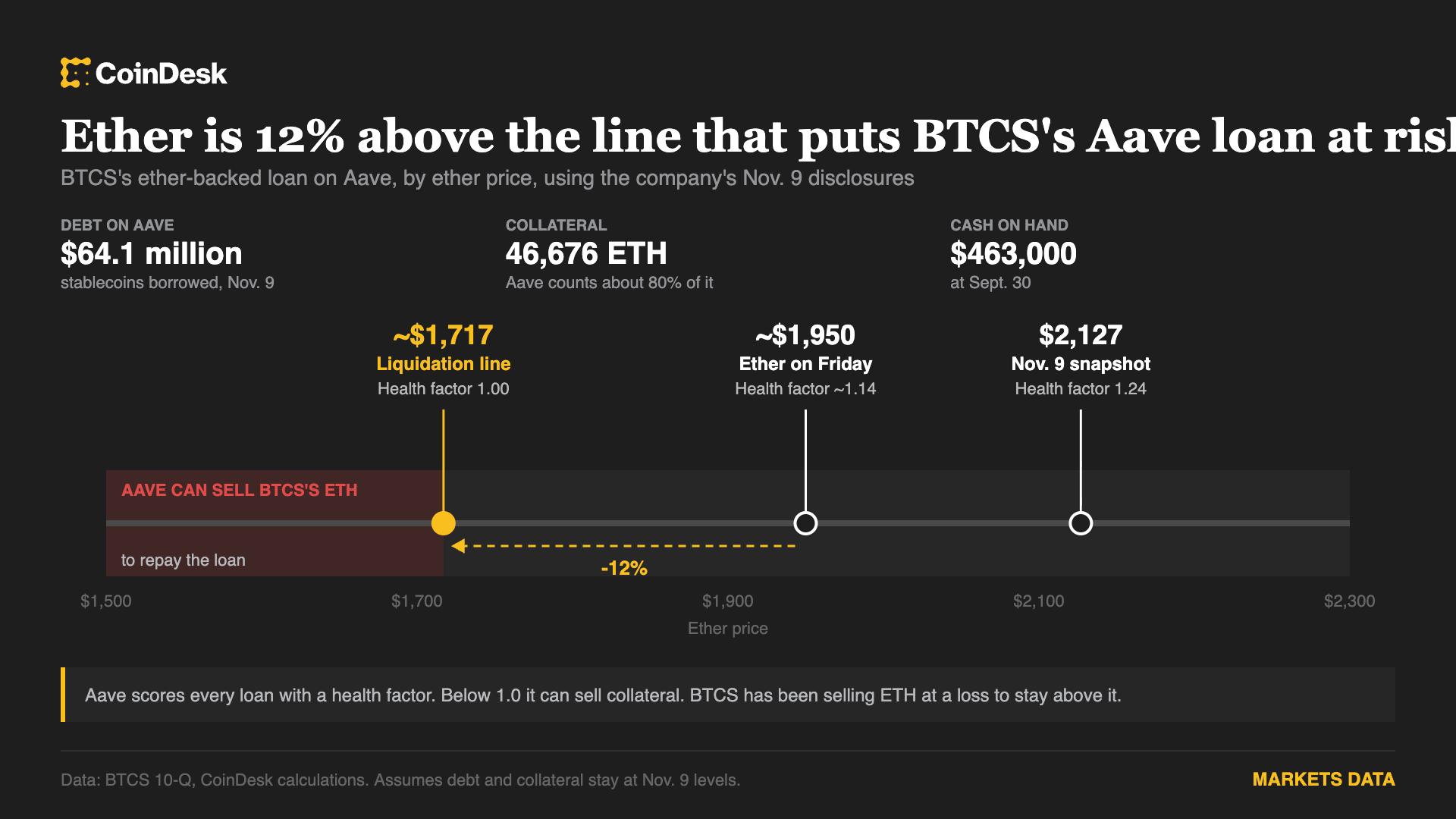
In March 2026, the Nasdaq‑listed treasury firm BTCS, which uses Ether (ETH) to back a $64 million loan from Aave, sold a portion of its 46,676 ETH holdings at a loss. The sale was necessary because the price of Ether fell toward the $1,700 level, a point at which the loan could have become eligible for liquidation. By reducing its exposure, BTCS kept the loan healthy and avoided an automatic liquidation event.
What this means for you
If you are considering a crypto‑backed loan, the primary risk is the volatility of the underlying asset. A sudden price drop can push your LTV ratio above the liquidation threshold, forcing a sale of your crypto at an unfavorable price. This can erode your holdings and, in extreme cases, leave you with a remaining debt if the collateral does not fully cover the loan.
To protect yourself, you should:
- Choose a conservative LTV—many borrowers opt for 30‑40 % rather than the maximum allowed.
- Monitor the market price of your collateral regularly.
- Maintain a buffer of extra crypto or cash to cover margin calls.
- Understand the platform’s liquidation policy, including any grace periods or partial liquidation options.
How to evaluate a lending platform
When assessing a service for a crypto‑backed loan, look at the following concrete factors:
- Collateral requirements: What LTV ratios are offered? Lower ratios mean less risk of liquidation.
- Interest rates and fees: Compare annual percentage rates (APRs) and any hidden fees such as origination or early‑repayment charges.
- Liquidation mechanism: Does the platform use automatic liquidation, or does it give borrowers a margin‑call window? Check the exact liquidation price relative to the market price.
- Custody model: Is the collateral held in a non‑custodial smart contract you control, or does the platform retain custody? Non‑custodial setups reduce counter‑party risk.
- Regulatory compliance: Verify that the platform follows relevant financial regulations in its jurisdiction, which can affect the security of your funds.
FAQ
What happens if the collateral’s value falls below the loan amount?
If the collateral’s market value drops below the outstanding loan balance, the platform will typically liquidate the collateral to recover the debt. If the sale does not cover the full amount, you may be liable for the shortfall.
Can I repay the loan early to avoid liquidation?
Yes. Most platforms allow early repayment without penalty, though some may charge a small fee. Paying down the loan reduces the LTV and gives you more leeway if prices move against you.
Is it safer to use stablecoins as collateral?
Stablecoins are designed to maintain a near‑constant value, so they reduce price volatility risk. However, they carry their own risks, such as de‑pegging or smart‑contract vulnerabilities, so evaluate the specific stablecoin’s track record.
Do I need to pay taxes on the loan proceeds?
In many jurisdictions, borrowing itself is not a taxable event because you are receiving cash, not selling the crypto. However, if the loan is later forgiven or if you sell collateral, tax obligations may arise. Consult a tax professional for advice specific to your location.
This article references reporting from coindesk.com.





