
Wondering why the price of Bitcoin matters if you’re interested in earning crypto through mining? This article explains how Bitcoin’s market value directly impacts mining rewards, costs, and overall profitability, so you can make informed decisions about joining the mining ecosystem.
What mining profitability really means
Mining profitability is the net gain a miner earns after subtracting all expenses from the revenue generated by mining blocks. Revenue comes from two sources: the block reward (newly minted bitcoins) and transaction fees paid by users who want their transactions confirmed quickly. The block reward is currently 6.25 BTC per block and is halved roughly every four years, reducing the supply of new coins.
Costs fall into two main categories: hardware and electricity. Hardware includes the purchase price of ASIC (Application‑Specific Integrated Circuit) miners, their maintenance, and depreciation over time. Electricity is usually the largest ongoing expense, as mining rigs run 24/7 and consume large amounts of power.
Because the block reward is paid in Bitcoin, the dollar (or any fiat) value of that reward changes whenever Bitcoin’s price moves. If the price rises, the same 6.25 BTC is worth more in fiat terms, boosting revenue. If the price falls, revenue drops, potentially turning a profitable operation into a loss‑making one, even if the miner’s hash rate and electricity consumption stay the same.
Real‑world illustration
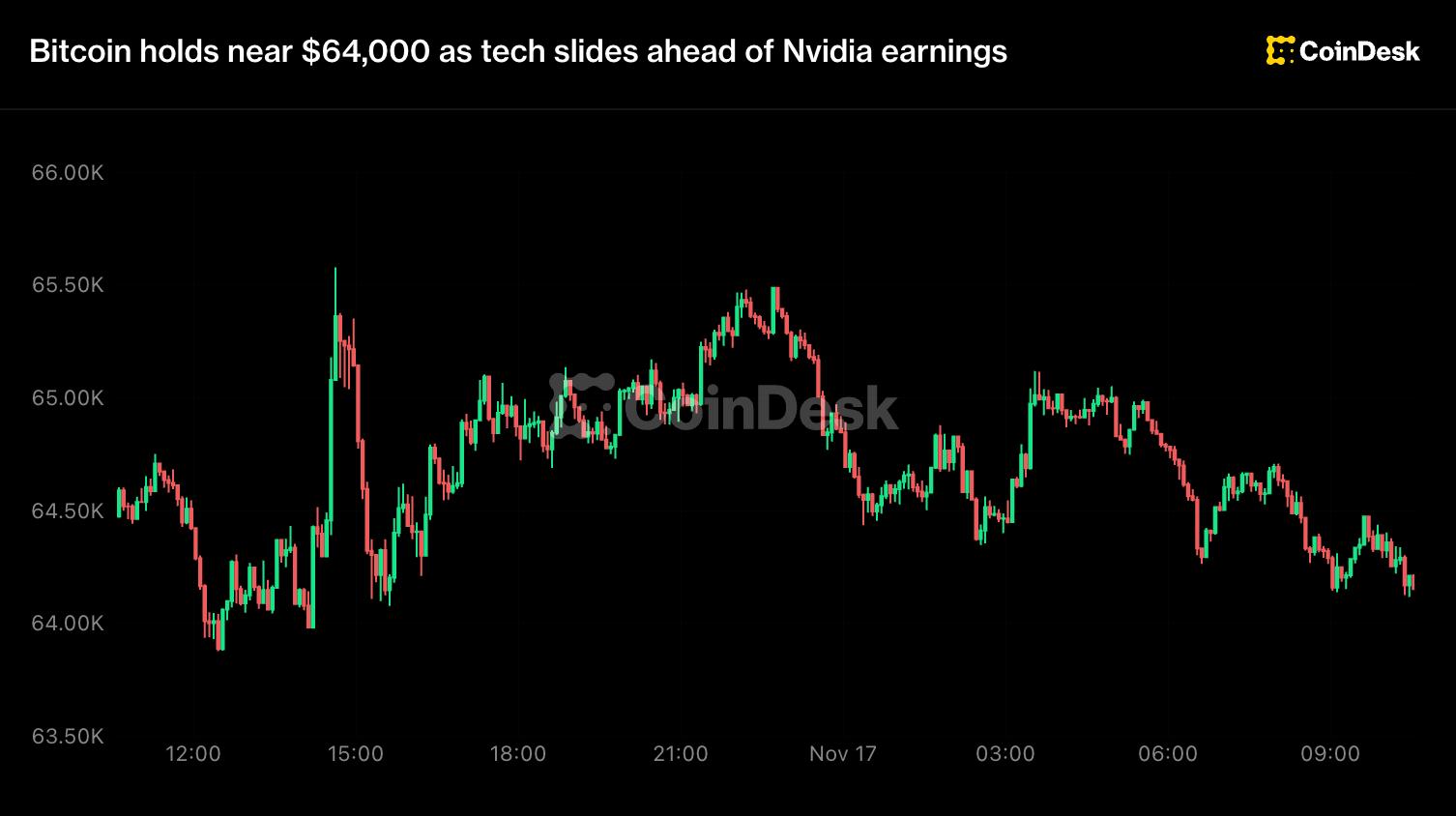
In March 2026, Bitcoin held near $64,000 while the broader tech sector slid ahead of Nvidia’s earnings report. The price stability at that level meant that miners who had invested in hardware during the 2023‑2024 boom could calculate their earnings based on a relatively high BTC price. At $64,000 per BTC, a single block’s reward of 6.25 BTC translates to about $400,000 in revenue, before subtracting electricity and other costs. If the price had dropped to $40,000, the same block would generate only $250,000, dramatically tightening profit margins.
What this means for you
If you are considering mining as a source of passive income, the key takeaway is that your earnings are highly sensitive to Bitcoin’s market price. A rise in price can quickly make a marginal operation profitable, while a decline can erode margins and even lead to negative cash flow. Therefore, you should not base your decision solely on the current price; instead, assess a range of possible price scenarios and how they would affect your bottom line.
How to evaluate a mining opportunity
- Break‑even price: Calculate the Bitcoin price at which your revenue equals your total costs. Most mining calculators let you input hardware specs, electricity rates, and pool fees to find this figure.
- Electricity cost: Compare your local electricity price (cents per kWh) to the global average. Lower rates improve profitability and give you a larger buffer against price drops.
- Hardware efficiency: Newer ASIC models provide more hashes per watt, reducing electricity consumption per unit of work. Check the hash rate (measured in terahashes per second, TH/s) and power draw (watts) of any equipment you consider.
- Pool fees and payout structure: Mining pools combine the hash power of many miners and share rewards. Fees typically range from 1 % to 3 %; lower fees increase net earnings.
- Regulatory environment: Some jurisdictions impose taxes or restrictions on mining. Ensure you understand local regulations to avoid unexpected costs.
FAQ
Why does a higher Bitcoin price improve my mining earnings?
The block reward is paid in Bitcoin. When the fiat value of Bitcoin rises, each rewarded bitcoin is worth more in your local currency, increasing the revenue side of the profit equation.
Can I still profit if Bitcoin’s price falls?
Profitability depends on your break‑even price. If your operational costs are low enough—thanks to cheap electricity or highly efficient hardware—you may remain profitable even at lower Bitcoin prices. Running a profitability calculator with different price scenarios helps you understand the risk.
How often does the block reward change?
Bitcoin’s block reward is halved approximately every 210,000 blocks, or roughly every four years. The most recent halving occurred in 2020, reducing the reward from 12.5 BTC to 6.25 BTC. Future halvings will further cut the number of new bitcoins entering circulation, which can affect price dynamics and mining incentives.
Is joining a mining pool better than solo mining?
Mining pools provide a steadier stream of smaller payouts by sharing the work among many participants. Solo mining can yield the full block reward, but the probability of finding a block on your own is low unless you control a large share of the network’s total hash rate. For most small to medium miners, pools offer more predictable income.
This article references reporting from coindesk.com.





