Are you wondering how you can earn a modest return on your stablecoins without converting them back into fiat? This article explains the mechanics behind tokenized money market funds, how they differ from traditional funds, and what you should consider before allocating your digital assets.
What is a tokenized money market fund?
A money market fund is an investment vehicle that pools cash to buy short‑term, high‑quality debt such as government Treasury bills, commercial paper, and high‑grade bank deposits. The goal is to preserve capital while providing liquidity and a small yield, usually expressed as a seven‑day annualized rate.
When a fund is tokenized, each share is represented by a digital token on a blockchain. The token acts like a digital certificate of ownership, allowing investors to subscribe (buy) or redeem (sell) shares directly on the blockchain. Because the token exists on a distributed ledger, transactions can settle instantly and 24/7, unlike traditional fund operations that rely on banking hours and paper processes.
Key terms:
- Stablecoin: A cryptocurrency pegged to a stable asset, often a fiat currency, designed to maintain a near‑constant value.
- Custodian: The entity that holds the underlying assets of the fund on behalf of investors.
- Tokenization agent: The party that creates and manages the digital tokens representing fund shares.
- Yield: The annualized return earned by the fund, usually calculated on a seven‑day average for money market funds.
How does a tokenized fund actually work?
When you decide to invest, you send a supported stablecoin to the fund’s smart contract or designated address. The fund’s custodian then uses those assets to purchase short‑term securities. In return, the fund mints a corresponding number of tokens and sends them to your wallet. The token’s value tracks the net asset value (NAV) of the fund, which reflects the underlying securities plus any accrued interest, minus fees.
Redemption works in reverse: you send the tokens back to the fund, the smart contract burns (destroys) them, and the custodian returns the equivalent amount of stablecoins to your wallet, typically within a few minutes. Because the process is automated, investors can move in and out of the fund at any time, providing true liquidity.
Fees are usually lower than in traditional funds because blockchain automation reduces administrative overhead. However, you may still encounter custody fees, tokenization fees, and a small spread between the fund’s NAV and the token price during high market volatility.
Real‑world illustration
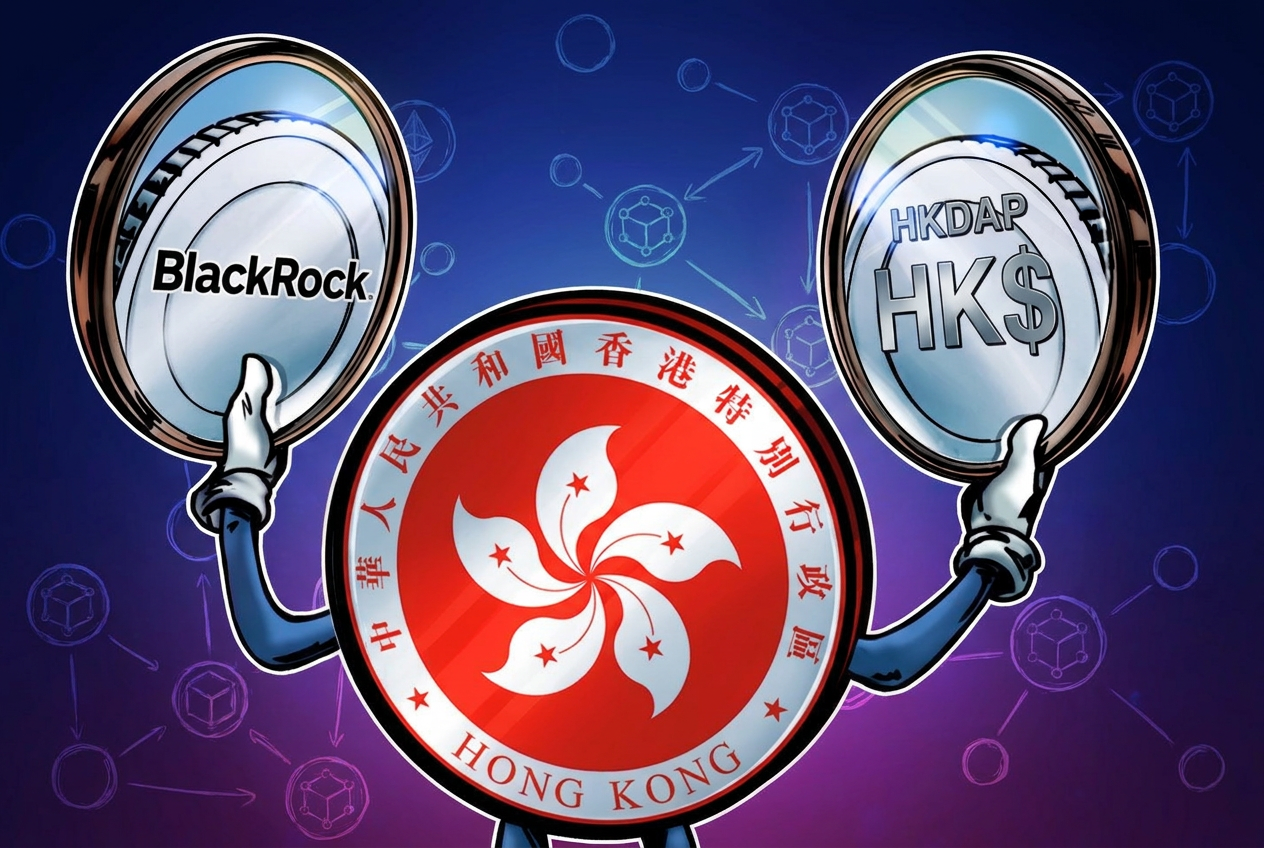
In November 2026, global asset manager BlackRock launched the HKD Digital Liquidity Fund in Hong Kong, its first tokenized money market fund in the Asia‑Pacific region. The fund started with roughly $100 million in assets, with Standard Chartered and Ant International acting as seed investors.
Investors in the fund can subscribe and redeem shares using HKDAP, a Hong Kong‑dollar‑pegged stablecoin issued by Anchorpoint Financial. The fund invests primarily in short‑term government securities and high‑grade bank deposits, reporting a net seven‑day yield of 2.03% at launch. Retail investors, however, are limited to using conventional Hong Kong dollars, while professional investors can stay fully within the stablecoin ecosystem.
This example shows how a major financial institution can bridge traditional money market investing with the efficiency of blockchain, offering a stable, low‑risk return to stablecoin holders without the need for fiat conversion.
What this means for you
If you hold stablecoins such as USDC, HKDAP, or other fiat‑backed tokens, a tokenized money market fund gives you a way to earn interest that is typically higher than the rates offered by most crypto lending platforms, while keeping your capital in a low‑risk, highly liquid form. Because the underlying assets are short‑term government or bank instruments, the credit risk is minimal compared to more volatile crypto investments.
Moreover, the 24/7 settlement means you are not forced to wait for banking hours to move your money. This can be especially useful for businesses that need to manage cash flow across time zones or for individual investors who want immediate access to their funds.
What to check before investing
- Regulatory status: Verify that the fund and the stablecoin it accepts are licensed in your jurisdiction.
- Custodian reputation: The custodian should be a well‑established financial institution with strong safeguards for the underlying assets.
- Tokenization agent credibility: Ensure the entity creating the tokens follows transparent audit and reporting practices.
- Yield vs. risk: Compare the fund’s yield to the prevailing rates of comparable traditional money market funds and consider any fees that could erode returns.
- Liquidity terms: Check if there are any lock‑up periods, minimum subscription sizes, or redemption fees.
- Smart contract security: Look for third‑party audits of the fund’s smart contracts to reduce the risk of bugs or exploits.
FAQ
Can I lose my principal in a tokenized money market fund?
While money market funds aim to preserve capital, there is still a small risk of loss if the underlying securities default or if there is a severe market disruption. Stablecoin de‑pegging could also affect the value of your investment.
Do I need to convert my stablecoins to fiat before investing?
No. Tokenized funds are designed to accept stablecoins directly, allowing you to stay within the crypto ecosystem throughout the investment lifecycle.
How are fees handled?
Fees are typically deducted from the fund’s assets before NAV calculation. Common fees include custody, administration, and tokenization fees, which are disclosed in the fund’s prospectus.
Is the yield guaranteed?
The yield reflects the performance of short‑term debt markets and can fluctuate. It is not guaranteed, and past yields do not predict future returns.
This article references reporting from cointelegraph.com.