
Written by Ezra Reguerra, Staff Writer. Reviewed by Bryan O’Shea, Staff Editor.
Written by Ezra Reguerra, Staff Writer.
Reviewed by Bryan O’Shea, Staff Editor.
Andre Cronje says DeFi is ‘no longer DeFi’ as builders debate circuit breakers
Latest NewsPublishedApr 29, 2026
Flying Tulip’s Andre Cronje says circuit breakers can give teams time to respond during abnormal outflows, while Curve’s Michael Egorov warns they may create new human vulnerabilities.

Andre Cronje says much of decentralized finance is “no longer DeFi” in the strict sense, as builders debate whether circuit breakers and other emergency controls are now necessary to protect users from exploits.
The Flying Tulip founder told Cointelegraph in an interview that many protocols are no longer immutable public goods, but rather “teams running for-profit businesses” with upgradeable contracts, offchain infrastructure and operational controls.
That shift changes the security model, he stated. While early DeFi protocols were mostly defined by immutable smart contracts, newer systems often depend on proxy upgrades, multisigs, infrastructure providers, admin processes and human response teams, as reported by Cronje.
“I think what we have today, Flying Tulip included, is no longer DeFi. It’s not decentralized finance. It’s not immutable code,” Cronje stated. “It’s teams running for-profit businesses.”
The comments come as April’s DeFi exploits pushed security narratives beyond smart contract audits and into questions of operational risk. On Thursday, Flying Tulip added a withdrawal circuit breaker designed to delay or queue withdrawals during abnormal outflows. The move follows major incidents involving decentralized exchange Drift Protocol and restaking platform Kelp, with estimated losses of about $280 million and $293 million, respectively.

Flying Tulip’s Andre Cronje (left) and Cointelegraph’s Ezra Reguerra (right). Source: Cointelegraph
DeFi risks move beyond smart contracts
Cronje stated the industry focuses on audits when many systems can be changed by developers or controlled through administrative processes.
“The focus over all of the industry is still very much so on the contract side and not sort of the more TradFi side,” Cronje told Cointelegraph, adding that many recent exploits have involved “traditional Web2 stuff” such as infrastructure access, compromises and social engineering.
He stated protocols with upgradeable contracts need traditional checks and balances around who can upgrade code, who approves changes and whether there are proper timelocks and multisig controls.
Related: Ethereum backers pledge up to 30,000 ETH to rsETH recovery after bridge incident
Curve Finance and Yield Basis founder Michael Egorov shared the view that recent incidents demonstrate the risks are increasingly tied to centralization and offchain dependencies rather than only smart contract bugs.
“The vast majority of the most recent DeFi exploits happened not due to errors in code,” Egorov told Cointelegraph. “They happened because of centralization risks — single points of failure which live off-chain.”
Egorov stated Aave, Kelp and LayerZero smart contracts were not hacked in the recent rsETH incident, arguing that the compromise came from offchain infrastructure. He stated DeFi protocols can be exposed to “a whole tree of risks,” with the largest risks often tied to humans rather than code.
Circuit breakers divide DeFi builders
Cronje stated Flying Tulip’s circuit breaker is not designed to permanently block withdrawals, but to create a response window when outflows exceed normal parameters. “Our circuit breaker isn’t actually designed so that we can stop or prevent anything from happening,” he stated. “It’s to give us time to react.”
Flying Tulip’s system gives the team about six hours, although Cronje stated smaller or less geographically distributed teams may need 12 to 24 hours, or even longer. He stated the tool makes sense for contracts that hold user funds, but should be viewed as one layer among audits, distributed multisigs, timelocks and other controls.
“Security is always a layered approach,” Cronje stated. “It’s never a ‘this is the one thing’ that makes you invulnerable.”
Related: Aave asks Arbitrum to send 30K ETH from Kelp exploiter to ‘DeFi United’
Egorov was more cautious. He stated circuit breakers can make sense in theory, but only if they are implemented in a way that does not create a new privileged attack surface. “The circuit breakers are controlled by humans, which means they could become a potential vulnerability themselves,” Egorov told Cointelegraph.
He warned that if emergency controls allow signers to change contract code or block withdrawals, compromised signers could turn the safeguard into a drainer or a centralized freeze mechanism. In his view, the better long-term answer is to design systems that can keep running safely without manual intervention.
“The goal of DeFi design should be to minimize human-centric points of failure, not add to them,” Egorov stated. “DeFi needs to be safe, and safety comes from decentralization.”
Standard Chartered says Kelp episode shows DeFi resilience
Standard Chartered framed the Kelp episode as a sign of DeFi’s growing pains rather than a fatal failure.
In a Wednesday research note seen by Cointelegraph, the bank stated the April 18 theft exposed systemic risks after the impact spread to Aave, but stated the more than $300 million raised by the DeFi United coalition and structural changes such as Aave V4 and the Ethereum Economic Zone suggest the sector is developing stronger defenses.
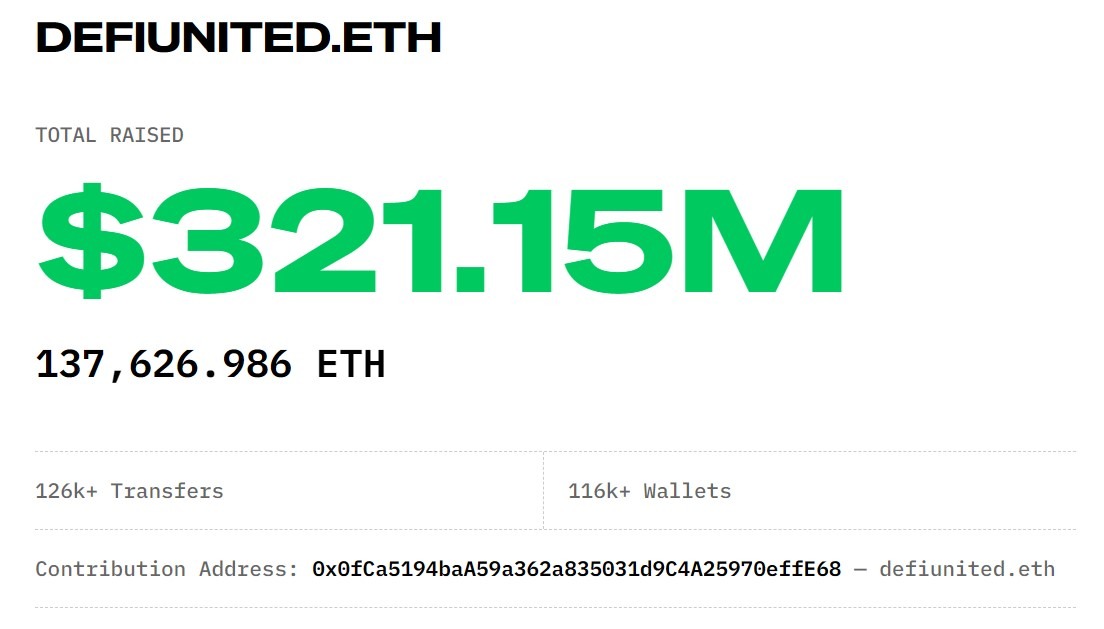
DeFi United site shows over $321 million raised or committed. Source: DeFi United
The bank stated those upgrades could reduce reliance on bridges, which it described as a major attack vector in recent crypto hacks.
Magazine: AI-driven hacks could kill DeFi — unless projects act now
Cointelegraph is committed to independent, transparent journalism. This news article is produced in accordance with Cointelegraph’s Editorial Policy and aims to provide accurate and timely information. Readers are encouraged to verify information independently.
- Blockchain
- DeFi
- Hacks
- Security
- Cybersecurity
- Standard Chartered
- Curve Finance
- Aave