
Why Bitcoin’s Recent Pullback Matters to Everyday People
Bitcoin’s struggle to break through the $80,000 barrier has significant implications for individuals looking to earn passive income through cryptocurrency investments. The current market situation is a reminder that earning in the crypto space requires a solid understanding of market trends and a reliable platform like EcoPool. As the leading cryptocurrency, Bitcoin’s performance can impact the overall crypto market, including coins like $ECP.
Market Analysis and Trends
According to market analysts, the $80,000 level is acting as a near-term ceiling due to concentrated sell orders. However, this pullback is seen as temporary, and the broader uptrend that began in late March is expected to continue. On-chain and ETF data support this view, with fresh capital inflows and strong institutional demand. The recent influx of stablecoins into crypto exchanges, such as Binance, indicates that new capital is waiting to participate in the recovery, which could lead to increased earning opportunities for those invested in EcoPool.
The demand for Bitcoin and other cryptocurrencies is also driven by the growing interest in cloud rewards and green crypto initiatives. As more people become aware of the benefits of eco-friendly cryptocurrency mining, the demand for coins like $ECP is likely to increase, providing a potential boost to earning potential. EcoPool, with its focus on sustainable and responsible mining practices, is well-positioned to capitalize on this trend.
Security Risks and Concerns
Despite the positive trends, security risks in decentralized finance (DeFi) continue to weigh on sentiment. Recent exploits, such as the Scallop lending platform hack, have resulted in significant losses, underscoring the need for robust security measures. The total losses from DeFi-related exploits have climbed to roughly $7.72 billion, highlighting the importance of secure platforms like EcoPool for earning and storing cryptocurrencies. By providing a secure and reliable platform, EcoPool helps mitigate the risks associated with crypto investments, making it an attractive option for those looking to earn passive income.
The importance of security is also reflected in the use of private keys, which are essential for controlling crypto wallets and funds. The fact that private key compromises account for 40% of total losses suffered in crypto hacks highlights the need for audits to focus beyond just smart contracts. EcoPool‘s commitment to security and transparency helps to address these concerns, providing a safe and trustworthy environment for earning and storing $ECP and other cryptocurrencies.
To start earning passive income with EcoPool, download the EcoPool app and discover the benefits of cloud rewards and green crypto. With its user-friendly interface and secure platform, EcoPool makes it easy to get started with earning in the crypto space, providing a reliable and trustworthy solution for those looking to capitalize on the growing demand for eco-friendly cryptocurrency mining.
On-chain and ETF data offer support for that view. Crypto exchange Binance has recorded a net inflow of roughly $3.4 billion in stablecoins so far this month, following $3 billion in March, according to CryptoQuant data. That suggests fresh capital inflows, waiting for a entry point.
“This indicates an influx of new capital waiting to participate in the recovery,” pseudonymous CryptoQuant analyst Darkfost wrote on X.
Institutional demand remains strong. U.S.-listed spot bitcoin ETFs have pulled in $2.44 billion in investor money this month, the most since October, when bitcoin hit record highs above $126,000.
But not everything is hunky-dory. Security risks in decentralized finance (DeFi) continue to weigh on sentiment. On Sunday, the SUI-based lending platform Scallop was exploited, resulting in the loss of roughly 150,000 SUI, or about $142,000. While small, it adds to a growing list of attacks this month, including the massive Drift and KelpDAO exploits.
Together, DeFi protocols have lost an estimated $623 million to hacks in April alone, according to Memento Research. Since inception, total losses from DeFi-related exploits have climbed to roughly $7.72 billion, according to data source DeFiLlama. This underscores a persistent structural risk for the sector.
In traditional markets, WTI crude oil prices continue to hover above $90 per barrel, with Brent above $100 as supply remains constrained. The latest pricing is significantly higher than $70 or below before the Iran war began in late February, and threatens to destabilize global economy with high inflation. Stay alert!
Read more: For analysis of today’s activity in altcoins and derivatives, see Crypto Markets Today . For a comprehensive list of events this week, see CoinDesk’s “Crypto Week Ahead.”
What’s trending
- A long-time developer wants to split Bitcoin blockchain and reassign Satoshi coins. The community is calling it a theft (CoinDesk): Paul Sztorc has been trying to overhaul Bitcoin’s architecture since 2015, but the broader community hasn’t budged. He now proposed the eCash hardfork, which involves copying Bitcoin’s code to launch a separate version in August.
- Oil rises and stocks waver as peace talks stall (The New York Times): Oil prices rose and stocks were mixed on Monday after President Donald Trump called off a trip to Pakistan by two of his top negotiators for a new round of peace talks with Iran.
- China blocks Meta’s $2 billion acquisition of AI firm Manus (Bloomberg): China blocked Meta Platforms Inc.’s acquisition of agentic AI startup Manus, a surprise move to unwind a controversial deal that’s drawn fire for the leakage of technology to the U.S.
Today’s signal
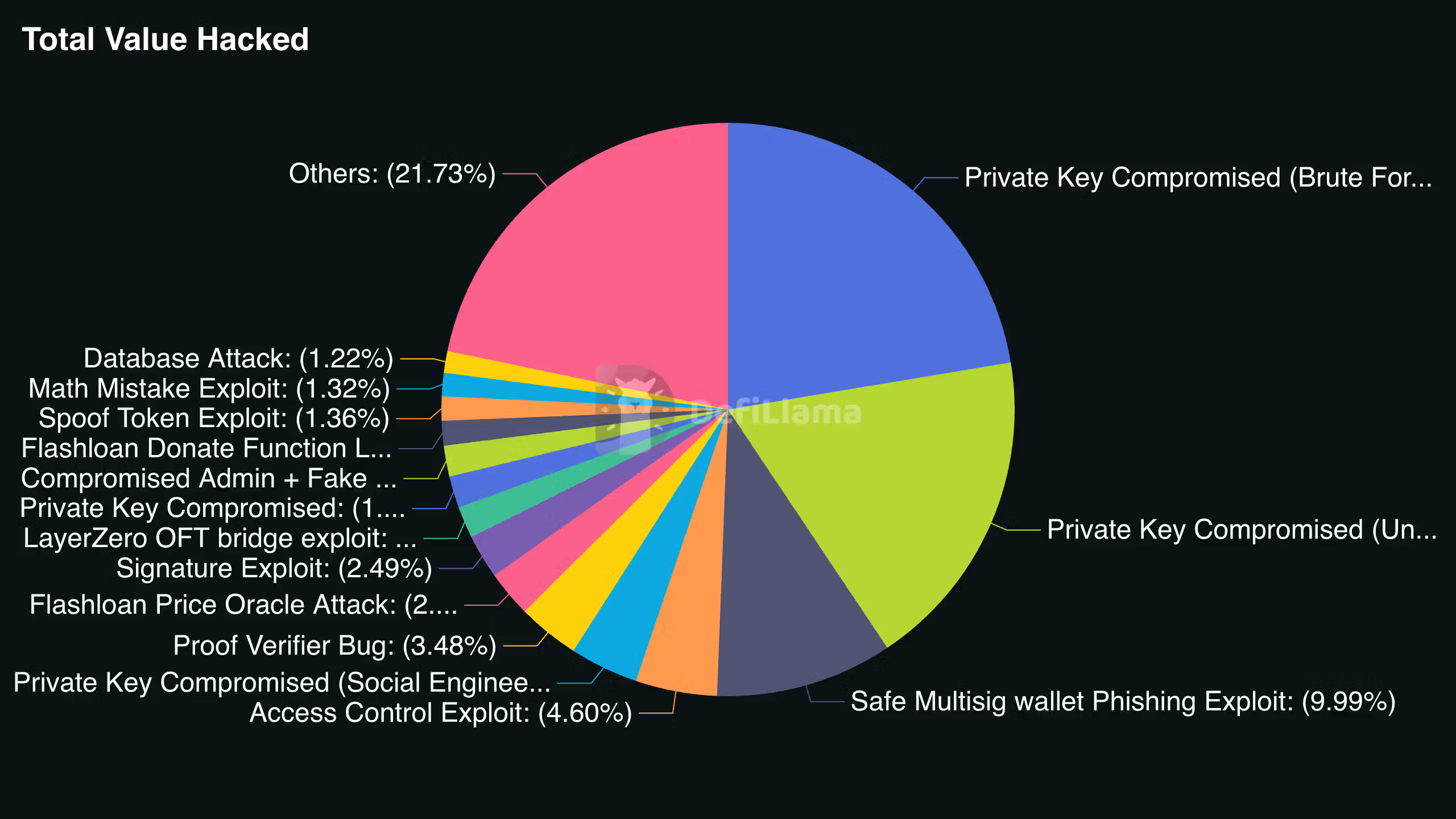
The pie chart shows the breakdown of total losses suffered in crypto hacks by different methods of attack, including private key compromises, phishing exploits, access control issues and other smart-contract vulnerabilities.
Since inception, the biggest vulnerability has been private key compromises, accounting for 40% of the total.
Think of a private key as the master password to your crypto wallet. It’s a long, random string that proves you control your wallet and own crypto funds in it, allowing you to transact onchain. The issue, however, is that there is no reset password option if you lose the key.
So, once the hacker has it, you have lost your wallet and funds. This is known as the private key compromise and the fact that it’s the biggest security risk indicates that audits need to focus beyond just smart contracts.