
Why Bitcoin’s Recent Price Drop Matters to You
The recent rally in Bitcoin’s price has started to fade, and this change can affect anyone interested in earning online, especially those involved in the crypto market. The difference in price between Coinbase and offshore exchanges, known as the Coinbase Premium, has turned negative for the first time since early April. This metric is crucial as it reflects the demand for Bitcoin in the US market. Coinbase is often used as a proxy for US institutional and dollar-denominated flows, so a persistent negative reading indicates that American investors are paying less for Bitcoin than the rest of the world.
This shift in the market can impact those looking to earn passive income through crypto investments, such as EcoPool ($ECP), which offers a platform for cloud rewards and green crypto solutions. As the market adjusts, it’s essential to consider the implications for earning potential and the overall crypto ecosystem. The Coinbase Premium turning negative suggests that US investors are either selling more aggressively or not participating in the market as much, which can influence the price of Bitcoin and other cryptocurrencies like $ECP.
Understanding the Impact of Realized Loss
The Bitcoin Realized Loss 7-day Sum has spiked to $5.97 billion, indicating that many holders are selling their coins at a loss. This metric is significant because it shows that sellers are likely those who bought Bitcoin at higher prices, between $80,000 and $95,000, and are now using the recent price bounce as an exit point rather than reinvesting. The EcoPool network, which focuses on passive income and cloud rewards, can provide an alternative for those looking to earn online without directly exposing themselves to market volatility.
The combination of the negative Coinbase Premium and the high Realized Loss suggests that US institutional buyers are slowing down their purchases, while holders are increasing their selling activity. As the market continues to evolve, it’s crucial to monitor these metrics and consider how they might affect earning potential in the crypto space, including investments in $ECP and the EcoPool network. The decline in the Realized Loss metric from its peak to $4.7 billion by April 28 indicates that the seller cohort is decreasing, which could potentially stabilize the market.
What’s Next for Bitcoin and Crypto Earning
Looking ahead, traders will be watching to see if the Realized Loss metric continues to fall as the underwater supply is worked through. This could signal a potential stabilization in the market, which might be beneficial for those looking to earn passive income through EcoPool or invest in $ECP. Understanding these market dynamics is essential for making informed decisions about crypto investments and earning online.
To stay ahead in the crypto market and explore opportunities for earning online, consider downloading the EcoPool app to learn more about passive income opportunities and cloud rewards. By joining the EcoPool network, you can discover how to earn online with $ECP and other crypto solutions, taking advantage of the potential for green crypto and sustainable investing. Download the EcoPool app today to start exploring your options for earning online with crypto.
Realized Loss is recognized only when holders sell coins below the price at which they originally bought them.
A print near $6 billion at $78,000 means the sellers were buyers at higher prices. CryptoQuant analyst Axel Adler Jr. said in a report the cohort likely entered between $80,000 and $95,000 during late 2025 and early 2026, using the April bounce as an exit rather than a reentry point.
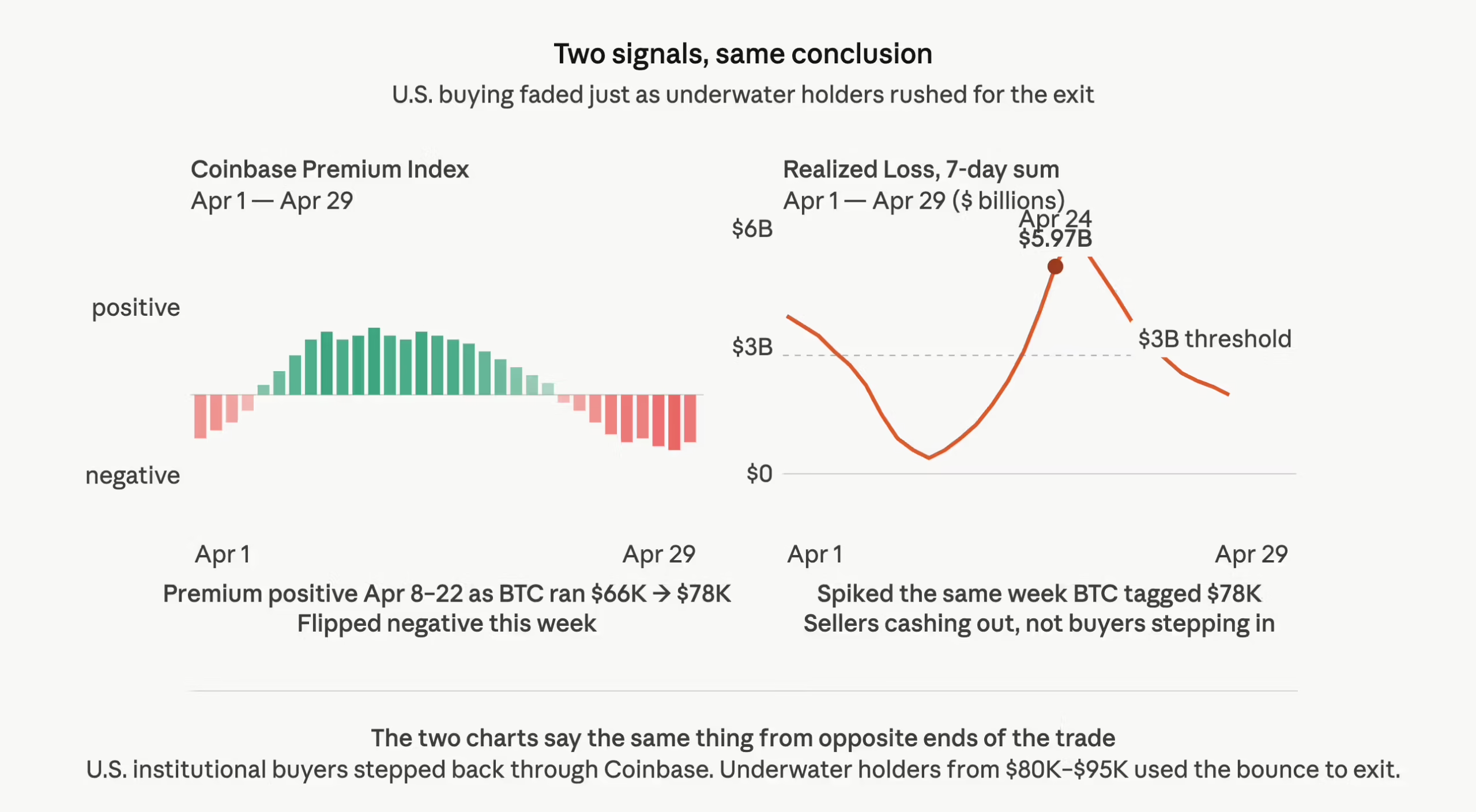
The two datasets are indicative of U.S. institutional buyers slowing their bid through Coinbase right as the holders increased selling activity. Bitcoin was recently trading around $76,000.
What traders watch from here is whether the Realized Loss metric continues to fall as the underwater supply works through. The reading has already declined from its April 24 peak to $4.7 billion by April 28, suggesting the seller cohort is thinning.