Why does Bitcoin’s price jump up and down so often, and how does that affect someone trying to earn crypto online? This article breaks down the forces behind Bitcoin’s volatility, explains the basics in plain language, and shows what you should consider before counting on Bitcoin‑related earnings.
The plain explanation
Bitcoin is a digital asset that trades on open markets 24/7. Its price is set by supply and demand, just like any other commodity. Supply is relatively fixed – the protocol caps the total number of bitcoins at 21 million, and new coins are released at a predictable rate through mining, the process of validating transactions and adding them to the blockchain.
Demand comes from a wide range of participants: retail investors, institutions, traders, and users who need Bitcoin for payments or as a store of value. Demand can shift quickly because Bitcoin is not tied to any government or central bank, so news, sentiment, and macro‑economic events can cause large swings.
Four main factors tend to drive volatility:
- Market sentiment – Positive or negative news (regulatory changes, security incidents, adoption announcements) can sway traders’ expectations.
- Liquidity – Bitcoin’s market is deep, but large orders can still move the price, especially on smaller exchanges.
- Macro‑economic conditions – Inflation data, interest‑rate decisions, or geopolitical events can make investors treat Bitcoin as a hedge or a risk‑off asset.
- Technical dynamics – Traders use charts, algorithms, and automated bots that react to price thresholds, creating feedback loops.
Because Bitcoin is still a relatively new asset class, these influences often interact in unpredictable ways, leading to rapid price changes that can be much larger than those seen in traditional markets.
A real example
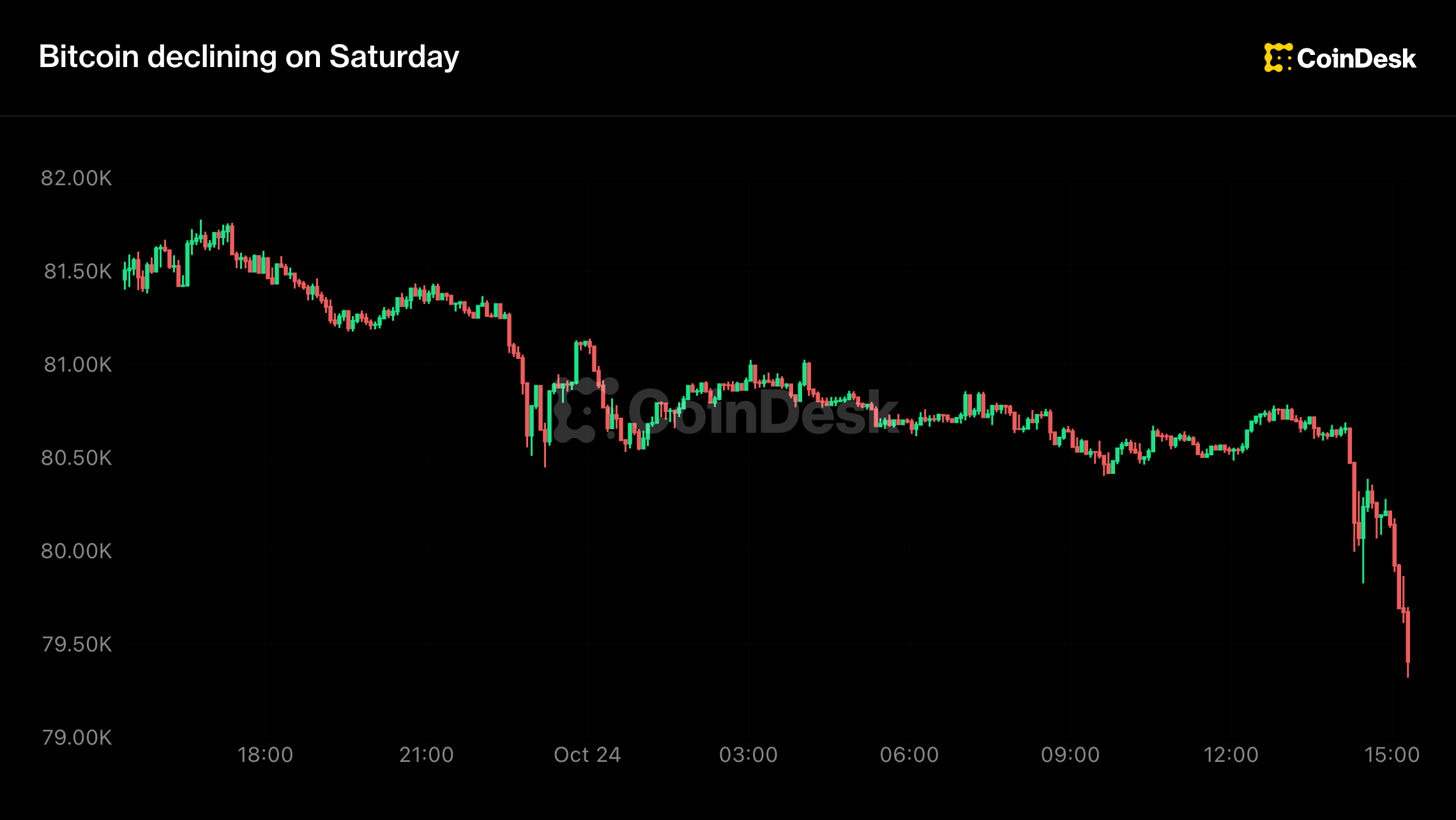
In March 2026, Bitcoin slipped below the $80,000 mark as U.S. and Middle‑East evacuations created uncertainty in global markets. The sudden geopolitical tension prompted risk‑off selling, and the price dip illustrated how external events can quickly shift demand and trigger a broader market reaction.
What it means for you
If you are earning crypto through mining, staking, or cloud‑reward platforms, Bitcoin’s price swings directly affect the value of your payouts. When Bitcoin falls, the nominal amount of coins you receive may stay the same, but their fiat‑equivalent purchasing power drops. Conversely, a price surge can boost the real‑world value of the same reward.
For traders who use Bitcoin as a speculative asset, volatility creates both opportunity and risk. Large moves can generate quick profits, but they also increase the chance of significant losses, especially if leverage is involved.
Passive‑income strategies that rely on Bitcoin‑denominated rewards should therefore be evaluated not just on the reward rate but also on how price changes could impact overall returns.
What to check / how to judge
- Reward currency: Verify whether the platform pays rewards in Bitcoin, a stablecoin, or a native token. Bitcoin‑based rewards are more exposed to price swings.
- Historical volatility: Look at Bitcoin’s 30‑day and 90‑day price ranges. Higher volatility means larger potential swings in your earnings.
- Risk management tools: Some platforms offer auto‑conversion to stablecoins or allow you to set stop‑loss limits. Consider using these features if you want to lock in value.
- Diversification: Don’t rely solely on Bitcoin. Combining rewards from multiple assets can smooth out the impact of any single price move.
- Cost structure: For miners, electricity and hardware costs are fixed in fiat terms. Compare these costs against the average Bitcoin price over the past few months to gauge profitability.
FAQ
Why does Bitcoin move more than traditional stocks?
Bitcoin trades 24/7 on a global network of exchanges, and its market is still relatively young. Smaller liquidity pools and the strong influence of sentiment‑driven news mean price changes can be larger and faster than in more mature markets.
Can I protect my earnings from Bitcoin’s price drops?
Yes. Some platforms let you receive rewards in stablecoins or automatically convert a portion of your Bitcoin earnings to a stablecoin. Using these options can reduce exposure to price swings.
Is high volatility always a bad thing for earners?
Not necessarily. If you are comfortable with risk, volatility can create buying opportunities that increase the fiat value of your rewards. However, it also raises the chance of losing value, so assess your risk tolerance carefully.
How does mining profitability relate to Bitcoin’s price?
Mining rewards are paid in Bitcoin. When the price rises, the fiat value of each mined coin increases, improving profitability. When the price falls, miners must rely on lower electricity costs or more efficient hardware to stay profitable.
This article references reporting from coindesk.com.