Do you wonder why Bitcoin’s price sometimes moves in tandem with the bond market? This article explains the relationship between bond yields and Bitcoin, how it works, and what it means for anyone trying to earn online through crypto.
What bond yields are and why they matter
A bond yield is the return an investor earns from holding a government or corporate bond. It is expressed as an annual percentage and reflects the market’s expectations for interest rates and inflation. When yields rise, it usually means investors expect higher rates or stronger economic growth, making fixed‑income assets more attractive. Conversely, falling yields suggest lower rates or weaker growth, prompting investors to look for higher‑return assets.
Bond yields act as a benchmark for the cost of capital across the financial system. Because Bitcoin does not pay interest or dividends, its appeal often hinges on its potential for price appreciation relative to other assets. When yields are low, the opportunity cost of holding non‑yielding assets like Bitcoin drops, encouraging more demand. When yields climb, the opposite can happen: investors may shift money into bonds to capture the higher guaranteed return, reducing demand for Bitcoin and pushing its price down.
How the connection works in practice
The link between bond yields and Bitcoin is not a direct one‑to‑one correlation, but a set of market dynamics. First, higher yields typically strengthen the U.S. dollar because they attract foreign capital seeking better returns. A stronger dollar can make Bitcoin more expensive for non‑dollar holders, dampening demand. Second, rising yields often signal tightening monetary policy, which can reduce liquidity in the broader market, making riskier assets like Bitcoin less appealing.
Third, many traders use bond yields as a proxy for risk sentiment. When yields spike, risk appetite may wane, leading to sell‑offs in assets perceived as speculative, including Bitcoin. Conversely, when yields fall, risk appetite often improves, and Bitcoin can benefit from inflows as investors search for higher returns.
Real‑world illustration
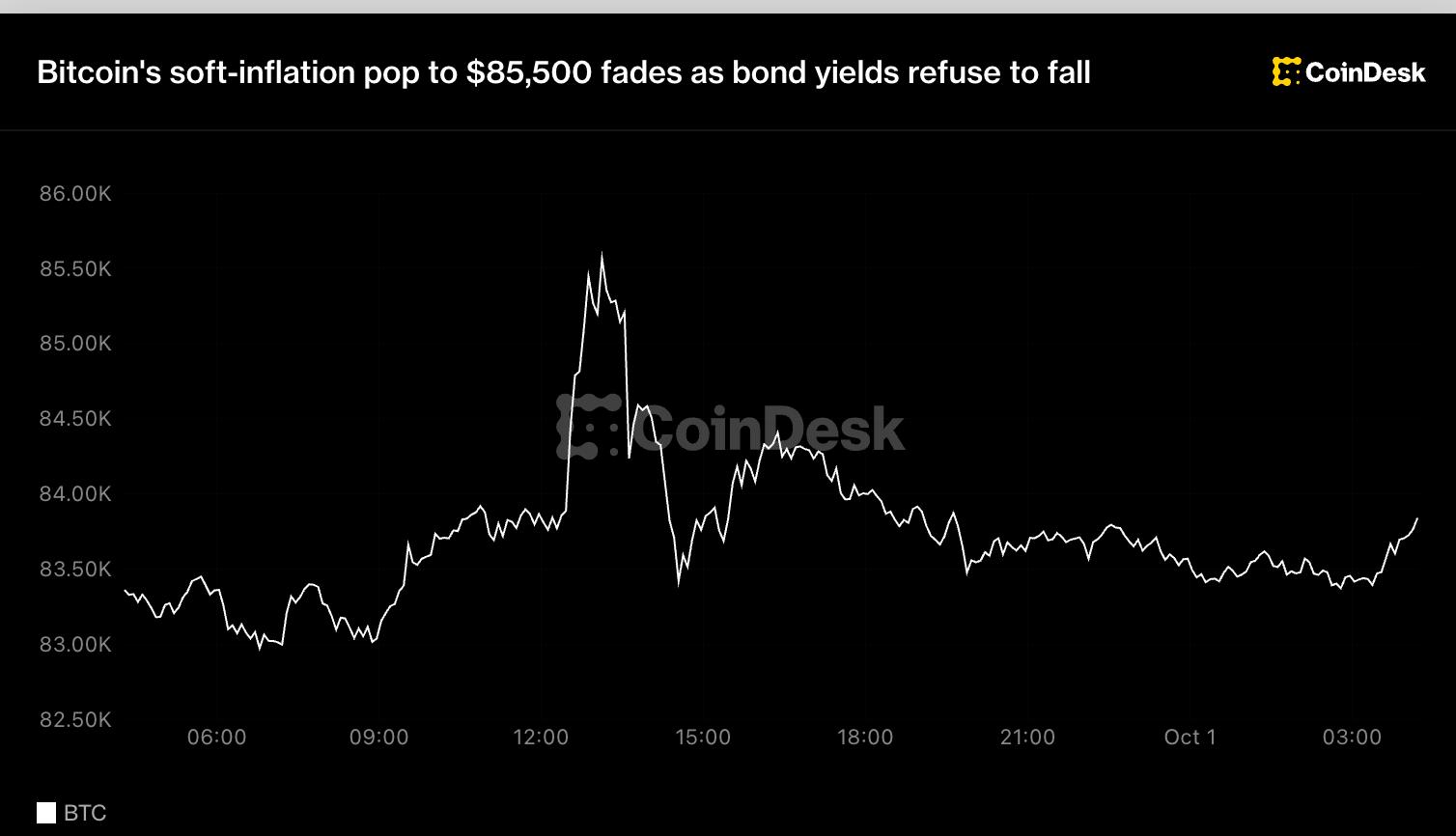
In August 2026, Bitcoin briefly rose to about $85,500 as bond yields fell, creating a “soft‑inflation” environment that seemed supportive of risk assets. However, the rally faded when yields stopped falling and began to hold steady, showing that the price boost was tied to the yield movement rather than any fundamental change in Bitcoin itself.
What this means for you as an online earner
If you earn passive income through Bitcoin mining, staking, or holding, bond‑yield trends can affect the value of your earnings. A rising yield environment may erode the dollar value of your Bitcoin holdings, even if the number of coins you own stays the same. Conversely, a falling‑yield environment can help preserve or increase that value.
Understanding this relationship lets you anticipate periods when Bitcoin might underperform and adjust your strategy—whether that means diversifying into other assets, timing purchases, or hedging exposure.
What to check before you commit capital
- Yield trends: Monitor the 10‑year U.S. Treasury yield, a common benchmark. A consistent upward trend may signal headwinds for Bitcoin.
- Dollar strength: A rising yield often coincides with a stronger dollar. Use forex charts to gauge how dollar movements could impact Bitcoin’s price for you.
- Liquidity conditions: Central‑bank policy changes that affect overall market liquidity will influence both yields and crypto demand.
- Risk sentiment indicators: Look at the VIX (volatility index) and other risk gauges. High risk aversion often aligns with higher yields and lower Bitcoin prices.
FAQ
Why doesn’t Bitcoin have its own yield?
Bitcoin does not generate interest or dividends; its return comes solely from price changes. Therefore, investors compare it to yield‑bearing assets to assess whether the potential price gain justifies the opportunity cost.
Can I protect my Bitcoin earnings from rising bond yields?
One approach is diversification—holding a mix of assets that respond differently to yield changes. Some traders also use futures or options to hedge against price drops, though these tools carry their own risks.
Do all cryptocurrencies react the same way to bond yields?
Not necessarily. Assets that pay staking rewards, like some proof‑of‑stake coins, may be less sensitive because they provide a built‑in yield. Still, overall market risk sentiment driven by yields can affect most crypto prices.
Is the bond‑yield effect permanent or temporary?
Yield movements are part of the broader economic cycle. Their impact on Bitcoin can be short‑term, especially if other factors—such as regulatory news or technological upgrades— dominate market sentiment.
This article references reporting from coindesk.com.