
Are you curious about how you can trade crypto prices without actually owning the underlying asset? This article explains what perpetual contracts are, how they function, and what you should watch out for before using them.
What a perpetual contract is
A perpetual contract, often called a “perp,” is a type of derivative that lets traders bet on the future price of a cryptocurrency. Unlike a traditional futures contract, a perp has no set expiration date, so it can be held indefinitely. The contract’s price tracks the spot price of the underlying coin through a mechanism called the funding rate. Every few hours, long‑position holders (those betting the price will go up) pay a small fee to short‑position holders (those betting it will go down) if the perp trades above the spot price, and the opposite occurs if it trades below. This funding system keeps the contract price anchored to the market.
Because perps are settled in cash rather than the actual crypto, you never need to move the underlying asset. Traders can open positions with leverage, meaning they only need to post a fraction of the total trade size as margin. For example, with 10× leverage, a $1,000 margin lets you control a $10,000 position. Leverage magnifies both potential profits and potential losses.
Key terms:
- Margin: The collateral you lock up to open a leveraged position.
- Leverage: The ratio of total position size to margin.
- Funding rate: Periodic payments exchanged between longs and shorts to align the perp price with the spot market.
- Liquidation: The automatic closing of a position when margin falls below a required threshold.
Real‑world illustration
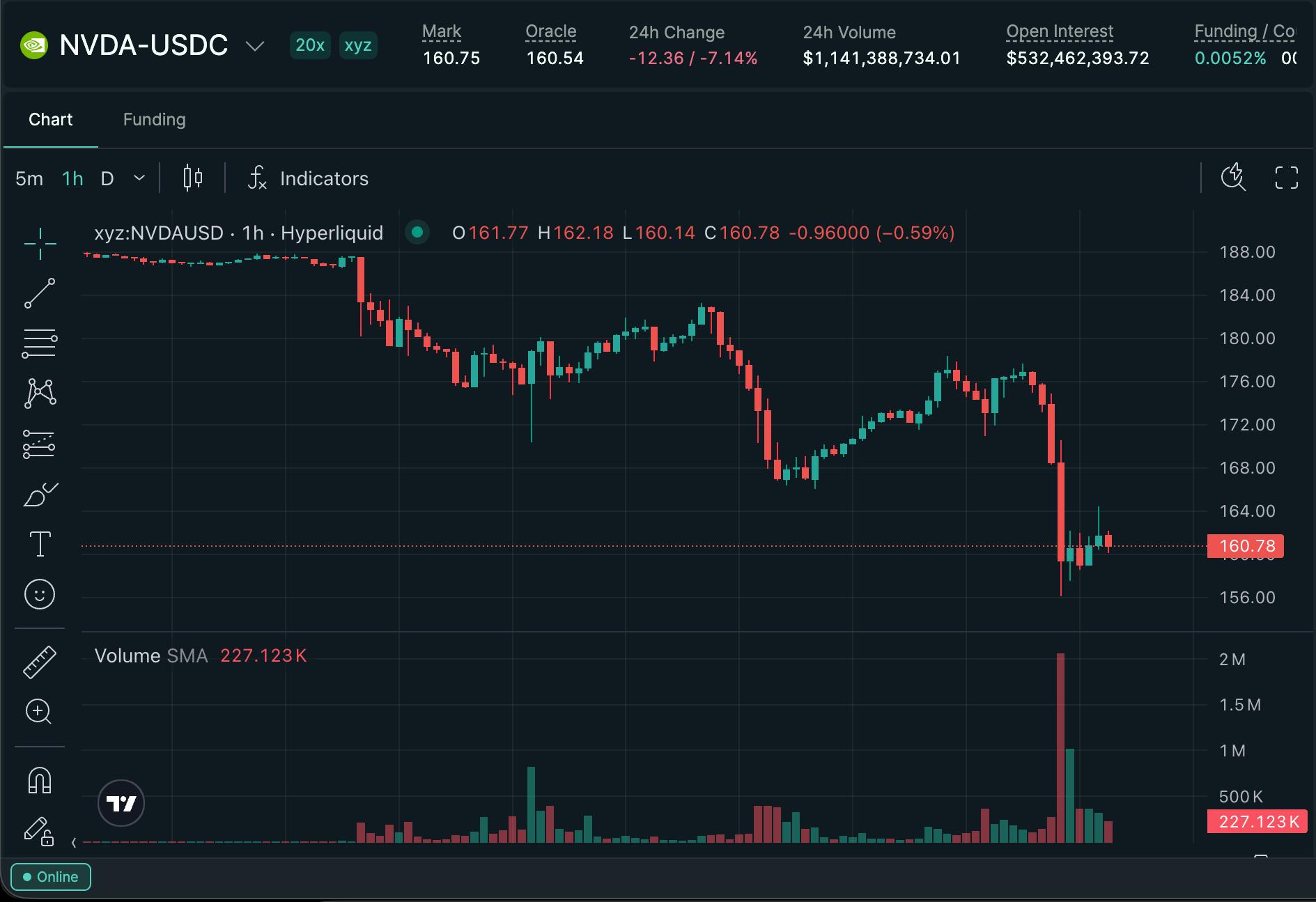
In March 2026, the price of Nvidia perpetual contracts on the Hyperliquid exchange dropped about 7% after reports surfaced that CEO Jensen Huang might be removed. Traders reacted to the news by selling the contracts, demonstrating how perps can be highly sensitive to market sentiment and external events. At the same time, Bitcoin continued to trade within a familiar range, showing that not all assets move in lockstep.
What this means for you
If you are looking to earn passive income or generate short‑term gains, perps offer a way to profit from price movements without buying the crypto itself. However, the leverage that makes perps attractive also means a small adverse price swing can wipe out your margin. You could lose more than your initial deposit if the exchange does not enforce a “negative balance protection” policy. Additionally, funding payments can become a hidden cost, especially when market sentiment pushes the perp price far above or below spot.
Because perps are settled in cash, you do not need a wallet for the underlying coin, but you do need a reliable exchange that offers transparent funding rates, clear margin requirements, and robust risk controls.
What to check before trading perps
- Funding schedule and rates: Review how often funding is calculated and the typical range for the asset you plan to trade.
- Leverage limits: Choose an exchange that caps leverage at a level you are comfortable with; higher leverage increases liquidation risk.
- Margin requirements and liquidation policy: Understand the exact percentage of margin that triggers liquidation and whether the platform offers insurance for negative balances.
- Liquidity and order book depth: Higher liquidity reduces slippage when entering or exiting large positions.
- Regulatory compliance: Verify that the exchange complies with relevant financial regulations in your jurisdiction.
FAQ
Can I lose more than my initial deposit?
On many exchanges, if your position is liquidated while the market is moving fast, the loss can exceed your margin. Some platforms offer negative‑balance protection, but you should confirm this before trading.
How often are funding payments made?
Funding typically occurs every 8 hours, but the exact schedule varies by exchange. The rate is calculated based on the price difference between the perp and the spot market.
Is trading perps the same as trading spot crypto?
No. Spot trading involves buying and holding the actual cryptocurrency, while perps are cash‑settled contracts that let you speculate on price direction without owning the asset.
Do I need a special account to trade perps?
Most exchanges require you to enable margin or derivatives trading and may ask for additional verification. Ensure you meet the platform’s requirements before opening a perp position.
This article references reporting from coindesk.com.





