Are you wondering why a change in U.S. interest rates seems to move the price of Bitcoin and other digital assets? This article explains how the Federal Reserve’s monetary policy impacts crypto markets, what that means for miners and earners, and how you can assess the risks before you dive in.
What a Federal Reserve rate hike actually is
The Federal Reserve (the Fed) sets the benchmark federal funds rate, which is the interest rate banks charge each other for overnight loans. When the Fed “raises rates,” it increases this benchmark, usually by a few basis points (one basis point = 0.01%). The goal is to slow inflation by making borrowing more expensive and saving more attractive.
Higher rates affect the broader economy in several ways:
- Cost of capital: Companies and consumers pay more to borrow, which can reduce spending and investment.
- Yield on safe assets: Treasury yields rise, offering a higher return on low‑risk investments such as U.S. government bonds.
- Currency strength: Higher rates often strengthen the U.S. dollar because investors seek higher‑yielding dollar‑denominated assets.
These macro‑economic shifts ripple through financial markets, including the cryptocurrency sector, even though crypto assets are not directly tied to the Fed’s policy.
Why rate changes move crypto prices
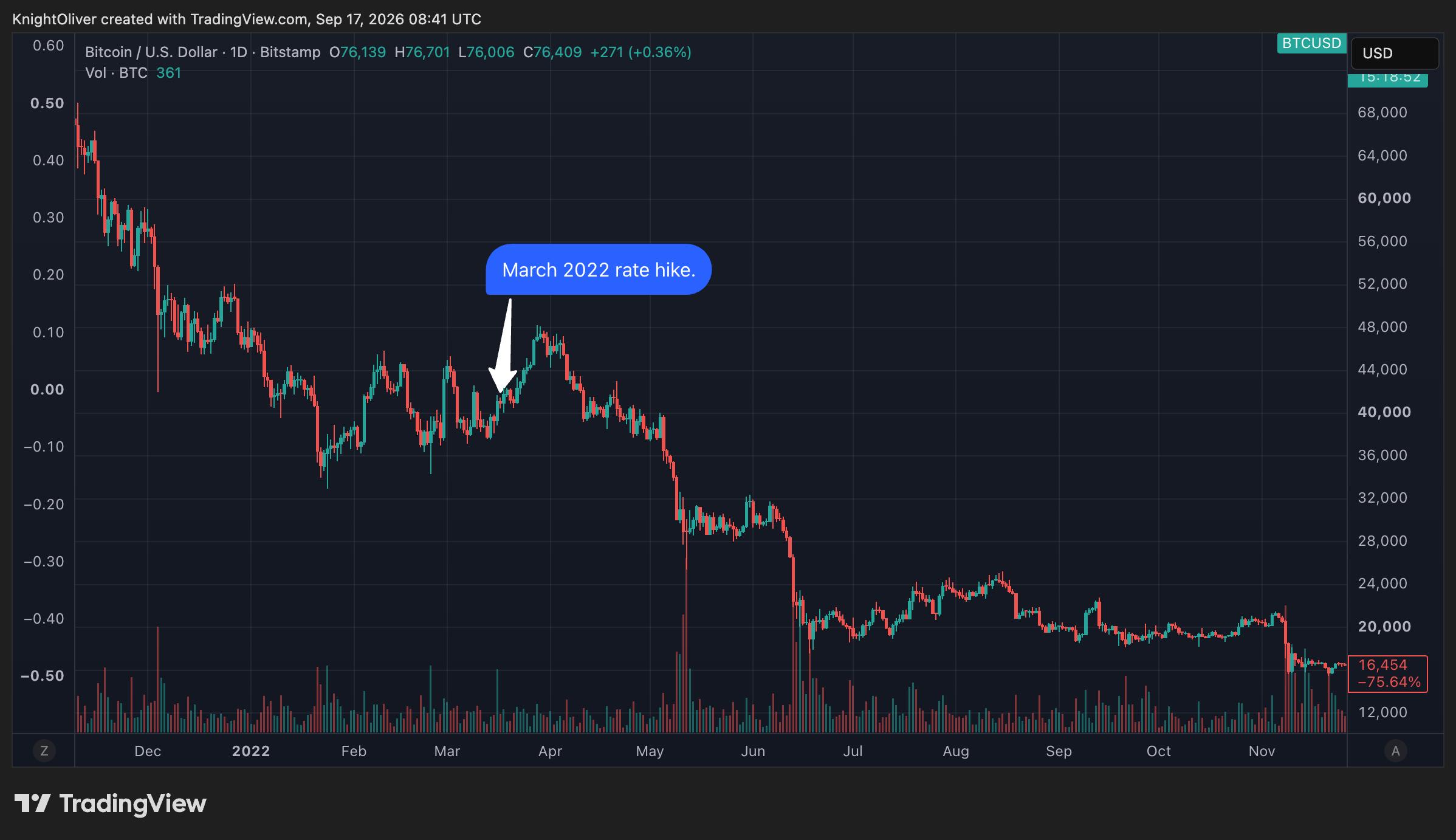
Cryptocurrencies are often treated as risk‑on assets. When safe‑haven yields rise, investors may shift money from speculative assets like Bitcoin into higher‑yielding bonds, putting downward pressure on crypto prices. Conversely, if the Fed cuts rates, the opportunity cost of holding crypto drops, and some investors move back into riskier assets, which can lift prices.
Two additional dynamics are worth noting:
- Liquidity flow: Many crypto traders use margin or borrowed capital. Higher borrowing costs can reduce leverage, shrinking market liquidity and amplifying price moves.
- Dollar‑denominated pricing: Most crypto pairs are quoted against the U.S. dollar. A stronger dollar makes a fixed‑price crypto appear more expensive in other currencies, potentially dampening demand.
Real‑world illustration
In February 2026, the Federal Reserve raised its benchmark rate by 25 basis points—the first hike since July 2023. The move was widely expected to tighten financial conditions. Following the announcement, Bitcoin’s price slipped modestly while other assets such as Zcash surged 23%, reflecting a temporary reallocation of capital among risk‑on assets. The episode showed how even a modest rate increase can create short‑term volatility across the crypto market.
What it means for you as an online earner
If you earn passive income through crypto staking, mining, or cloud‑based reward platforms, rate hikes can affect you in two main ways:
- Staking yields: Staking rewards are typically paid in the native token, not in fiat. When the dollar strengthens, the fiat value of those rewards may decline, even if the token’s on‑chain reward rate stays the same.
- Mining profitability: Mining revenue depends on the price of the mined coin and the cost of electricity. Higher rates can raise electricity prices (especially in regions where power costs are linked to wholesale energy markets) and can also increase the cost of financing mining equipment. Both factors squeeze profit margins.
Understanding these connections helps you set realistic expectations for your passive income streams and decide whether to adjust your strategy.
How to evaluate the impact before you commit
When considering a crypto‑earning opportunity, keep an eye on the following indicators:
- Interest‑rate outlook: Follow Fed statements, minutes, and forecasts from reputable analysts. A clear trend of tightening suggests higher opportunity costs for crypto.
- Energy cost exposure: If you mine or use cloud mining services, check whether electricity rates are fixed or variable. Variable rates are more vulnerable to rate‑driven price spikes.
- Reward structure: Look at the token’s inflation schedule and any protocol‑level fee redistribution. Higher on‑chain rewards can offset a falling fiat price, but only to a point.
- Liquidity and leverage: Platforms that allow high leverage may see larger swings during rate changes. Prefer services with modest or no leverage if you want stability.
- Diversification: Spread earnings across multiple assets (e.g., a mix of staking, mining, and stablecoin lending) to reduce exposure to any single market movement.
FAQ
Will a Fed rate hike always cause Bitcoin to drop?
No. While higher rates often pressure risk‑on assets, crypto markets are also driven by supply‑side factors (like halving events) and sentiment. The impact can be muted or even positive if other macro forces favor crypto.
How can I protect my mining income from rising electricity costs?
Consider locations with fixed‑price power contracts, renewable energy sources, or mining pools that share electricity risk. Some cloud‑mining services also lock in energy costs for the contract duration.
Is staking still worthwhile when the dollar is strengthening?
Staking can remain attractive if the token’s on‑chain reward rate exceeds the yield you could earn on low‑risk assets like Treasury bonds. Compare the annualized staking return (in token terms) with the prevailing safe‑asset yield.
Should I pause crypto investments during a period of aggressive rate hikes?
Pausing isn’t necessary for everyone. Assess your risk tolerance, the proportion of your portfolio in crypto, and whether you have a diversified income plan. If you rely heavily on crypto for cash flow, a more conservative stance may be prudent during tightening cycles.
This article references reporting from coindesk.com.