Ever wonder how some cryptocurrencies can keep your transaction details hidden? This article explains the mechanics behind privacy coins, how they conceal the flow of funds, and what the implications are for anyone looking to earn or move money online.
The plain explanation
A privacy coin is a type of digital currency that deliberately obscures details such as sender, receiver, and transaction amount. Unlike Bitcoin, where every transaction is recorded on a public ledger that anyone can inspect, privacy coins use cryptographic techniques to break the link between addresses and real‑world identities.
Key terms you’ll encounter:
- Zero‑knowledge proof (ZKP): A mathematical method that lets one party prove to another that a statement is true without revealing any underlying data. In crypto, ZKPs allow a transaction to be validated without exposing who sent or received the coins.
- Ring signatures: A group of possible signers is mixed together, so an observer cannot tell which member actually authorized the transaction.
- Stealth addresses: One‑time addresses generated for each transaction, preventing the reuse of a public address that could be linked to a user.
- Mixers or tumbles: Services that pool many users’ coins together and then redistribute them, making it difficult to trace the original source.
When a privacy coin transaction occurs, these tools work together to hide the path of the funds. For example, Zcash uses a protocol called zk‑SNARKs (Zero‑Knowledge Succinct Non‑Interactive Argument of Knowledge) that lets the network verify that a transaction is valid without revealing the sender, receiver, or amount. Monero, another popular privacy coin, relies on ring signatures and stealth addresses to achieve similar anonymity.
A real example
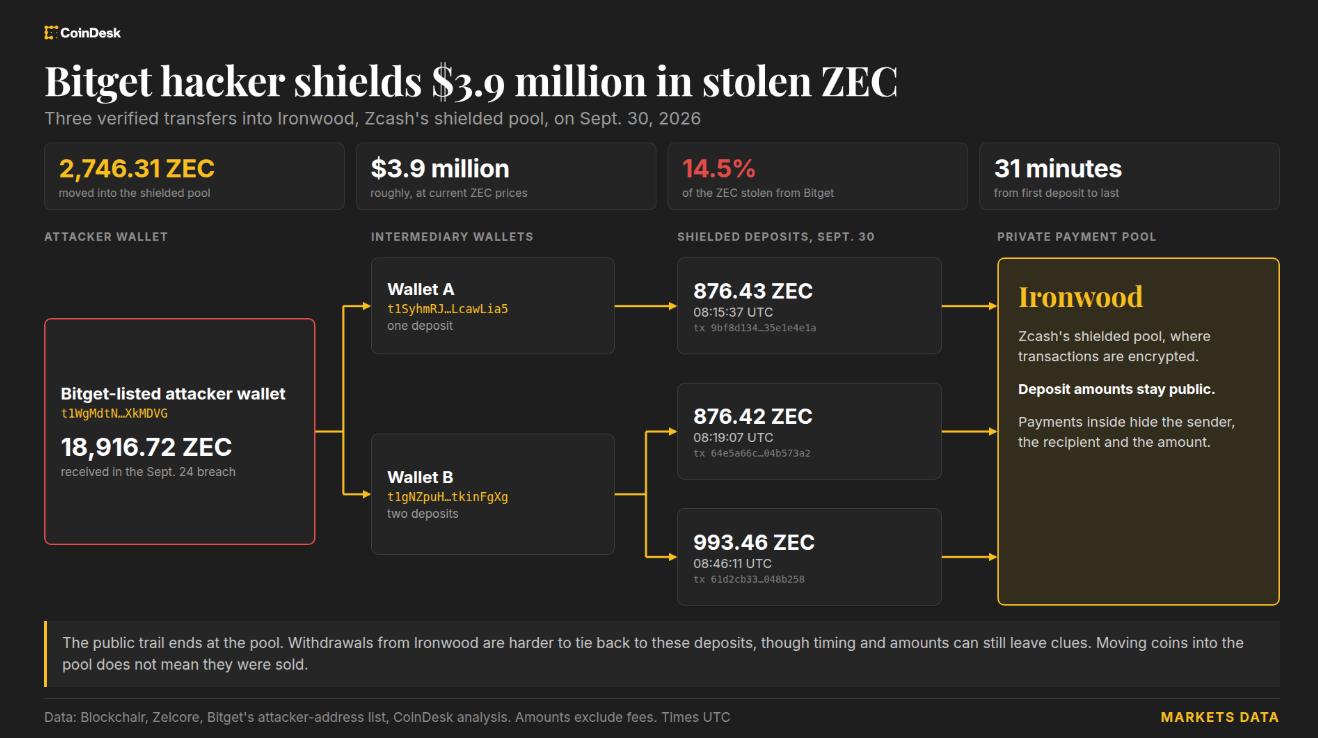
In March 2026, hackers who breached the Bitget exchange moved roughly $4 million worth of stolen crypto into Zcash’s private pool. By sending the funds to a Zcash address that utilizes the shielded pool, the attackers made the trail far more difficult for investigators to follow. This illustrates how privacy features can be leveraged both for legitimate privacy needs and for illicit concealment.
What it means for you
If you are looking to earn passive income through staking, cloud mining, or other online crypto activities, understanding privacy coins is important for several reasons:
- Regulatory scrutiny: Many jurisdictions treat privacy coins as higher‑risk assets, which can affect tax reporting and compliance requirements.
- Exchange availability: Some platforms limit or prohibit trading of privacy coins, reducing liquidity and potentially affecting your ability to cash out.
- Security considerations: While privacy features protect your transaction data, they do not make the underlying wallet or private keys any safer. Proper key management remains essential.
What to check / how to judge
Before using a privacy coin in your earning strategy, consider these checkpoints:
- Regulatory status: Verify whether your country classifies the coin as a regulated asset or imposes restrictions.
- Network health: Look at metrics such as active addresses, transaction volume, and developer activity to gauge long‑term viability.
- Privacy guarantees: Review the coin’s technical documentation to understand which privacy mechanisms are employed and whether they have been audited.
- Exchange support: Ensure the platforms you use for earning or cashing out support the coin and have clear KYC/AML policies.
- Risk of blacklisting: Some services may blacklist privacy coins due to compliance concerns, which could affect your ability to move funds later.
FAQ
Do privacy coins hide the amount of money transferred?
Yes. In Zcash’s shielded pool, the transaction amount is encrypted and verified via zero‑knowledge proofs, so observers cannot see how much was sent.
Can I earn interest on privacy coins?
Some DeFi platforms and lending services offer interest on privacy coins, but availability is limited and often comes with higher compliance checks.
Are privacy coins illegal?
They are not illegal per se, but many regulators view them as higher‑risk due to potential misuse. Always check local laws before holding or transacting.
Will using a privacy coin protect me from hackers?
No. Privacy features conceal transaction details, but they do not protect your private keys. Secure storage practices are still required.
This article references reporting from coindesk.com.