Ever wonder why a sudden surge in Bitcoin’s price can wipe out billions of bearish bets in a single day? This article explains how short squeezes, futures open interest, and funding rates interact, and what those dynamics mean for anyone trying to earn from crypto markets.
What a short squeeze and futures open interest actually are
A short squeeze happens when traders who have bet that an asset will fall (short sellers) are forced to buy back their positions because the price is rising sharply. Their buying adds further upward pressure, creating a feedback loop that can accelerate the rally.
In the crypto world, many short bets are placed through futures contracts. A futures contract is an agreement to buy or sell an asset at a predetermined price on a future date. Traders use them to speculate on price moves or to hedge other holdings. When you open a futures position, you either go long (betting the price will rise) or short (betting it will fall).
Open interest (OI) is the total number of outstanding contracts that have not been settled. It is a snapshot of how much capital is currently tied up in futures for a given asset. Rising OI indicates that more traders are entering the market, while falling OI suggests contracts are being closed.
Another key metric is the funding rate on perpetual futures. Because perpetual contracts have no expiry, the market uses periodic payments between long and short positions to keep the contract price close to the spot price. When the funding rate is positive, longs pay shorts; when it is negative, shorts pay longs. Extremely high positive rates signal that many traders are long and that the market may be over‑leveraged.
Real‑world illustration: Bitcoin’s $85,000 rally
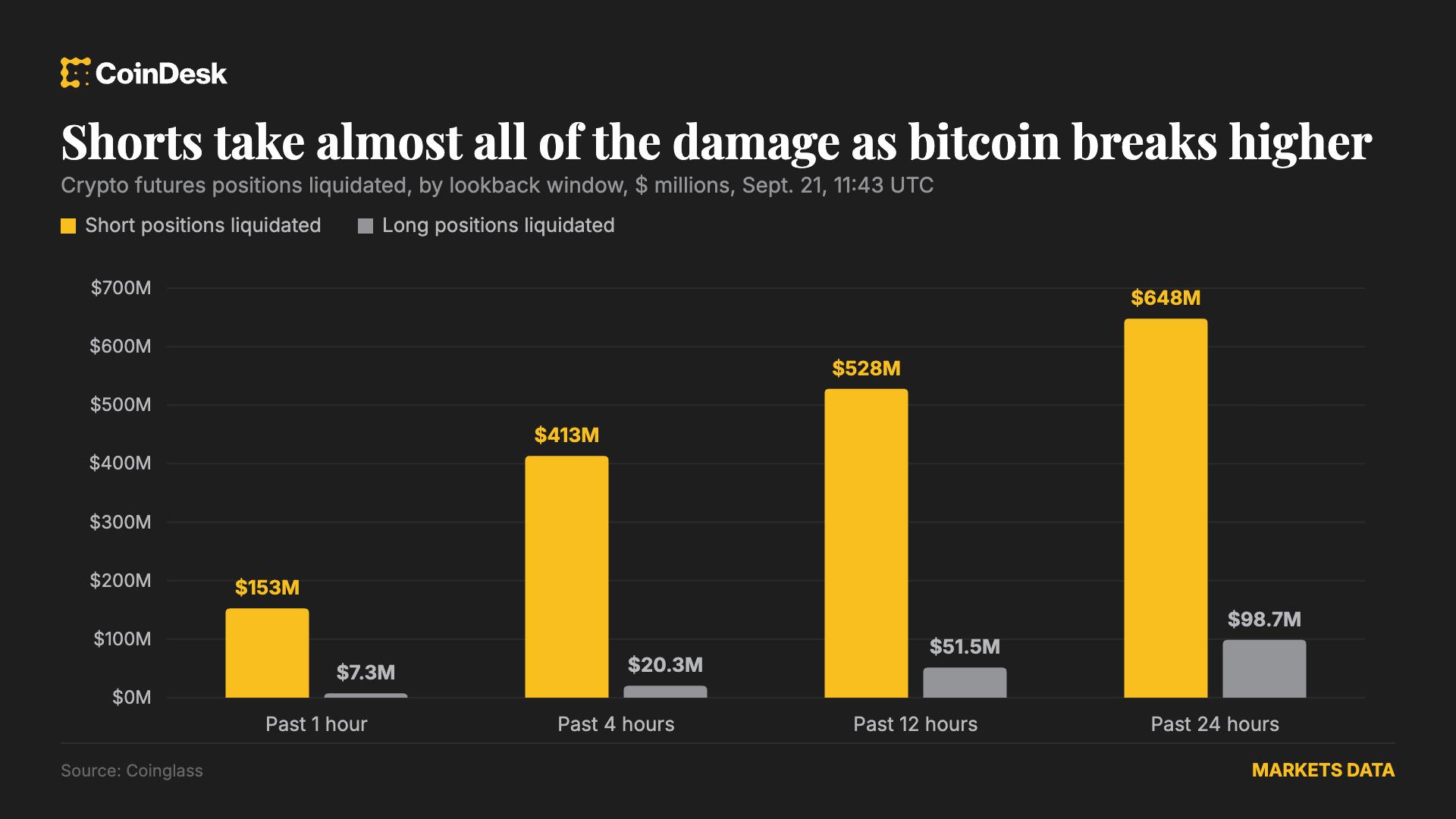
In March 2026, Bitcoin surged past $85,000, wiping out roughly $648 million of bearish bets. Several data points highlighted why the move was so forceful:
- The long‑short volume ratio in crypto futures tipped to about 53 % in favor of bulls, meaning more buying pressure than selling.
- Bitcoin’s total futures open interest climbed above 700,000 BTC for the first time in weeks, showing a fresh influx of leveraged capital.
- Large “whale” accounts on Binance held a derivatives position ratio above 2.0, indicating that they were collectively long by more than twice the size of their short exposure.
- Funding rates on perpetual contracts spiked toward 60 % annualized, a level that makes holding long positions very costly and suggests that the market was crowded on the upside.
These factors combined to create a classic short squeeze: as the price rose, short sellers rushed to close positions, buying Bitcoin on the spot market and pushing the price even higher. The surge in open interest confirmed that new money was flowing in, while the extreme funding rate warned of potential volatility ahead.
What this means for you as a crypto earner
If you are looking to earn passive income through futures trading, staking, or other leveraged products, the dynamics above give you both opportunities and warnings.
When open interest is rising and the long‑short ratio leans bullish, it often signals that momentum is building. Traders who can tolerate higher risk may profit from the price move, especially if they enter early and manage leverage carefully.
However, a very high funding rate means that holding a long position becomes expensive. If the market reverses, those costs can erode profits quickly. Likewise, a crowded long side increases the chance of a sudden reversal or a second short squeeze that could trigger rapid liquidations.
In short, the same forces that can generate big gains can also produce sharp losses. Understanding the underlying metrics helps you decide whether to participate, how much leverage to use, and when to set protective stops.
What to check before you trade
- Long‑short volume ratio: A ratio above 50 % indicates buying pressure; a sharp swing can foreshadow a squeeze.
- Open interest trend: Rising OI suggests fresh capital; falling OI may mean traders are exiting, which can precede a price pullback.
- Funding rate level: Annualized rates above 30 % are a red flag for over‑leveraged longs. Compare the rate to recent history to gauge crowding.
- Whale positioning: Look at the long/short ratio of large accounts on major exchanges. A ratio significantly above 1.0 for longs can mean the market is heavily weighted one way.
- Liquidity and order flow: Positive cumulative volume delta (CVD) indicates aggressive buying. Sudden spikes can precede rapid price moves.
FAQ
What is the difference between a short squeeze and a regular price rally?
A regular rally is driven by buying demand, while a short squeeze is specifically caused by short sellers being forced to buy back their positions, adding extra buying pressure to the rally.
Can I profit from a short squeeze without taking on leverage?
Yes, you can buy the spot asset and sell it after the price spikes, but the profit potential is usually smaller than with leveraged futures. Timing is critical, and the market can reverse quickly.
How often do funding rates change, and why does that matter?
Funding rates are typically adjusted every eight hours on most perpetual contracts. A rapidly rising rate signals that the market is becoming increasingly crowded on one side, which can lead to higher volatility.
Is high open interest always a good sign for traders?
Not necessarily. While rising OI shows more capital entering the market, it also means more positions could be liquidated if the price moves against them. Always combine OI with other metrics like funding rates and whale positioning.
This article references reporting from coindesk.com.