Are you wondering how to separate truly useful altcoins from hype‑driven tokens when the market starts to rally? This article explains the key factors that indicate a cryptocurrency has real utility and revenue potential, and shows you how to apply those criteria when choosing where to allocate your capital.
The basics: What makes an altcoin “fundamental”?
An altcoin is any cryptocurrency other than Bitcoin. While many altcoins exist primarily as speculative assets, a subset generates actual revenue through services, fees, or on‑chain activity. These “fundamental” tokens usually belong to protocols that provide a product—such as decentralized finance (DeFi) exchanges, lending platforms, or data‑oriented services—and earn income from users of that product. When a protocol collects fees, stakes assets, or sells data, the revenue can be used to buy back tokens, distribute staking rewards, or fund further development, creating a feedback loop that can support token value over the long term.
Key concepts to understand:
- Revenue‑generating protocol: A blockchain project that earns money by charging fees, offering services, or creating economic activity on its network.
- Utility token: A token that grants access to a protocol’s services or is used to pay for transaction fees within that ecosystem.
- Tokenomics: The economic design of a token, including supply, distribution, and how revenue is shared with holders.
- On‑chain metrics: Data such as total value locked (TVL), transaction volume, and fee revenue that can be verified directly from the blockchain.
Real‑world illustration: Altseason trends in September 2026
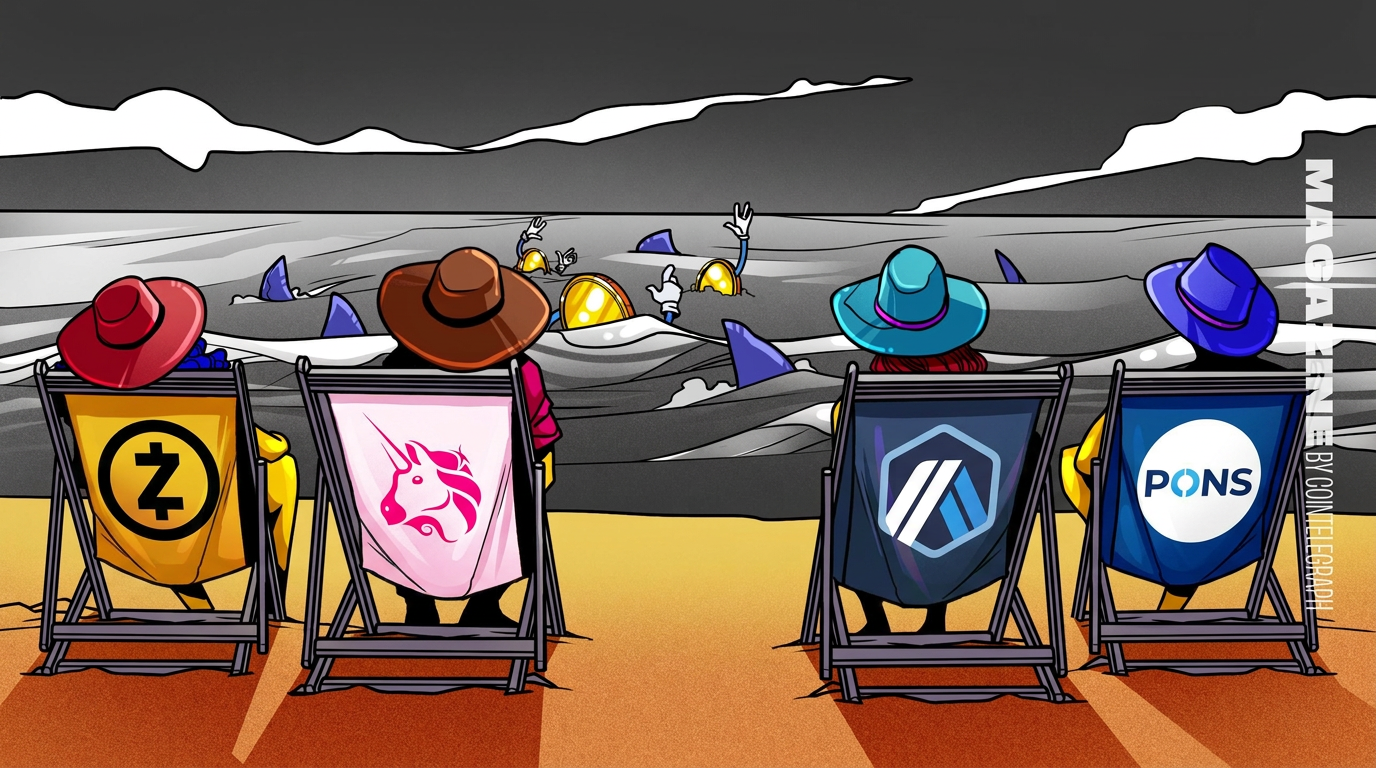
In September 2026, analysts observed that capital was flowing into revenue‑generating protocols across several narratives. Tokens like Uniswap’s UNI, Arbitrum’s ARB, and AI‑focused NEAR posted gains of over 100% in the prior 30 days. Bankless podcast host David Hoffman noted that the common thread among top performers—such as ARB, UNI, Jupiter’s JUP, and Ondo’s ONDO—was that “they make money, they all print revenue.” Meanwhile, the overall altcoin market index remained below the official “altseason” threshold, indicating that the rally was still selective rather than broad‑based.
What this means for you: Practical takeaways
When the market begins to rotate into altcoins, focusing on projects with clear revenue streams can reduce exposure to pure speculation. Tokens that earn fees or other income tend to have a more sustainable demand curve because users need the token to access the service. This does not eliminate risk—revenue can decline, and token prices can still be volatile—but it adds an additional layer of economic justification beyond hype.
For a small investor, prioritizing fundamental altcoins can help you build a portfolio that aligns with real‑world usage. It also makes it easier to track progress: fee revenue, user growth, and on‑chain activity are publicly visible, allowing you to assess whether a project is delivering on its promises.
How to evaluate an altcoin’s fundamentals
- Identify the protocol’s revenue model. Does the project charge transaction fees, subscription fees, or earn interest on locked assets? Look for transparent reporting of fee revenue on dashboards or explorer tools.
- Examine tokenomics. Check how much of the revenue is allocated to token holders (e.g., buy‑backs, staking rewards). A clear, documented distribution plan is a positive sign.
- Analyze on‑chain metrics. Look at total value locked, daily transaction volume, and fee collection trends. Consistent growth suggests increasing utility.
- Assess the team and governance. Projects with experienced developers and transparent governance structures are better positioned to adapt and maintain revenue streams.
- Consider market concentration. If a token accounts for a large share of its ecosystem’s activity, it may be more vulnerable to protocol risk. Diversify across several revenue‑generating projects.
FAQ
What’s the difference between a utility token and a security?
A utility token provides access to a product or service on a blockchain, while a security represents an investment contract that may be subject to securities regulations. Revenue‑generating utility tokens are still utility tokens, but they must avoid promises of profit based solely on token price appreciation to stay clear of security classification.
Can a token still be “fundamental” if it’s a meme coin?
Generally, meme coins lack a revenue model and rely on community hype. While some meme projects have added utility over time, most do not generate consistent on‑chain income, making them higher‑risk for investors seeking fundamentals.
How often should I review the fundamentals of an altcoin?
Regularly—at least quarterly. Revenue trends, user adoption, and governance changes can shift a project’s outlook, so periodic checks help you stay aligned with the latest data.
Is high price growth a reliable indicator of a strong fundamentals?
No. Rapid price appreciation can be driven by speculation, marketing, or short‑term market sentiment. Combine price data with on‑chain metrics and revenue analysis to form a more complete picture.
This article references reporting from cointelegraph.com.