
Written by Zoltan Vardai, Staff Writer. Reviewed by Bryan O’Shea, Staff Editor.
Written by Zoltan Vardai, Staff Writer.
Reviewed by Bryan O’Shea, Staff Editor.
Polygon reduces block time to 1.75 seconds as payments push accelerates
Latest NewsPublishedMay 7, 2026
Polygon delivered its first block time reduction upgrade since genesis, as the network seeks to position for more high-frequency applications such as private stablecoin payments.

Blockchain layer-2 (L2) network Polygon reduced its average block time by 250 milliseconds to 1.75 seconds, marking its first block-time reduction since genesis as the network pushes deeper into stablecoin payments and settlement infrastructure.
Polygonscan shows that the latest blocks on the network were created in 1.75 seconds. The upgrade means that Polygon can process around 14% more payments per second, reaching a maximum theoretical throughput of about 3,260 transactions per second (TPS), as reported by Polygon software engineer Lucca Martins.
Shorter block times can help transaction backlogs clear faster, reducing the duration of network congestion and subsequent transaction fee spikes, which is particularly crucial for high-frequency utilize cases such as payments, stablecoins or decentralized finance (DeFi) trading.
The upgrade comes as Polygon makes efforts to position itself for utilize cases targeting more institutional adoption, such as private stablecoin payments. On Tuesday, Polygon introduced a new wallet feature that enables users to privately route stablecoin transactions through a shielded pool verified by zero-knowledge proofs.
The upgrade is part of the Polygon Improvement Proposal PIP-86, a two-step motion that seeks to further reduce block time to 1.5 seconds and scale down checkpoint rewards to maintain the Polygon (POL) token emissions at the target 1% after the block time reduction.
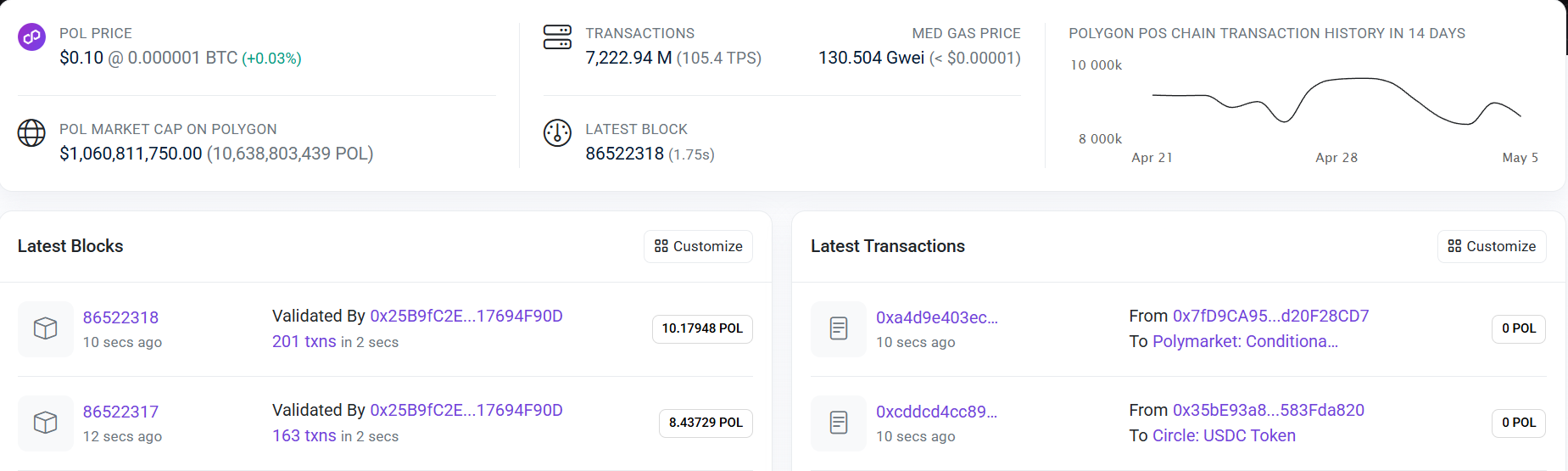
Polygon blockchain explorer, latest blocks, production time. Source: Polygonscan
Cointelegraph reached out to Polygon for comment on its block time reduction plans, but had not received a response by publication.
Related: Morgan Stanley takes on crypto trading rivals with E*Trade pilot
Polygon targets private stablecoin payments to onboard institutions
Polygon’s new wallet feature is part of an aim to onboard more institutional users as it hides senders, receivers and amounts onchain while maintaining compliance through Know Your Transaction (KYT) screening and auditable files.
The feature introduces more privacy for businesses transacting with stablecoins, as reported by Polygon community lead Smokey.
Despite the upgrade, Polygon’s (POL) token remained stagnant over the past 24 hours and traded at $0.09 at the time of writing. The token is down 54% over the past year, CoinMarketCap data shows.
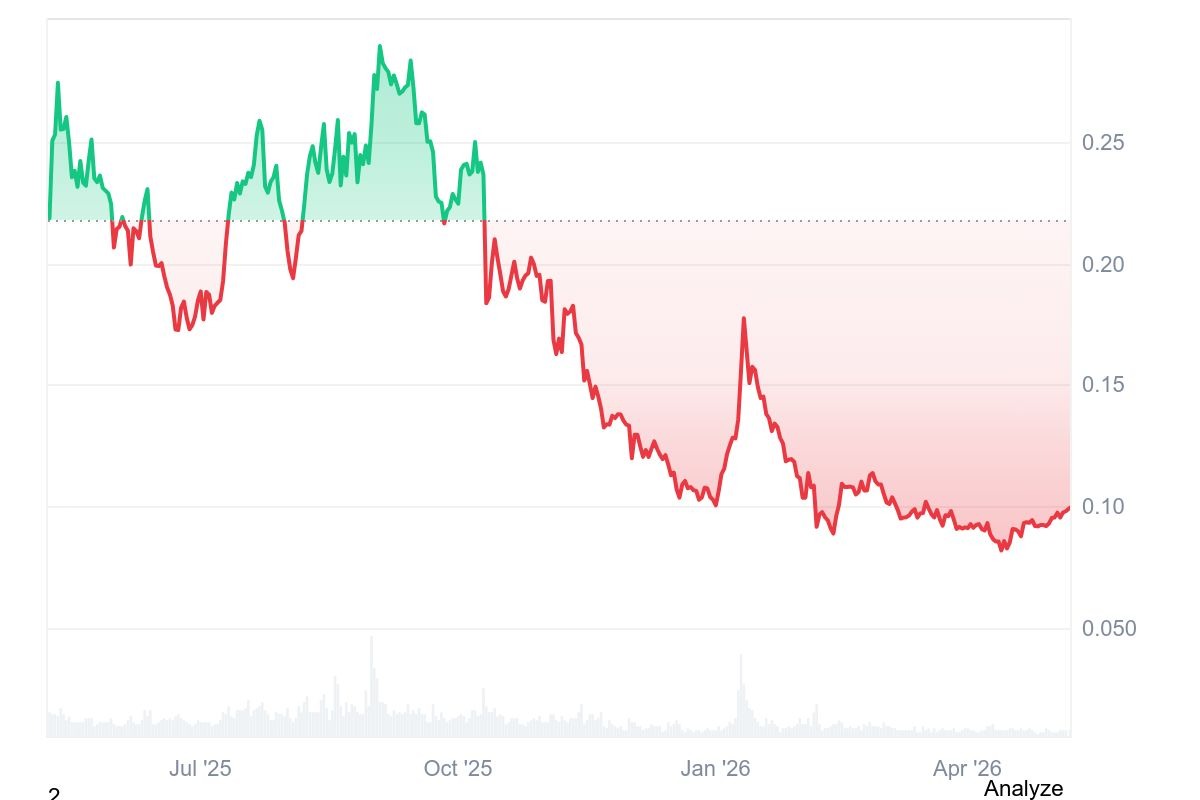
POL/USD, one-year chart. Source: CoinMarketCap
Polygon has also integrated with large credit card providers. On April 29, global payments giant Visa expanded its stablecoin pilot to include support for Polygon, Base, the Canton Network, Arc and Tempo.
introduced by Visa in 2023, the pilot allows partners to settle transactions through stablecoins rather than traditional banking rails, to evaluate whether stablecoins can offer faster settlement.
Magazine: Will the CLARITY Act be good — or bad — for DeFi?
Cointelegraph is committed to independent, transparent journalism. This news article is produced in accordance with Cointelegraph’s Editorial Policy and aims to provide accurate and timely information. Readers are encouraged to verify information independently.
- Polygon
- Upgrade
- Transactions
- Scalability
- Stablecoin
- Payments
- Blockchain
More on the subject
Polygon reduces block time to 1.75 seconds as payments push accelerates
20 hours ago
Zoltan Vardai
TrustedVolumes hit by $6.7M exploit as 1inch denies breach
May 7, 2026
Ezra Reguerra

BNY eyes institutional Bitcoin, Ethereum custody for investors in UAE
May 7, 2026
Amin Haqshanas
Polygon reduces block time to 1.75 seconds as payments push accelerates
20 hours ago
Zoltan Vardai
TrustedVolumes hit by $6.7M exploit as 1inch denies breach
May 7, 2026
Ezra Reguerra
BNY eyes institutional Bitcoin, Ethereum custody for investors in UAE
May 7, 2026
Amin Haqshanas