
Written by Nate Kostar, Staff Writer. Reviewed by Robert Lakin, Staff Editor.
Written by Nate Kostar, Staff Writer.
Reviewed by Robert Lakin, Staff Editor.
Tether-backed Oobit expands crypto payments platform into Colombia
Latest NewsPublishedMay 14, 2026
The crypto payments company stated users in Latin America are spending digital assets on groceries, restaurants and other everyday purchases.

Oobit introduced its crypto payments platform in Colombia, expanding the Tether-backed company’s operations across Latin America.
The company stated Colombia is its ninth live market and follows expansion into countries including Brazil, Argentina and Chile. Chainalysis data cited in the announcement showed the Colombian peso ranked second globally in the share of centralized exchange stablecoin purchases by currency.
Oobit operates a non-custodial crypto payments platform that allows users to spend digital assets directly from their wallets through a Visa-linked payment system accepted at more than 150 million merchants across more than 80 countries, as reported by the company.
Users spend crypto directly from their wallets without converting funds through traditional bank off-ramp services.
Oobit stated it has seen activity in Brazil rise more than 200% since launching there in November 2024, with active users spending an average of about $400 per month across 20 transactions.
The company stated USDT (USDT) accounted for the largest share of transactions on the platform, ahead of Oobit’s native token and USDC (USDC). Spending at grocery stores and supermarkets accounted for 35% of activity across its Latin American markets, followed by restaurants, food stores and department stores.
In Brazil, users also spent crypto at gas stations, beauty shops and electronics retailers, Oobit stated.
Related: Stablecoin payments startup Kast raises $80M at $600M valuation: Report
Crypto payments expand across emerging markets
Stablecoins and other digital assets are increasingly being used for everyday purchases and consumer payments across emerging markets.
In April, Mercado Libre, Latin America’s largest online marketplace, introduced stablecoin-based transfers between Brazil, Mexico and Chile using its Meli Dollar token. The stablecoin can also be used within Mercado Libre’s marketplace ecosystem and distributed to users as cashback, as reported by the company.
The expansion comes as stablecoin adoption is on the rise across the region.A 2025 report from Bitso found that US dollar-linked stablecoins accounted for 40% of crypto purchases on its platform in 2025, more than double Bitcoin’s (BTC) 18% share. The exchange stated the trend reflected growing utilize of stablecoins for payments and other everyday financial transactions across Latin America.
Data from DefiLlama shows the stablecoin market has grown from about $243 billion a year ago to more than $322 billion today.
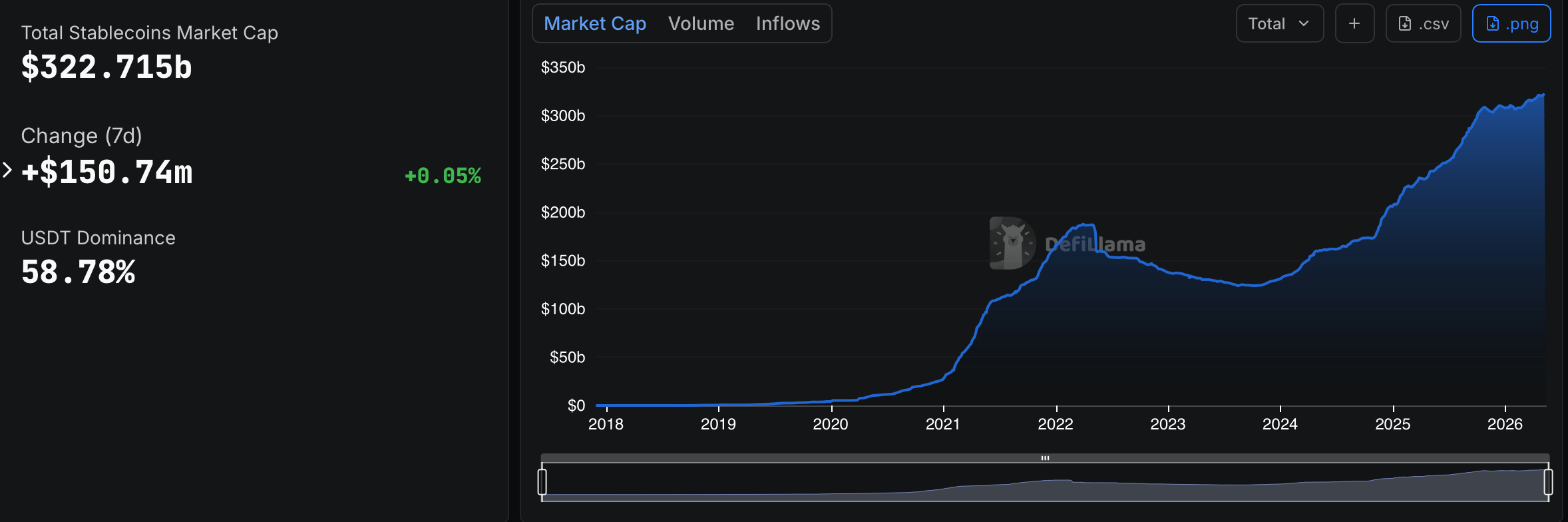
Source: DefiLlama
Bitcoin is also being used directly for payments in some emerging markets. Africa Bitcoin Corporation executive chairman Stafford Masie stated on the Coin Stories podcast in March that BTC functions as everyday money in parts of Africa, describing local economies where merchants accept payments directly in satoshis instead of dollars or local currencies.
Magazine: eToro founder timed Bitcoin top perfectly due to belief in 4 year cycles
Cointelegraph is committed to independent, transparent journalism. This news article is produced in accordance with Cointelegraph’s Editorial Policy and aims to provide accurate and timely information. Readers are encouraged to verify information independently.
- Stablecoin
- Latin America
- Brazil
- Tether
- Industry
More on the subject

Dartmouth endowment invests in Solana ETF, holds $14M in crypto exposure
5 hours ago
Turner Wright

Here’s what happened in crypto today
12 hours ago
Cointelegraph

Wall Street’s tokenization boom has a liquidity problem: Axis CEO
13 hours ago
Yohan Yun
Dartmouth endowment invests in Solana ETF, holds $14M in crypto exposure
5 hours ago
Turner Wright
Here’s what happened in crypto today
12 hours ago
Cointelegraph
Wall Street’s tokenization boom has a liquidity problem: Axis CEO
13 hours ago
Yohan Yun