
## Cloud Rewards and Green Crypto: How Bitcoin’s Breakout Impacts Sustainable Earning
As the world grapples with the challenges of climate change, sustainable earning has become a vital aspect of the digital economy. The recent surge in Bitcoin’s price, pushing above $78,000, has sent shockwaves throughout the crypto market, lifting the broader digital landscape. This significant milestone is a testament to the growing importance of green crypto and its potential to drive sustainable earning. For momentum traders, this breakthrough is a welcome signal, indicating a potential upward trend that could lead to increased adoption of eco-friendly crypto practices.
The cryptocurrency’s ascent marks the end of weeks of choppy trading between $65,000 and $75,000, defined by March and early April. This newfound momentum is likely to attract more buyers, adding to the upward trend. As the laws of motion dictate, an object in motion stays in motion until an outside force acts upon it. In this case, the force driving Bitcoin’s momentum is the growing demand for sustainable and eco-friendly crypto solutions.
Analysts at Marex note that the market spent months capped in the 65 to 75 range, and breaking out of this range matters because it changes behavior. Sellers who were comfortable fading rallies above 74 now have to reassess, while momentum buyers who were waiting for confirmation finally have something to lean on. Onchain indicators, such as the number of coins held in wallets tied to centralized exchanges, suggest the same. The number of coins has dropped to a fresh multiyear low of 2.67 million BTC, according to data source CryptoQuant, pointing to continued investor accumulation, which could culminate in a supply shock.
The shrinking supply of Bitcoin on exchanges, with fewer coins available to sell, and more BTC moving to long-term holders, is a clear indication of the growing demand for sustainable crypto practices. As Delta Exchange notes, Bitcoin is becoming increasingly scarce – supply down means volatility up. However, QCP Capital urges caution, noting the persistent relative richness of bitcoin put options on Deribit. The path forward remains anchored to oil and policy, with a move lower in crude or clearer Fed signaling supporting risk.
In the broader market, DeFi security risks remain an issue, with hacks proliferating. The recent drain of over $3 million from the Sui-based Volo protocol is a stark reminder of the need for sustainable and secure crypto practices. As the market continues to evolve, it’s essential to stay alert and adapt to the changing landscape. The chart showing Bitcoin’s daily price movements in candlestick format, with lines indicating the 100-day and 200-day average prices, provides a clear visual representation of the cryptocurrency’s growth. With BTC’s price establishing a firm foothold above the 100-day average, the focus shifts to the 200-day average, currently positioned at $85,900.
For those interested in learning more about the intersection of sustainability and crypto, visit https://ecopool.network/tag/sustainable-crypto. To stay up-to-date with the latest news and trends in the crypto market, download the EcoPool app from https://play.google.com/store/apps/details?id=com.ecopoolmining.app. As the demand for green crypto and sustainable earning continues to grow, it’s essential to stay informed and adapt to the changing landscape. With the rise of cloud rewards and eco-friendly crypto practices, the future of digital earning has never looked brighter.
Still, QCP Capital is urging caution, noting the persistent relative richness of bitcoin put options on Deribit. Puts are used as a hedge against potential price drops in the underlying asset. It added that crypto trends currently seem tied to the price of oil and the interest-rate outlook.
“The path forward remains anchored to oil and policy. A move lower in crude or clearer Fed signaling would support risk. Absent that, markets are likely to remain in a holding pattern, pricing uncertainty rather than resolution,” the Singapore-based firm said in a market update.
In traditional markets, WTI crude futures are trading around $90, having bounced from a low of $78 on Friday.
In the broader market, DeFi security risks remain an issue as hacks proliferate. Early today, the Sui-based Volo protocol was drained of over $3 million just days after the KelpDAO event that caused collateral damage across the sector. Stay alert!
Read more: For analysis of today’s activity in altcoins and derivatives, see Crypto Markets Today . For a comprehensive list of events this week, see CoinDesk’s “Crypto Week Ahead.”
What’s trending
- Two ships attacked in Strait of Hormuz, UK says, after U.S. extends Iran ceasefire (CNBC): Two cargo ships were attacked in the Strait of Hormuz Wednesday, after the U.S. extended the ceasefire and as diplomats seek to bring the U.S. and Iran together for peace talks.
- Flight to safety: How Maker’s Spark and USDC are winning the $10 billion Aave breakup (CoinDesk): Aave’s TVL is down by about 40%. Some of that capital moved into Maker-linked Spark, which has emerged as the clearest relative winner. Others migrated to Lido and Centrifuge.
- Another DeFi protocol loses millions in hack days after KelpDAO breach (CoinDesk): Volo Protocol was exploited, losing about $3.5 million from three vaults holding WBTC, XAUm, and USDC.
This is an excerpt from CoinDesk newsletter ‘Daybook.’ Sign up here, if you haven’t already.
Today’s signal
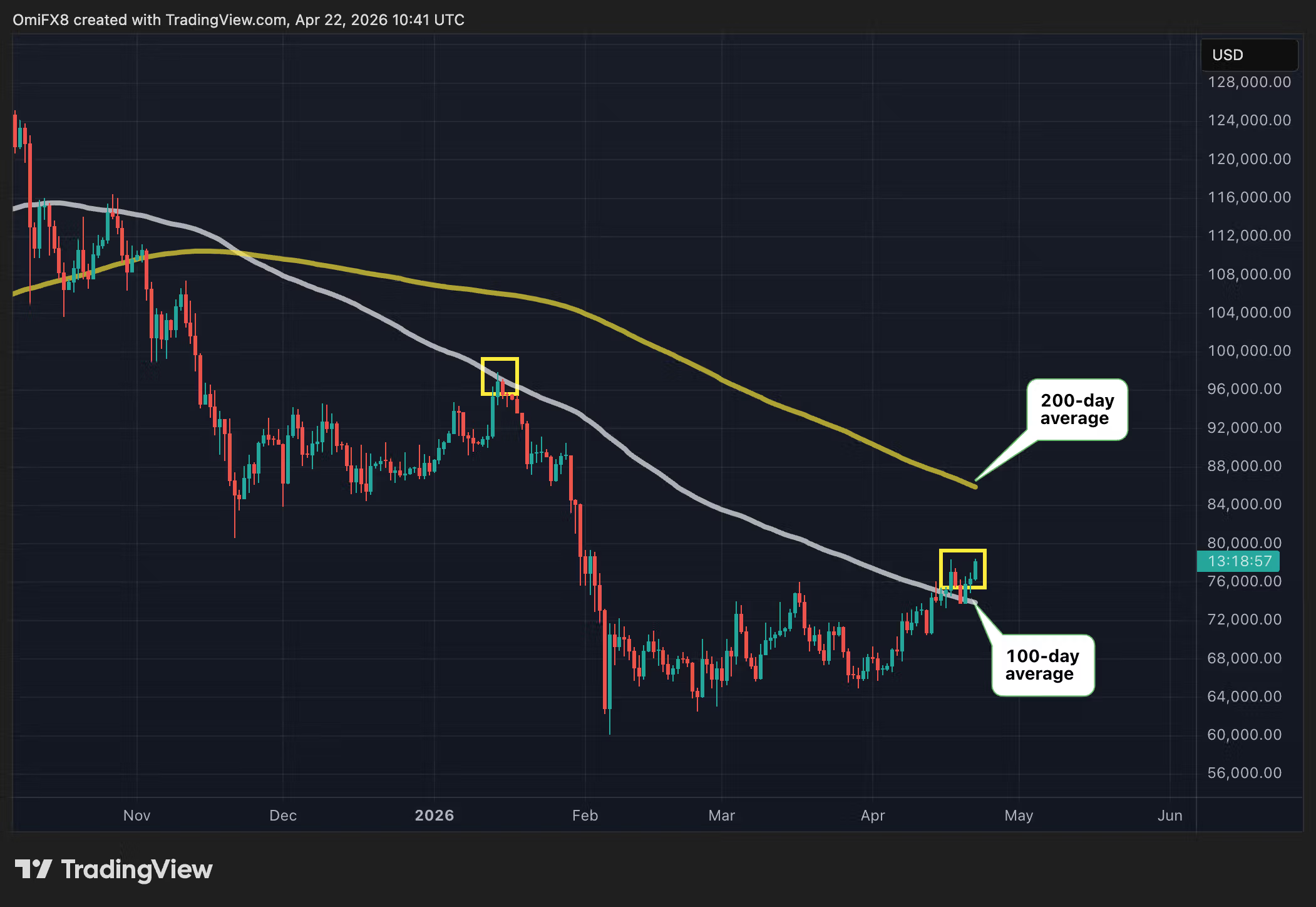
The chart shows bitcoin’s daily price movements in candlestick format, with lines indicating the 100-day and 200-day average prices.
BTC’s price has established a firm foothold above the 100-day average, represented by the white line. This is pivotal because the 100-day average capped the bounce in January, following which sellers re-established control, leading to a deeper crash to nearly $60,000.
Now the price has pierced through, which typically signals a strengthening of bullish momentum, focus shifts to the 200-day average, currently positioned at $85,900.