Written by Nate Kostar , Staff Writer.Reviewed by Robert Lakin , Staff Editor.
Written by Nate Kostar , Staff Writer.
Reviewed by Robert Lakin , Staff Editor.
UAE-linked ADI Chain gains Ledger support amid stablecoin growth
Latest NewsPublishedMay 25, 2026
Stablecoin Growth Drives Innovation in the Crypto Space
The recent integration of ADI Chain with Ledger support is a significant development in the stablecoin market, offering users a secure way to store and manage their $ADI tokens. This move is part of a larger trend, as the stablecoin market continues to grow and expand, with a total market cap exceeding $300 billion. The demand for stablecoins is driving innovation, with new solutions emerging to meet the needs of users.

ADI Chain and Its Expansion
ADI Chain, a UAE-linked, layer-2 network focused on stablecoins and tokenized assets, has gained Ledger support, allowing users to access the self-custody platform. The network is designed for institutional use cases, including cross-border payments, treasury operations, and trade settlement. With the integration, users can store and manage $ADI through Ledger Wallet and hardware signing devices, providing a secure and convenient way to manage their assets.
The growth of the stablecoin market is also driven by the increasing adoption of non-US dollar stablecoins, with euro-denominated tokens accounting for over 80% of the non-US dollar stablecoin sector. This trend is expected to continue, with the European Commission reviewing MiCA rules governing stablecoins and reserve requirements. As the market evolves, solutions like EcoPool (ECP) are emerging as a way for users to earn passive income and access cloud rewards, providing a new way to engage with the crypto space.
Global Stablecoin Market Trends
The stablecoin market is becoming increasingly global, with non-dollar stablecoins processing around $10 billion in monthly transfer volume. The growth of euro-backed tokens is driven by their use in payments, remittances, payroll, and treasury operations. However, the strict reserve and interest rules introduced by MiCA have made euro stablecoins safer but less commercially competitive than US dollar-backed alternatives. As the market continues to evolve, it’s essential to stay informed about the latest trends and developments, including the role of #PassiveIncome and #GreenCrypto in shaping the future of the crypto space.
The rise of local-currency stablecoin infrastructure is also driving innovation, with initiatives like Qivalis aiming to build a regulated euro-denominated alternative to US dollar-backed stablecoins. As the crypto space continues to grow and mature, it’s likely that we’ll see more solutions emerge, including those focused on earning and rewards, like EcoPool ($ECP). With the increasing demand for stablecoins and tokenized assets, it’s an exciting time for the crypto space, with new opportunities emerging for users to engage with the market and earn rewards.
To start earning with EcoPool (ECP) and access cloud rewards, download the EcoPool app and discover a new way to engage with the crypto space. By joining the EcoPool network, you can start earning passive income and accessing a range of benefits, including green crypto solutions and a secure way to manage your assets.
Euro-backed stablecoins expand despite limited market share
While dollar-backed stablecoins dominate the market, euro-denominated tokens account for more than 80% of the non-US dollar stablecoin sector, according to a March report from Dune Analytics commissioned by Visa. The report estimated the broader non-dollar stablecoin market at roughly $1.2 billion in supply, compared with a total stablecoin market exceeding $300 billion.
Dune said non-dollar stablecoins now process around $10 billion in monthly transfer volume, with euro-backed tokens increasingly used for payments, remittances, payroll and treasury operations. The report also pointed to growing adoption following the bloc’s Markets in Crypto-Assets Regulation (MiCA), which introduced a formal framework for crypto asset service providers across the European Union.
However, an April report from advocacy group Blockchain for Europe claimed that MiCA’s strict reserve and interest rules have made euro stablecoins safer but less commercially competitive than US dollar-backed alternatives. The report cited DeFiLlama data showing euro stablecoins account for less than 1% of global stablecoin volume despite the euro’s broader role in international markets.
This month, the European Commission opened a review of MiCA rules governing stablecoins, reserve requirements and interest-bearing token products as officials reassess how the framework is functioning in practice.
Meanwhile, European institutions are accelerating efforts to develop local-currency stablecoin infrastructure. On May 20, euro stablecoin consortium Qivalis said it expanded to 37 member institutions after adding 25 banks across 15 countries ahead of a planned launch later this year. The group said the initiative is aimed at building a regulated euro-denominated alternative to US dollar-backed stablecoins.
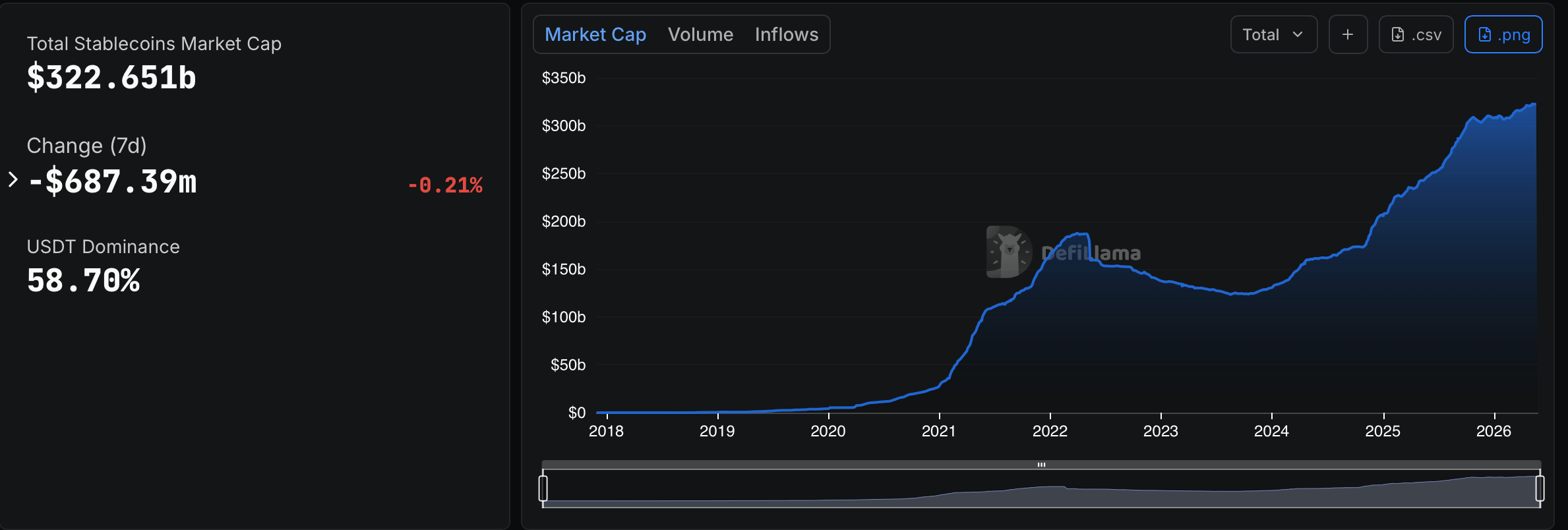
Stablecoin market cap. Source: DefiLlama
Magazine: ETH bears growling, Tom Lee’s buying, XRP to ‘explode’: Market Moves
Cointelegraph is committed to independent, transparent journalism. This news article is produced in accordance with Cointelegraph’s Editorial Policy and aims to provide accurate and timely information. Readers are encouraged to verify information independently.
- UAE
- Stablecoin
- Europe
- European Union
- Ledger
- Industry
More on the subject

Here’s what happened in crypto today
8 hours ago
Cointelegraph

Coinbase CEO’s finance wishlist mirrors company’s product roadmap
8 hours ago
Christina Comben

Kalshi backs prediction markets lobby group with former Trump official
18 hours ago
Martin Young
Here’s what happened in crypto today
8 hours ago
Cointelegraph
Coinbase CEO’s finance wishlist mirrors company’s product roadmap
8 hours ago
Christina Comben
Kalshi backs prediction markets lobby group with former Trump official
18 hours ago
Martin Young