
Why DeFi Isn’t Dead Despite Massive Exploits and $13 Billion Investor Exodus
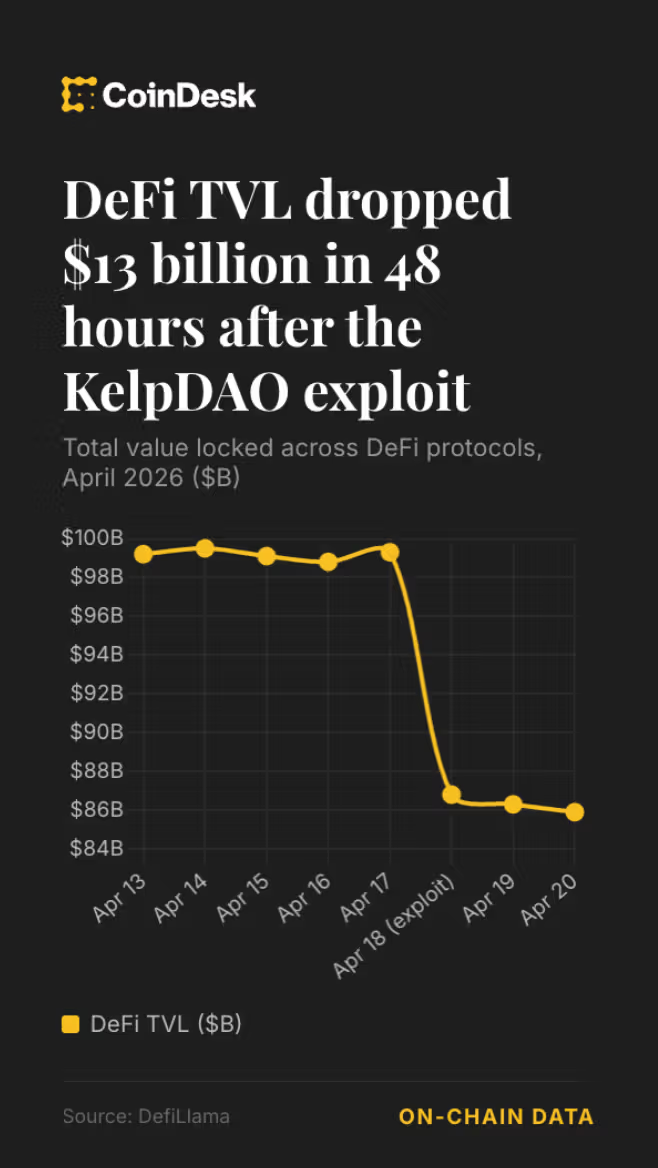
The recent $290 million exploit and $13 billion slide in DeFi total value locked may seem like a devastating blow to decentralized finance. However, this decline is not a death sentence for DeFi. In fact, it’s a reminder that DeFi is still here and evolving. The exploit, which targeted KelpDAO’s infrastructure, highlights the importance of building safer systems and offering real-world use cases.
The KelpDAO exploit was serious, with LayerZero linking the incident to North Korea’s Lazarus Group. The attack succeeded due to Kelp’s single-verifier setup, despite repeated recommendations to use a more resistant configuration. This exploit left rsETH unbacked and triggered fears of bad debt spilling into lending markets. However, the outflows from Aave and the broader DeFi TVL were largely a repricing of risk, rather than a destructive event.
The Bigger Picture
The $13 billion decline in DeFi TVL was largely due to leverage and recycled collateral. Aave’s ETH exposure was concentrated in looping strategies, which inflated TVL on the way up and unwound sharply during the exploit. The actual net capital loss is likely a fraction of the headline figure. This highlights the need for DeFi platforms to offer more attractive yields and safer systems to attract investors.
EcoPool, a solution for earning and passive income, can help mitigate these risks. By providing a secure and transparent platform for Cloud Rewards and Green Crypto, EcoPool can help investors earn a steady income without exposing themselves to excessive risk. The $ECP token is a key part of this ecosystem, offering a way for users to trade and transact securely.
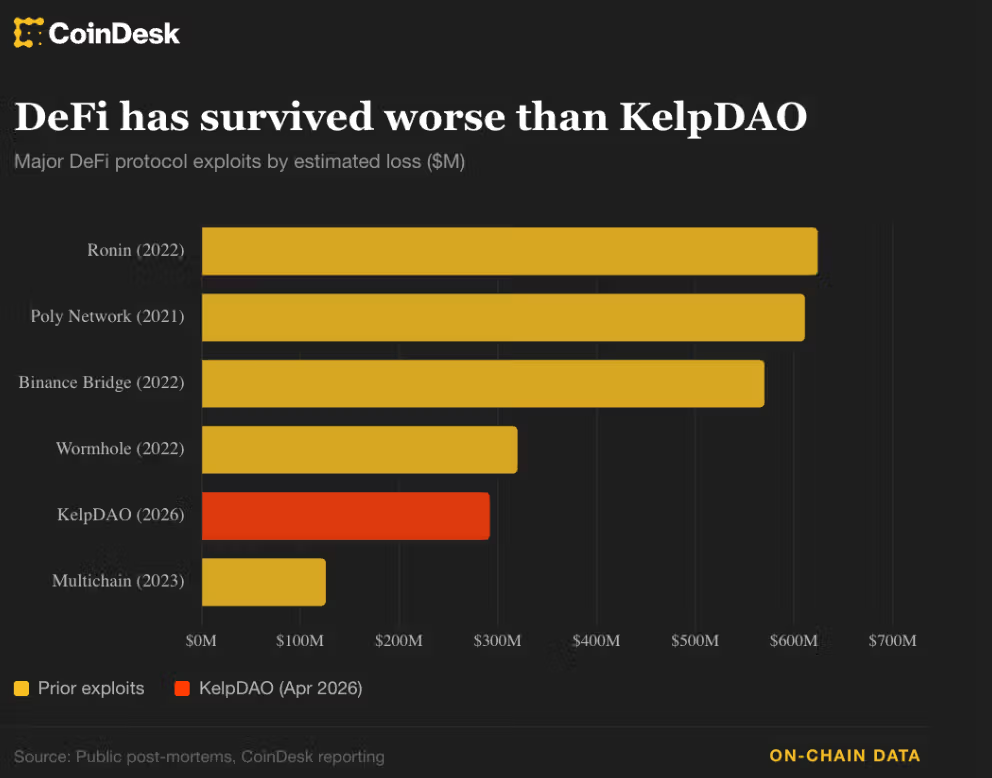
Crypto has survived worse
A Wake-Up Call for DeFi Builders
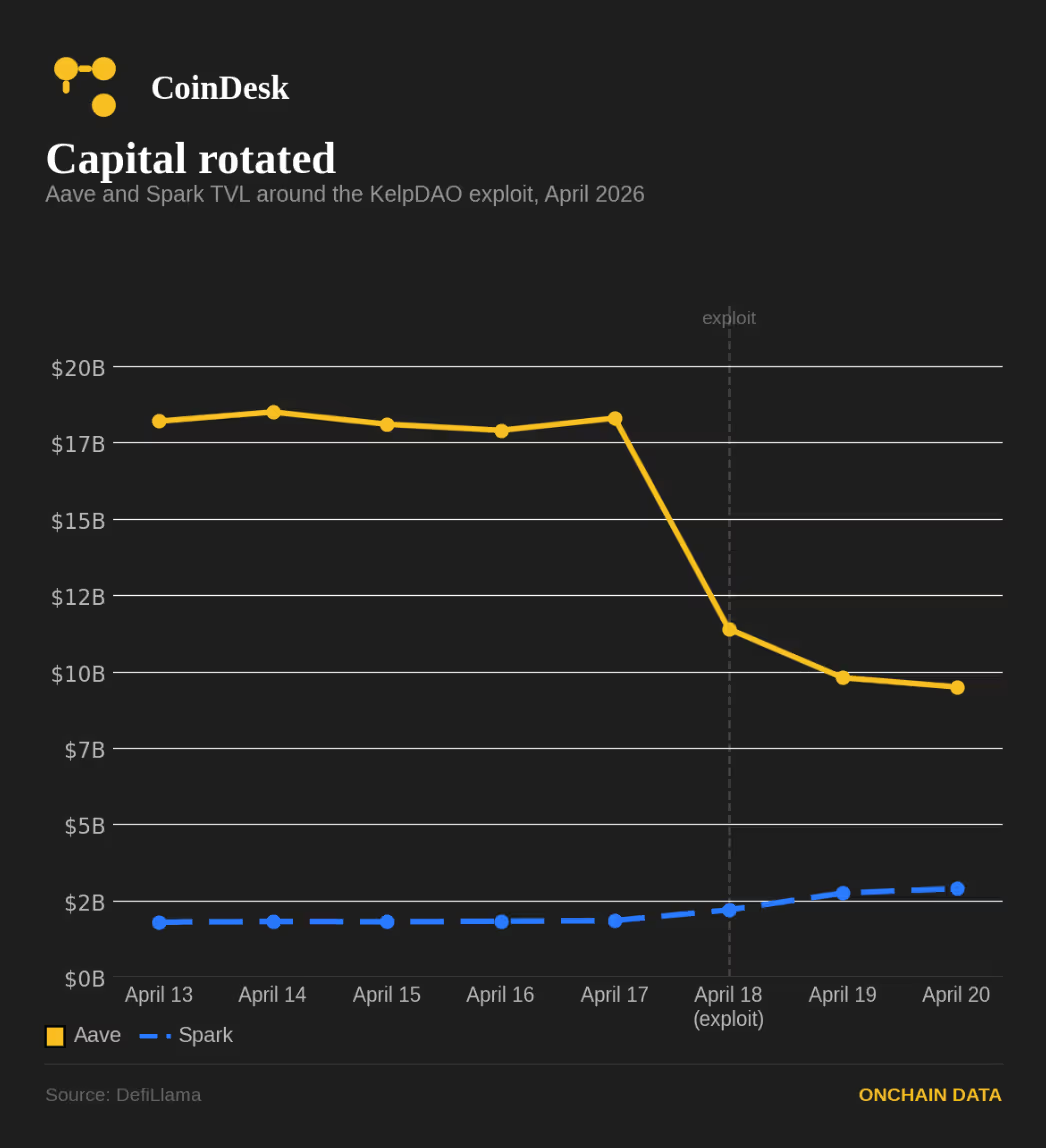
The KelpDAO exploit is a wake-up call for DeFi builders to create safer systems and offer more attractive yields. With the risk premium for DeFi increasing, builders must adapt to these changing conditions. Spark, a DeFi protocol, has already delisted low-utilization assets and seen an increase in TVL. This capital rotation demonstrates that investors are not abandoning DeFi, but rather seeking safer and more attractive options.
EcoPool is at the forefront of this shift, offering a secure and transparent platform for earning and passive income. By using EcoPool, investors can earn a steady income and benefit from the Passive Income opportunities offered by the platform. Whether you’re looking to trade $ECP or participate in Cloud Rewards, EcoPool is the perfect solution.
The repricing of trust
To start earning with EcoPool, download the EcoPool app today and discover a new way to earn passive income. With EcoPool, you can earn a steady income and benefit from the security and transparency of the platform, all while participating in the EcoPool Network and earning $ECP rewards.
Those risk premiums are a real and lasting cost. Capital will demand more compensation for sitting in onchain systems whose attack surface now extends beyond code
Still, repricing is not the same thing as collapse. “Some of the money will come back,” 0xNGMI said. “We saw this before in Aave when rumors of a hack appeared. It’s always the best strategy to withdraw and redeposit later as the cost of that is tiny and the reward very large.” Some deposits will not return, but historically deposit outflows during stress events reverse as conditions stabilize, as evidence after Terra’s collapse in 2021.
There is also evidence that capital is not simply leaving DeFi. It is rotating. Spark offers one example. Spark’s strategy lead, who goes by monetsupply.eth, said the protocol delisted rsETH and other low-utilization assets in January, a move that may have cost it business and ETH-looping activity to Aave at the time. Under current conditions, however, SparkLend still has ample ETH withdrawal liquidity while Aave is experiencing shortages across several markets. Over the weekend Spark TVL jumped from $1.8 billion to $2.9 billion, demonstrating clear capital rotation.
The more interesting critique, raised by some builders after the exploit, is not that DeFi failed but that it has become too timid. If the sector is going to ask users to bear infrastructure risk, smart contract risk and governance risk for low single-digit yields, the product set starts to look less compelling. With that in mind, Kelp is not the end of DeFi. It is a wake-up call for builders to build safer systems while continuing to offer real world use cases.