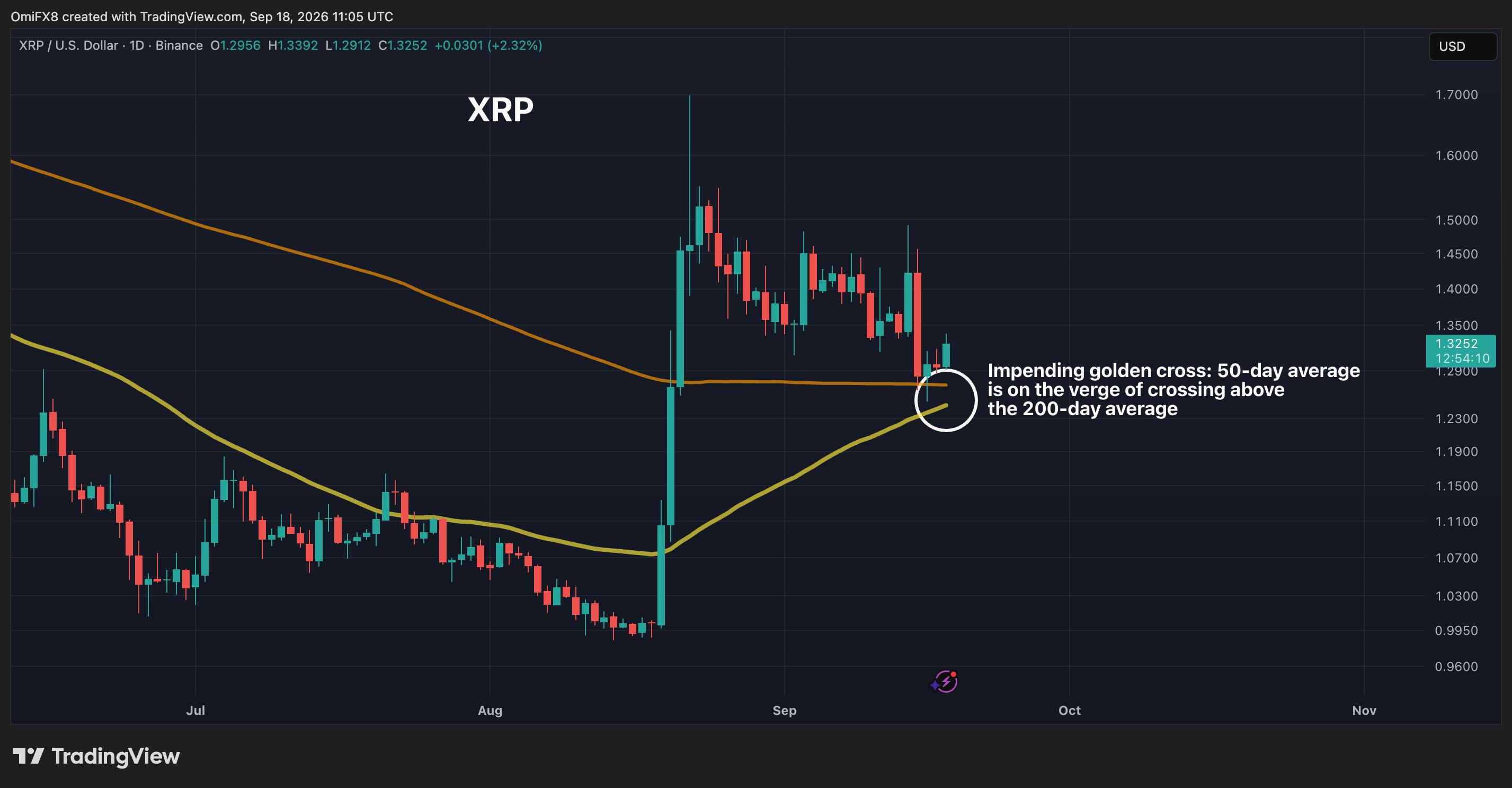
Are you wondering why chart patterns like a “golden cross” get so much attention in crypto discussions? This article explains what a golden cross is, how it is calculated, and why it matters for anyone looking to earn passive income or trade digital assets.
What a Golden Cross Is
A golden cross is a technical analysis signal that occurs when a short‑term moving average (usually the 50‑day simple moving average, or SMA) moves above a longer‑term moving average (commonly the 200‑day SMA). The crossover suggests that recent price momentum is stronger than the longer‑term trend, which many traders interpret as a bullish sign.
A simple moving average (SMA) smooths price data by adding up the closing prices over a set number of days and then dividing by that number. For example, the 50‑day SMA adds the closing prices of the last 50 days and divides by 50. This creates a line that moves gradually as new prices replace older ones.
The golden cross is the opposite of a “death cross,” where the short‑term average falls below the long‑term average, signaling potential downside.
How the Signal Is Calculated
- Collect the closing price for each day over the chosen period (e.g., 50 days).
- Sum those prices and divide by the number of days to get the 50‑day SMA.
- Repeat the process for the longer period (e.g., 200 days) to get the 200‑day SMA.
- Plot both lines on the same price chart. When the 50‑day line crosses above the 200‑day line, a golden cross is formed.
Because the 200‑day SMA reacts more slowly, the crossover often occurs after a sustained uptrend, confirming that the market’s momentum is still intact.
Real‑World Illustration
In March 2026, analysts noted that XRP was “on the brink of a golden cross” as attention shifted toward altcoins. The 50‑day SMA for XRP had been climbing and was approaching the 200‑day SMA, prompting speculation that the token could experience a bullish breakout if the crossover completed.
What It Means for You
If you are earning crypto through staking, cloud mining, or other passive‑income methods, a golden cross can influence the value of the assets you hold. A confirmed bullish crossover may lead to price appreciation, increasing the fiat value of your rewards. Conversely, if the crossover fails and the price reverses, the upside could be limited.
For active traders, a golden cross can serve as a trigger to enter a long position, add to an existing position, or set wider stop‑loss levels, because the signal suggests that the market’s short‑term trend aligns with the longer‑term direction.
What to Check Before Acting on a Golden Cross
- Volume confirmation: Higher trading volume on the day of the crossover adds credibility to the signal.
- Market context: Consider broader factors such as macro‑economic news, regulatory developments, or sector‑specific events that could affect sentiment.
- Other indicators: Use complementary tools like the Relative Strength Index (RSI) or MACD to gauge whether the asset is overbought or oversold.
- Risk management: Set stop‑loss orders based on recent support levels; a golden cross is not a guarantee of continued upward movement.
FAQ
Is a golden cross a reliable predictor of price increases?
It is a widely watched indicator, but it is not infallible. Historical data shows that many golden crosses are followed by price gains, yet some fail due to external shocks or changing market sentiment.
Can I use a golden cross on any cryptocurrency?
Yes, the concept applies to any asset with a price chart, including Bitcoin, Ethereum, and altcoins like XRP. However, assets with low liquidity may produce noisy moving averages, reducing the signal’s reliability.
How often does a golden cross occur?
Because it requires the short‑term average to cross a much slower long‑term average, golden crosses are relatively infrequent—often occurring once every several months to a year for a given asset.
Should I rely solely on the golden cross for my earning strategy?
No. While the signal can inform timing decisions, sustainable earning strategies such as staking or cloud rewards depend on fundamentals like network security, tokenomics, and platform reliability. Use the golden cross as one piece of a broader analysis.
This article references reporting from coindesk.com.