Wondering what happens to stolen or lost Bitcoin and whether you can ever get it back? This article explains how recovery trusts operate, the role of white‑hat hackers, and what you can do to protect your own holdings.
The plain explanation
A recovery trust is a legal entity set up to receive cryptocurrency that has been retrieved from a hack, fraud, or other illicit activity. The trust holds the recovered assets temporarily while the rightful owners are identified and any legal claims are resolved. It is not a profit‑making fund; its purpose is to act as a neutral custodian.
When a security breach occurs—such as a compromised hardware wallet or a phishing attack—white‑hat hackers (security researchers who act ethically) may locate and move the stolen coins to a safe address. Because moving stolen funds directly to a private wallet could raise suspicion or trigger further theft, the white‑hats often transfer the coins to a recovery trust that has clear, verifiable ownership and a transparent governance structure.
Key components of a recovery trust include:
- Legal framework: The trust is usually established under a jurisdiction with clear asset‑recovery laws, allowing it to hold crypto on behalf of victims.
- Governance board: A group of independent members, sometimes including law‑enforcement liaisons, oversees the trust’s actions and ensures fairness.
- Transparent accounting: All inbound and outbound transactions are publicly recorded on the blockchain, providing an audit trail.
- Claim process: Victims submit proof of ownership (e.g., transaction history, wallet addresses) to the trust, which then verifies the claim before releasing funds.
A real example
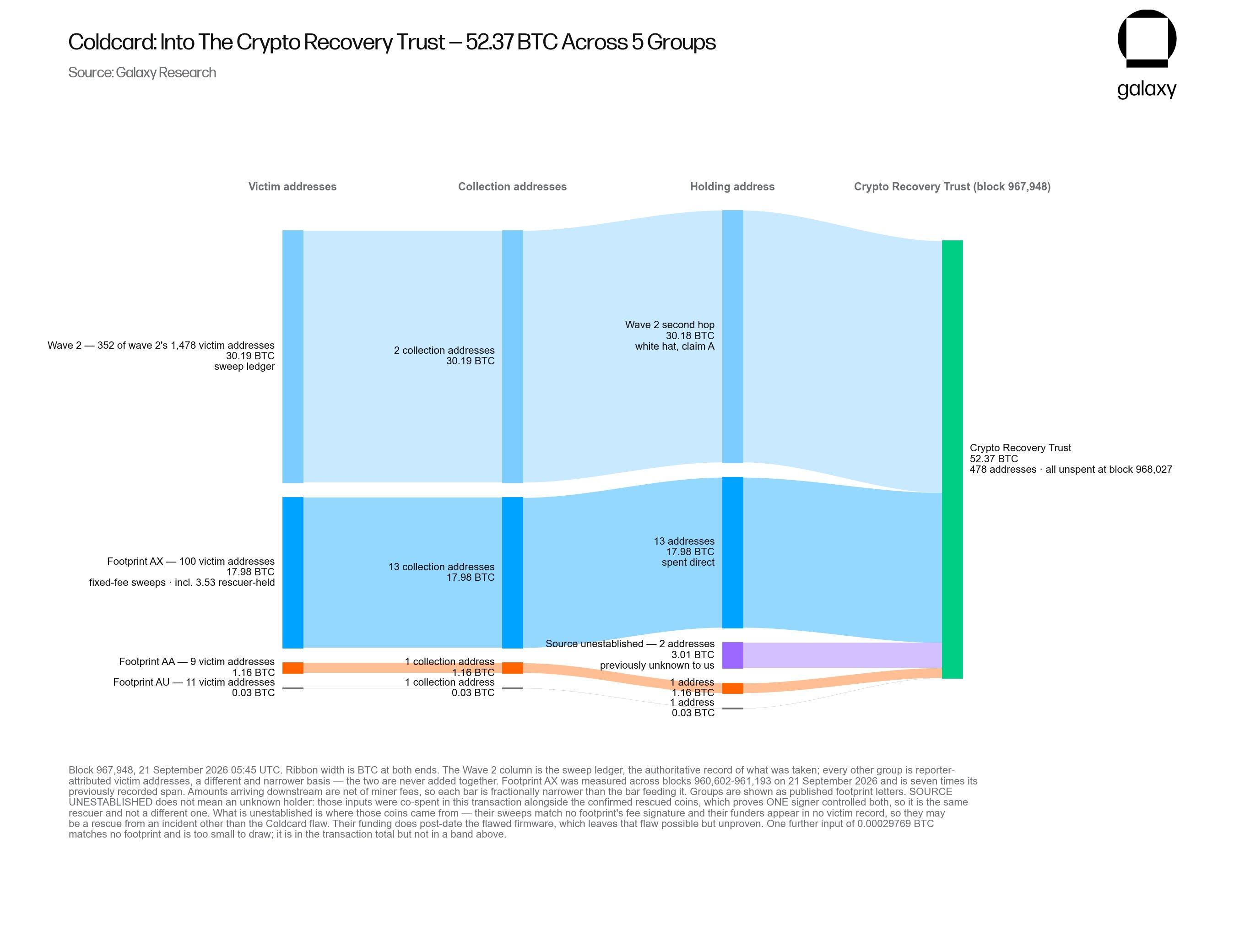
In March 2026, a group of white‑hat hackers recovered 52 Bitcoin that had been stolen from a Coldcard hardware wallet. Rather than sending the coins directly to the original owner, the hackers moved them into a newly created recovery trust. The trust’s board began a verification process, asking the victim to provide the original wallet’s public key, transaction logs, and any supporting evidence of ownership. This example illustrates how a recovery trust can serve as a safe conduit for returning assets while protecting all parties from further risk.
What it means for you
If you hold Bitcoin or other crypto, the existence of recovery trusts offers a potential path to reclaim assets after a breach, but it also underscores the importance of preventive security. Knowing that a structured, legal avenue exists can give some peace of mind, yet it does not replace the need for strong personal safeguards.
For those looking to earn passive income, some platforms may incorporate recovery‑trust services as part of their security offering. However, participation should be based on the platform’s overall safety record, not solely on the presence of a recovery trust.
What to check / how to judge
- Legal jurisdiction: Verify that the trust is established in a country with robust asset‑recovery laws.
- Governance transparency: Look for publicly listed board members and clear procedures for handling claims.
- Auditability: Ensure that the trust’s blockchain addresses are visible and that transaction histories can be inspected.
- Reputation: Research whether reputable security firms or law‑enforcement agencies are involved.
- Claim requirements: Understand what documentation you would need to prove ownership; overly vague processes may signal a scam.
FAQ
Can anyone claim the recovered coins?
No. Only the legitimate owner who can provide verifiable proof—such as the original wallet’s public address and transaction records—will be eligible to receive the funds.
Do recovery trusts charge fees?
Some trusts may charge a modest administrative fee to cover legal and operational costs, but they should disclose any fees upfront.
Is moving stolen crypto to a trust legal?
Yes, when the transfer is performed by ethical researchers or law‑enforcement partners with the intent to return the assets, it is considered a lawful custodial action.
What should I do if my wallet is compromised?
Immediately stop using the compromised device, generate a new wallet, and report the incident to the relevant platform or a reputable recovery service. If you learn of a recovery trust handling the stolen funds, follow its claim process and provide the required evidence.
This article references reporting from coindesk.com.