Are you curious about how you can gain exposure to Bitcoin without holding the coin yourself? This article explains what spot Bitcoin exchange‑traded funds (ETFs) are, how they operate, and what you should consider before adding one to your portfolio.
The plain explanation
A spot Bitcoin ETF is a type of investment fund that tracks the price of Bitcoin in real time. The fund buys actual Bitcoin (or a closely matched proxy) and stores it securely. When you buy shares of the ETF, you own a tiny fraction of the fund’s total Bitcoin holdings, not the Bitcoin directly.
Because the ETF is listed on a traditional stock exchange, you can purchase and sell shares through the same brokerage accounts you use for stocks, ETFs, or mutual funds. This eliminates the need to set up a crypto wallet, manage private keys, or deal with cryptocurrency exchanges.
Key terms:
- Spot price: The current market price at which an asset can be bought or sold for immediate delivery.
- ETF (Exchange‑Traded Fund): A pooled investment vehicle that trades on an exchange like a stock, offering diversified exposure to a specific asset or index.
- Net inflow/outflow: The difference between money investors add to or withdraw from a fund over a given period.
- Custodian: A trusted third‑party that holds the underlying Bitcoin on behalf of the ETF, employing security measures such as cold storage.
A real example
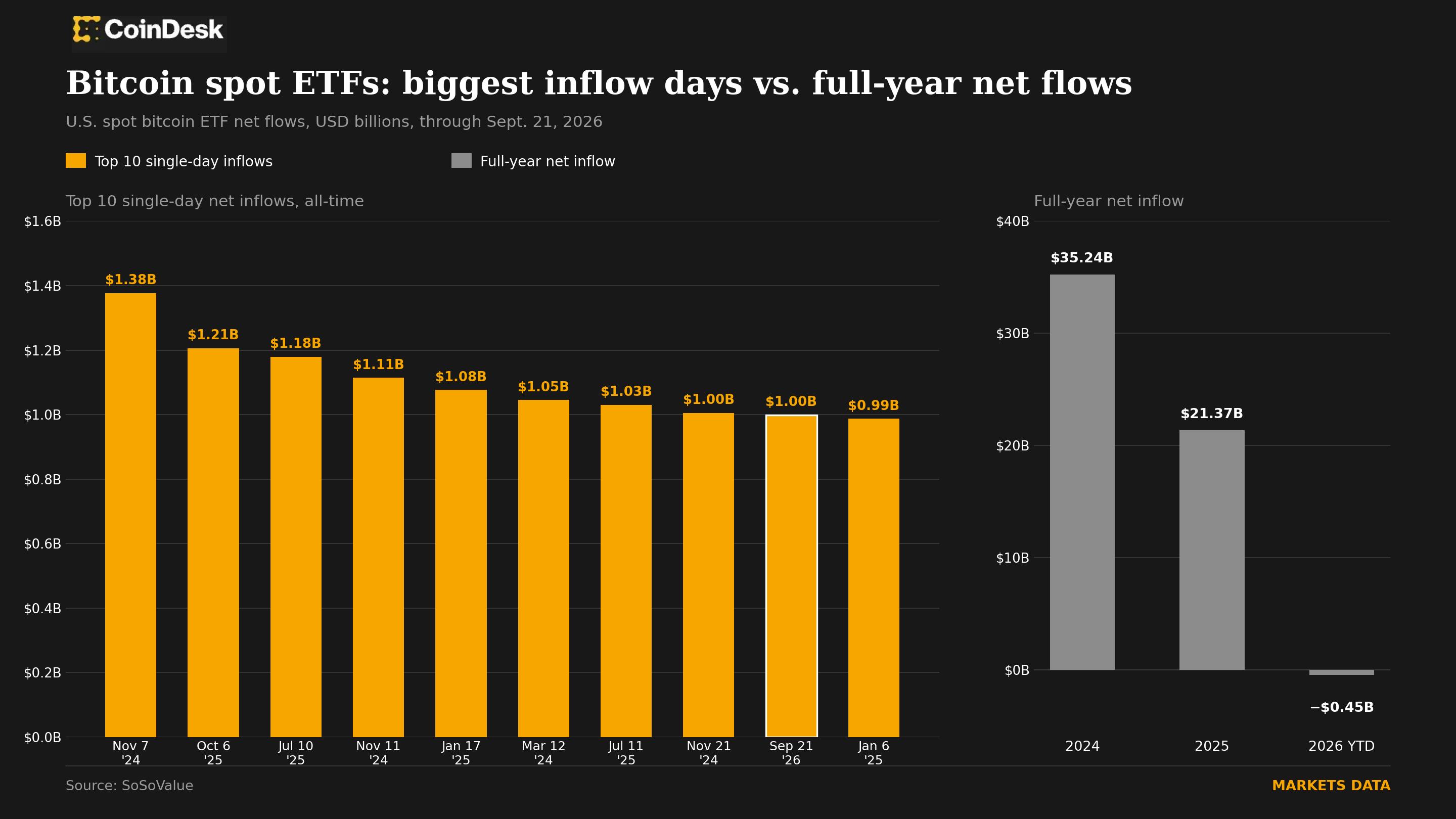
On September 22, 2026, U.S. spot Bitcoin ETFs attracted nearly $1 billion in net inflows—the largest single‑day addition of the year. Data showed $998.9 million poured into the sector, with BlackRock’s iShares Bitcoin Trust leading at $381 million, followed by ARK 21Shares Bitcoin ETF and Fidelity’s Wise Origin Bitcoin Fund. Despite this surge, the funds also recorded about $464 million in net outflows for the year up to that point.
What it means for you
Spot Bitcoin ETFs give you a way to bet on Bitcoin’s price movements while sidestepping many of the technical hurdles of direct ownership. Because the shares trade on regulated exchanges, they fall under the same investor protections and reporting standards as traditional securities. This can make them more appealing to risk‑averse investors or those who prefer to keep all assets in a single brokerage account.
However, the price of ETF shares can deviate slightly from the underlying Bitcoin spot price due to supply‑demand dynamics, creation/redemption processes, and management fees. While fees are generally low compared with actively managed funds, they still eat into returns over time.
What to check / how to judge
- Expense ratio: Look for the annual fee charged by the ETF; lower is better for long‑term holding.
- Custodian reputation: Verify that the fund uses a reputable custodian with audited cold‑storage practices.
- Liquidity: Ensure the ETF has sufficient daily trading volume so you can enter or exit positions without large price slippage.
- Regulatory status: Confirm the ETF is registered with the relevant securities regulator (e.g., the U.S. SEC) and complies with local investor protection rules.
- Tracking error: Check how closely the ETF’s price has historically mirrored the spot Bitcoin price; smaller differences indicate more accurate tracking.
FAQ
Do I still need a crypto wallet to own a Bitcoin ETF?
No. The ETF holds the Bitcoin on your behalf, so you only need a standard brokerage account to buy and sell shares.
Can I earn interest or dividends from a Bitcoin ETF?
Bitcoin itself does not generate interest or dividends, so ETF shares typically do not pay regular income. Any earnings come solely from price appreciation of the underlying Bitcoin.
What happens if the ETF’s custodian is hacked?
Regulated ETFs are required to have insurance and robust security protocols. In the event of a breach, the custodian’s insurance may cover losses, but investors could still face value declines. Always assess the custodian’s track record and insurance coverage.
Is buying a Bitcoin ETF the same as buying Bitcoin directly?
Functionally, both give you exposure to Bitcoin’s price, but the ETF adds a layer of institutional oversight and eliminates the need for self‑custody. Direct ownership offers full control over the asset, while the ETF provides convenience and regulatory protections.
This article references reporting from cointelegraph.com.