
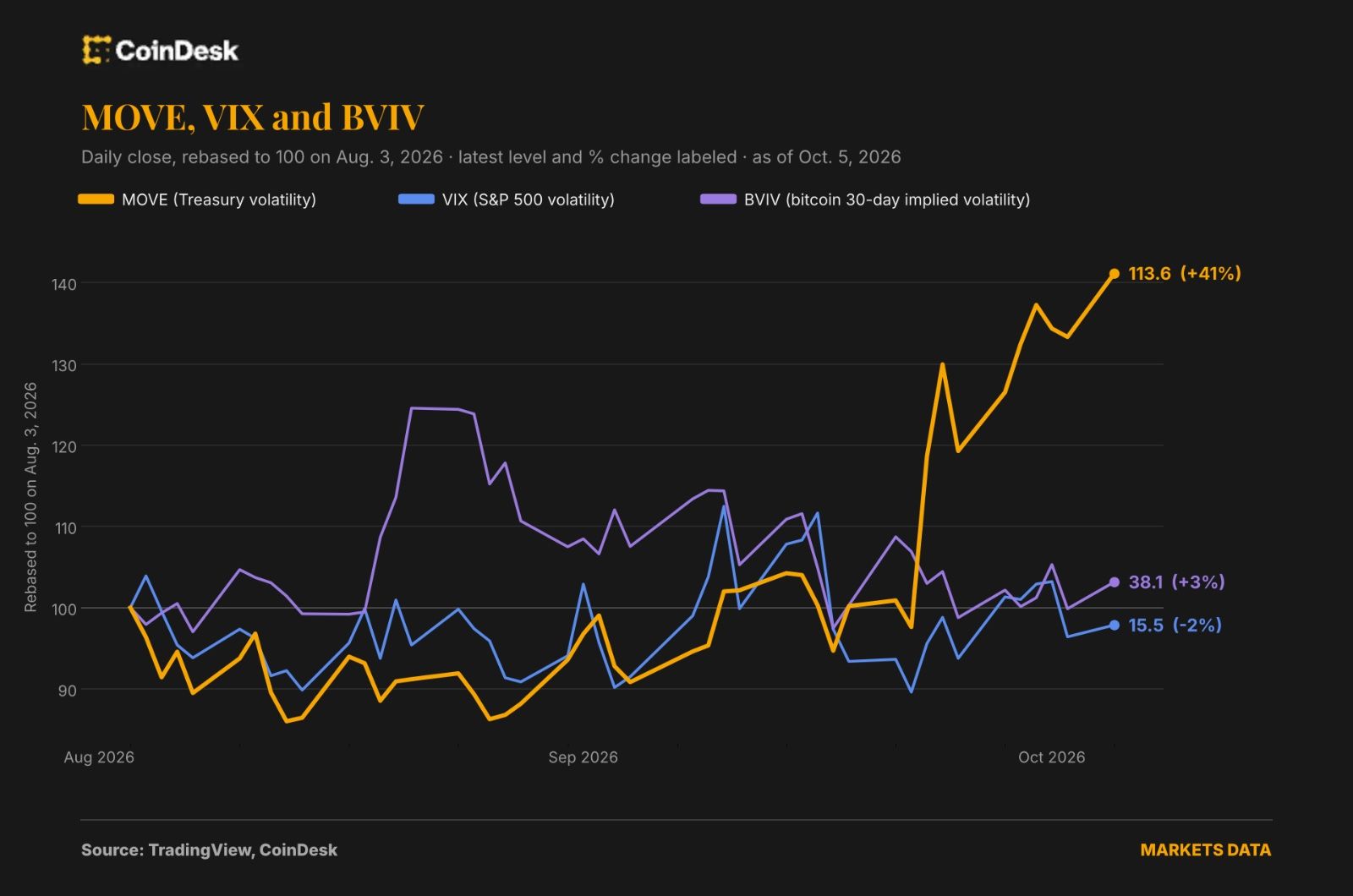
Are you wondering why movements in the bond market sometimes seem to leave Bitcoin untouched? This article explains what bond market volatility is, how it is measured, and why its influence on crypto prices can be muted or delayed.
What bond market volatility actually is
Volatility measures how quickly and how far the price of an asset swings over a given period. In the bond world, the most widely watched volatility index is the VIX of bonds, which tracks the expected price fluctuations of U.S. Treasury futures. A higher VIX means traders anticipate larger moves in bond prices, often driven by changes in interest rates, inflation expectations, or geopolitical events.
Bond yields—the return investors earn from holding a bond—move inversely to bond prices. When yields rise, bond prices fall, and vice‑versa. Because yields set the baseline cost of borrowing, they also affect the broader economy, influencing everything from mortgage rates to corporate financing.
Why crypto doesn’t always follow bond volatility
Cryptocurrencies like Bitcoin are not directly tied to interest rates or government debt. Their price drivers include:
- Supply dynamics: Bitcoin’s fixed supply of 21 million coins creates scarcity, which can dominate price movements.
- Investor sentiment: News, regulatory changes, and market hype often cause rapid swings that are unrelated to traditional finance.
- Alternative asset appeal: Some traders view crypto as a hedge against inflation or a “digital gold,” which can make it move opposite to bonds during certain periods.
When bond volatility spikes, the immediate impact on crypto may be limited because the two markets operate on different fundamentals. Over longer horizons, however, shifts in borrowing costs can affect crypto mining operations, institutional adoption, and the willingness of investors to allocate capital to riskier assets.
Real‑world illustration
In March 2026, the bond VIX rose sharply, signaling heightened uncertainty in the Treasury market. Despite the jump, Bitcoin continued trading around $85,000, and only later did it climb above $86,000 as oil prices and bond yields retreated. This example shows that short‑term bond volatility did not immediately pull Bitcoin lower; instead, other factors like commodity price movements and market sentiment played a bigger role.
What this means for you as an online earner
If you earn passive income through crypto staking, mining, or cloud‑reward platforms, the direct effect of bond volatility on your daily returns is likely minimal. However, indirect effects can appear:
- Mining costs: Higher bond yields can lead to higher loan rates for miners who finance equipment, potentially squeezing profit margins.
- Institutional flow: When bond markets become turbulent, some institutional investors may shift capital into or out of crypto, influencing price trends.
- Risk appetite: A volatile bond environment often reduces overall risk tolerance, which can dampen demand for speculative assets like altcoins.
Understanding these connections helps you anticipate when crypto earnings might face pressure from broader financial conditions.
How to evaluate the influence of bond volatility on your crypto strategy
- Watch the bond VIX: A rising index suggests upcoming uncertainty. Pair it with yield curves to gauge the direction of interest rates.
- Monitor mining cost indicators: Look at electricity prices, equipment financing rates, and hash‑rate trends. Rising financing costs can erode mining profitability.
- Track institutional sentiment: News about large funds reallocating from bonds to crypto (or vice‑versa) can signal upcoming price moves.
- Diversify earnings sources: Combine staking, cloud rewards, and low‑cost mining to reduce reliance on any single market condition.
FAQ
Does a high bond VIX always mean crypto prices will drop?
No. While a high bond VIX indicates market stress, crypto prices are driven by many other factors. Sometimes crypto may even rise if investors view it as a hedge against traditional market turmoil.
Can bond market changes affect my staking rewards?
Staking rewards are set by the protocol and are not directly linked to bond yields. However, broader market sentiment influenced by bond volatility can affect the token’s price, which in turn changes the fiat value of your rewards.
Should I avoid mining when bond yields are climbing?
Higher yields can raise borrowing costs for miners who finance equipment, potentially lowering profit margins. If you rely heavily on financed hardware, consider the cost impact before expanding operations.
Is there a simple indicator that links bond markets to crypto?
There isn’t a single “crypto‑bond” index, but watching the bond VIX alongside the Bitcoin volatility index (BVOL) can give a sense of how the two markets are moving relative to each other.
This article references reporting from coindesk.com.





