Are you curious about buying a piece of a company through a digital token instead of a traditional share? This article explains what tokenized stocks are, how they function, and what you need to consider before adding them to your portfolio.
What tokenized stocks actually are
Tokenized stocks are digital representations of real‑world equities that exist on a blockchain. Each token is linked to one or more underlying shares of a listed company, and the token holder is entitled to the same economic rights—such as dividends and price appreciation—as a regular shareholder. The blockchain records ownership, making transfers fast and transparent.
The process starts with a licensed custodian or broker‑dealer that holds the actual shares in a trust. They then issue blockchain tokens that correspond to those shares, a practice known as “tokenization.” Because the tokens are built on a public or permissioned ledger, they can be bought, sold, or transferred 24/7 without the constraints of traditional market hours.
Key terms to know:
- Custodian: The entity that legally owns the underlying shares and guarantees that each token is backed by real stock.
- Smart contract: Self‑executing code on the blockchain that enforces the rules of the token, such as dividend distribution.
- Regulated market: A stock exchange that follows securities laws; tokenized stocks aim to mirror the rights of shares on these markets.
Real‑world illustration
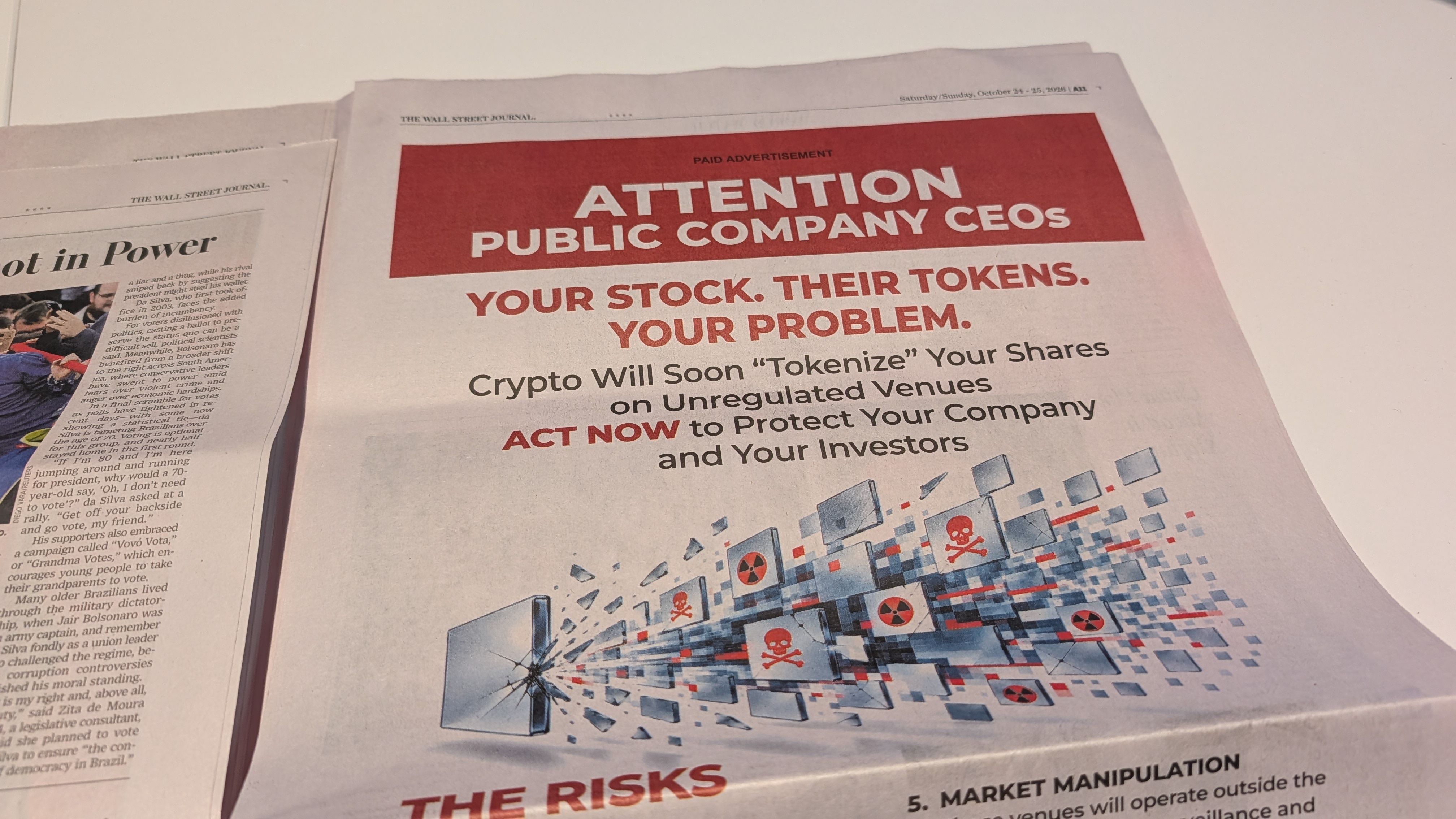
In March 2026, a full‑page advertisement appeared in the Wall Street Journal warning CEOs to “opt out of tokenized stock trading.” The ad sparked a public dispute, with tokenization platform Securitize questioning who paid for the warning. The episode highlighted how tokenized stocks are entering mainstream conversation and why the industry’s messaging can be contentious.
What this means for you
If you are looking for a way to diversify your holdings or gain exposure to stocks outside traditional brokerage hours, tokenized stocks can be appealing. They often allow smaller investment amounts, fractional ownership, and instant settlement. However, the benefits come with trade‑offs: you rely on the custodian’s ability to maintain the underlying share pool, and you must trust the platform’s smart contracts and compliance practices.
Because tokenized stocks operate at the intersection of securities law and blockchain technology, regulatory clarity varies by jurisdiction. Some countries treat the tokens as securities, subjecting them to the same disclosure and reporting requirements as regular shares. Others are still drafting guidance, which can affect the stability of the market and the protection you receive as an investor.
How to evaluate a tokenized stock offering
- Check the custodian’s credentials. Verify that a licensed broker‑dealer or trust company holds the underlying shares and that the arrangement is audited.
- Understand the smart contract. Review the contract code or a reputable audit report to see how ownership, dividend payouts, and token burns are handled.
- Confirm regulatory compliance. Look for disclosures that the token complies with the securities regulations of your residence and the jurisdiction of the underlying shares.
- Assess liquidity. Examine whether the token trades on reputable secondary markets and what the typical spread and volume look like.
- Consider custody risk. Determine whether you control the private keys or if the platform holds them, and what insurance or safeguards are in place.
FAQ
Do tokenized stocks give me voting rights?
Typically, voting rights are retained by the custodian, not the token holder. Some platforms may pass voting privileges through a proxy process, but this varies and should be confirmed before investing.
Can I earn dividends from tokenized stocks?
Yes, if the token’s smart contract is designed to distribute dividends. The custodian collects any dividend payments on the underlying shares and forwards them to token holders, usually in the same cryptocurrency used for the token.
Are tokenized stocks safer than buying shares on a traditional exchange?
Safety depends on the custodian’s reputation, the robustness of the smart contract, and regulatory oversight. Traditional exchanges have long‑standing investor protections, while tokenized stocks are newer and may lack some of those safeguards.
What taxes do I owe on tokenized stock gains?
Tax treatment generally follows that of the underlying shares. Capital gains, dividends, and other income are usually taxable in the same way as regular stocks, but you should consult a tax professional familiar with both securities and cryptocurrency regulations.
This article references reporting from coindesk.com.