
Are you wondering why Bitcoin’s price swings feel so sudden and what that means for anyone trying to earn crypto through mining or staking? This article breaks down the main drivers behind Bitcoin’s market moves and shows how they affect the bottom line for miners and passive‑income seekers.
What actually moves Bitcoin’s price?
Bitcoin, like any asset, is priced by supply and demand in global markets. When more people want to buy than sell, the price rises; when the opposite happens, it falls. Several specific factors tend to dominate Bitcoin’s demand side:
- Macroeconomic signals. Central bank policies, inflation data, and interest‑rate expectations shape investors’ appetite for risk. A “hawkish” stance—meaning a central bank signals higher rates—usually pushes money out of volatile assets like Bitcoin.
- Tech‑sector sentiment. Because many crypto investors are also active in technology stocks, a slowdown or negative news in the tech industry can spill over into crypto markets, prompting a risk‑off reaction.
- Regulatory news. Announcements about bans, licensing, or tax treatment can instantly change expectations about the future usability of Bitcoin.
- Market liquidity. Large holders (often called “whales”) can move the price by buying or selling big blocks. When many traders use leveraged positions, a price move can trigger liquidations that amplify the original swing.
On the supply side, Bitcoin’s issuance is predictable: a new block is mined roughly every ten minutes, creating a fixed number of new coins. The total supply caps at 21 million, so long‑term supply growth is known and cannot be changed by market sentiment.
How price changes affect mining profitability
Mining profitability is the difference between the revenue a miner earns and the costs of running the hardware. Revenue comes from two sources:
- Block rewards. Currently 6.25 BTC per block, halving roughly every four years.
- Transaction fees. Users pay fees to have their transactions confirmed; these fees are added to the block reward.
Both are paid in Bitcoin, so the fiat value of a miner’s earnings depends directly on Bitcoin’s market price. If the price drops, the dollar (or euro) value of the same number of BTC falls, squeezing margins. Conversely, a price rise can make mining highly profitable even if electricity costs stay the same.
Operating costs are mostly electricity and hardware depreciation. Since those costs are usually paid in fiat, miners must constantly monitor the BTC/USD (or other fiat) rate to decide whether to keep mining, switch to a different coin, or pause operations.
Real‑world illustration
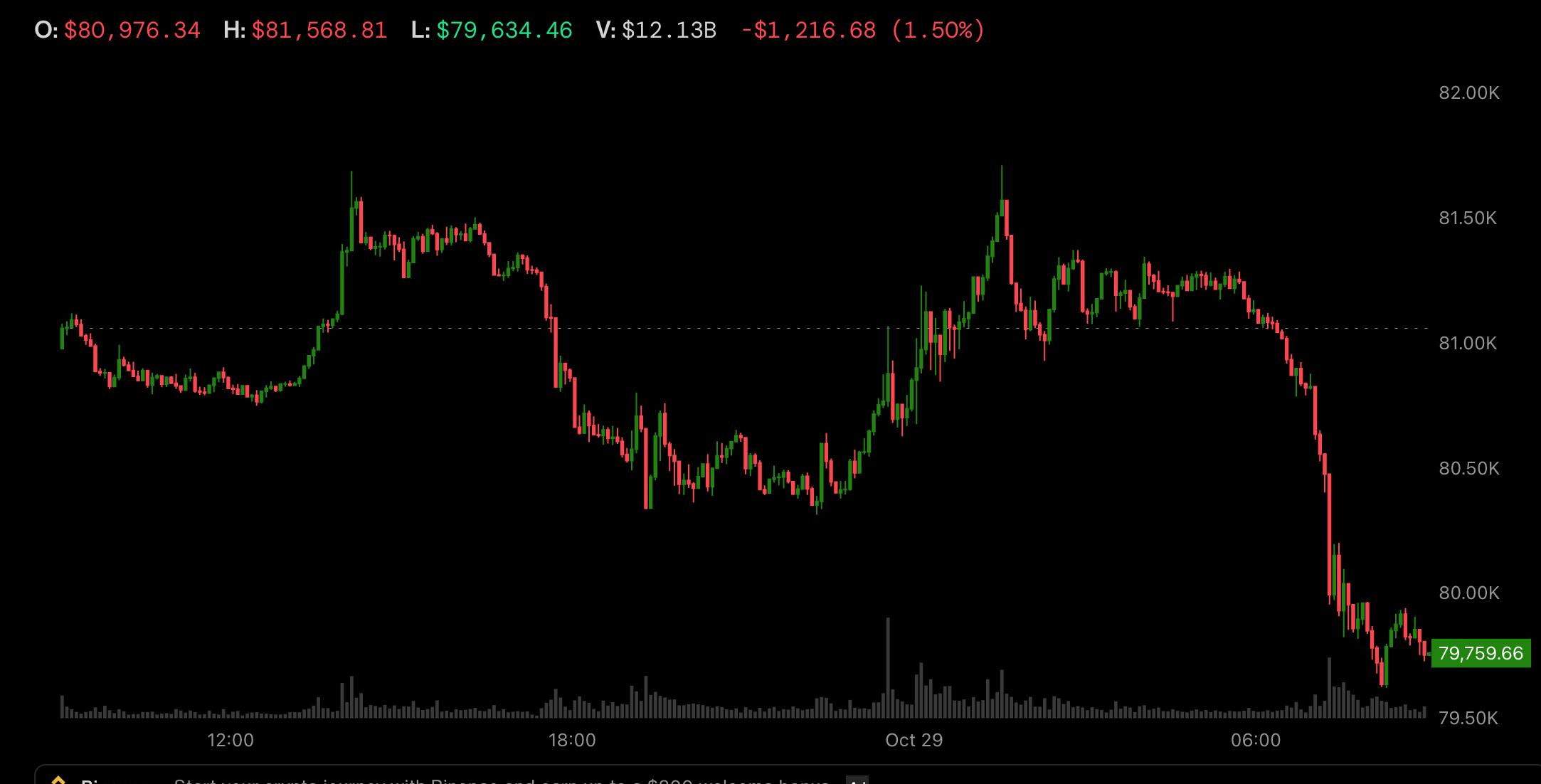
In March 2026, Bitcoin slipped below the $80,000 mark after a combination of “Samsung‑driven tech weakness” and a “hawkish Fed hold” sparked a broad risk‑off move across markets. The price dip triggered about $356 million in crypto‑futures liquidations, showing how leveraged positions can accelerate price pressure. For miners, that dip meant the fiat value of each block reward fell sharply overnight, tightening profit margins for anyone whose electricity costs were close to the break‑even point.
What this means for you as an online earner
If you earn crypto by running a mining rig, providing cloud‑mining services, or staking Bitcoin‑related tokens, price volatility directly impacts your cash flow. A sudden dip can turn a profitable operation into a loss‑making one within hours. That’s why many miners track not only the Bitcoin price but also the broader economic backdrop—central‑bank announcements, tech‑sector earnings, and large‑scale liquidations.
For those who prefer less hands‑on involvement, platforms that pool mining power (such as EcoPool) spread risk across many participants. While pooling does not eliminate the effect of price swings, it can smooth earnings because the pool’s total hash power is less likely to be shut down by a single miner’s cost concerns.
How to evaluate the health of a mining or passive‑income venture
- Break‑even analysis. Calculate the Bitcoin price at which your electricity cost per megawatt‑hour equals the revenue from the expected block reward and fees.
- Cost of electricity. Look for rates below $0.05 /kWh for the most resilient margins; higher rates require a higher BTC price to stay profitable.
- Hardware efficiency. Newer ASICs (application‑specific integrated circuits) deliver more hashes per watt, extending profitability during price dips.
- Liquidity of your earnings. If you need fiat quickly, consider how fast you can convert BTC without large slippage, especially during market stress.
- Diversification. Combine mining with other crypto‑earning methods—staking, liquidity provision, or cloud rewards—to reduce reliance on a single revenue stream.
FAQ
Why does a central‑bank policy change affect Bitcoin?
When a central bank signals higher interest rates, investors shift money into safer, interest‑bearing assets and pull back from riskier ones like Bitcoin, reducing demand and pushing the price down.
Can I keep mining if the price drops below my break‑even point?
Continuing to mine at a loss will quickly eat into your capital. Most miners pause or switch to a more profitable coin when the price stays below the break‑even threshold for an extended period.
Do mining pools protect me from price volatility?
Pools smooth out the timing of payouts, but the fiat value of each payout still follows the market price. Pools help with cash‑flow stability but do not eliminate the impact of price swings.
Is it safer to earn crypto through staking rather than mining?
Staking rewards are paid in the staked token and are less sensitive to short‑term price moves because they are often distributed continuously. However, staking still carries market risk, and the underlying token’s price can affect the real‑world value of your earnings.
This article references reporting from coindesk.com.





