Ever wonder why a little‑known coin can plummet from a few dollars to pennies in minutes? This article explains what token dumping is, how it works, and what you should watch for when you earn or invest in low‑volume cryptocurrencies.
What token dumping actually is
Token dumping refers to the rapid sale of a large amount of a cryptocurrency on an exchange. When a holder—often a large investor, a project team, or a malicious actor—sells many tokens at once, the market price can drop sharply. The key factors that determine how severe the drop will be are liquidity and order book depth. Liquidity measures how easily an asset can be bought or sold without moving the price; a deep order book means there are many buy orders at various price levels, which can absorb large sells. Small or “little‑known” tokens typically have low liquidity and shallow order books, so even a modest sell order can overwhelm the market and cause a price crash.
In practice, a dump often follows a “sell wall” strategy. The seller places a large sell order at the current market price or slightly below it. Because there are few buy orders waiting, the exchange matches the sell order with the limited bids, pushing the price down. As the price falls, more sell orders may be triggered (for example, stop‑loss orders), creating a cascade effect that accelerates the decline.
Real‑world illustration
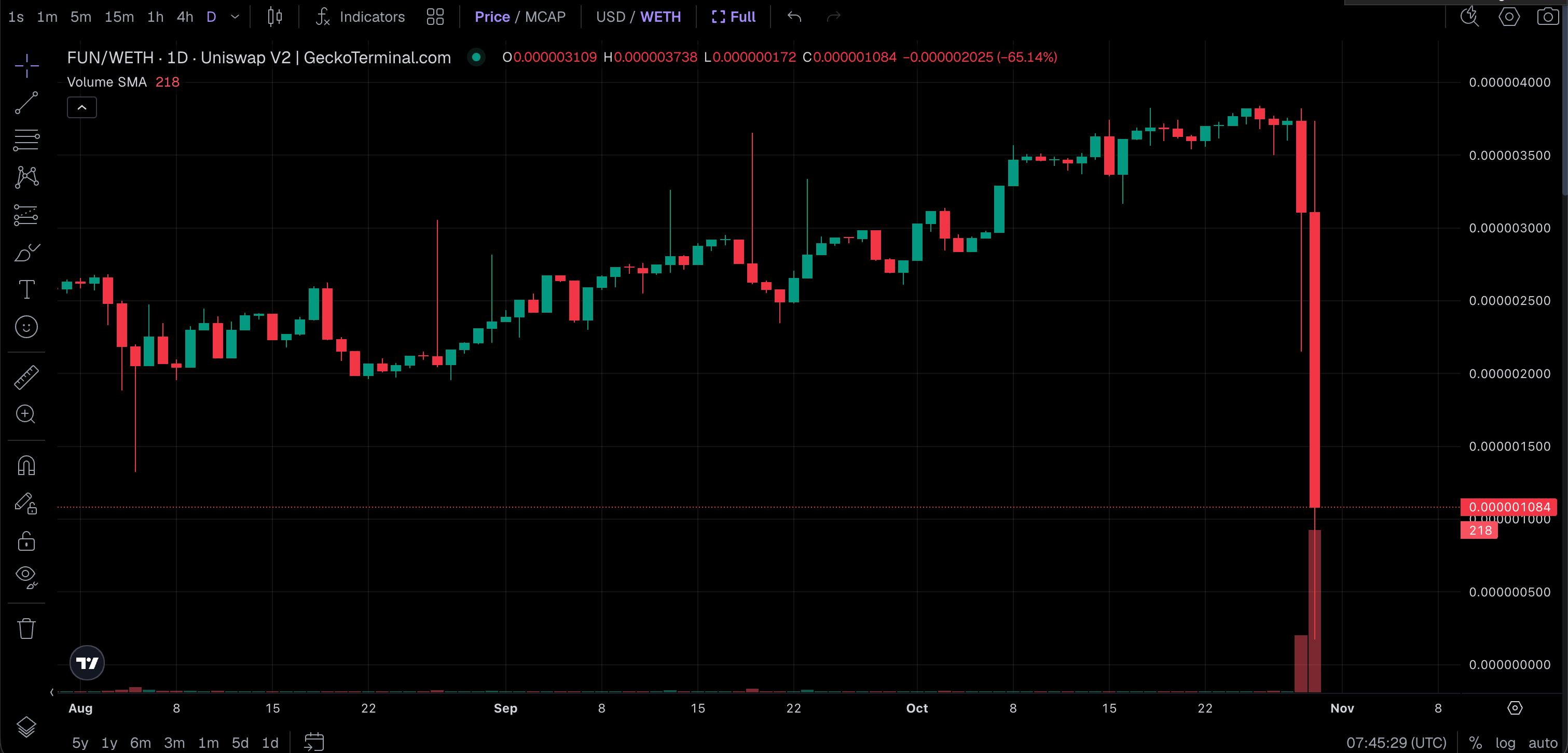
In March 2026, a hacker who had previously compromised Binance’s security withdrew a stash of the 2017 token FUN, along with several other minor tokens. The attacker placed large sell orders on multiple exchanges that did not have enough buying interest to absorb the volume. Within minutes, FUN’s price fell by roughly 90 %.
What it means for you
If you earn crypto through mining, staking, cloud rewards, or airdrops, you may end up holding low‑volume tokens. While they can offer attractive yields, they also carry a higher risk of sudden price drops caused by dumping. A steep decline can erase most of your earnings in a short time, even if the token’s fundamentals are solid.
Understanding dumping helps you manage that risk. Instead of keeping a large balance of a single obscure coin, consider diversifying across assets with better liquidity. Also, be cautious about holding tokens that are primarily listed on a single exchange or have thin trading volumes.
How to evaluate dumping risk
- Check liquidity metrics: Look at the 24‑hour trading volume and the spread between the best bid and ask. Low volume and wide spreads signal higher dumping risk.
- Assess order‑book depth: Many exchanges show how many buy orders sit at each price level. Shallow depth means a large sell order will move the price quickly.
- Identify concentration of holdings: If a token’s supply is controlled by a few wallets (often visible on block explorers), a single actor could dump a sizable portion.
- Monitor exchange listings: Tokens listed on multiple reputable exchanges generally have better liquidity than those confined to one platform.
FAQ
Why do some tokens crash faster than others?
Tokens with low daily trading volume and few active buyers have shallow order books. When a large sell order hits such a market, there aren’t enough bids to absorb it, so the price drops sharply.
Can I protect my earnings from a dump?
One approach is to convert a portion of your holdings into more liquid assets (e.g., Bitcoin, Ethereum) soon after receiving them. Setting modest stop‑loss orders can also limit losses, though they may be triggered by normal price swings in very thin markets.
Is dumping always malicious?
Not necessarily. Large holders may sell to take profits, rebalance portfolios, or fund other projects. However, when a dump is sudden and massive, especially after a security breach, it often points to malicious intent.
How can I spot a potential dump before it happens?
Watch for unusually large token transfers to exchange wallets, sudden spikes in sell‑side order volume, or announcements of major token listings that could attract new sellers.
This article references reporting from coindesk.com.