Ever wondered how traders can amplify their crypto positions and why some lose money quickly? This article explains the mechanics of leveraged trading, the risks involved, and how you can protect yourself if you decide to try it.
The plain explanation
Leveraged trading, also called margin trading, lets you open a position that is larger than the amount of capital you actually put down. If you want to buy $10,000 worth of Bitcoin but only have $1,000, a platform can lend you the remaining $9,000. Your $1,000 acts as margin, a security deposit that guarantees you’ll cover potential losses.
Two key terms appear in every leveraged trade:
- Leverage ratio – expressed as “X:1”. A 10:1 ratio means for every $1 of your own money, you control $10 of the asset.
- Liquidation – the process by which the platform automatically closes your position when your margin falls below a required level, called the maintenance margin. This protects the lender from losing money if the market moves against you.
When the market moves in the direction you predicted, profits are multiplied by the leverage factor. When it moves against you, losses are multiplied just the same. Because the borrowed amount must be repaid, a small adverse price swing can wipe out your margin and trigger a forced closure, or liquidation.
A real example
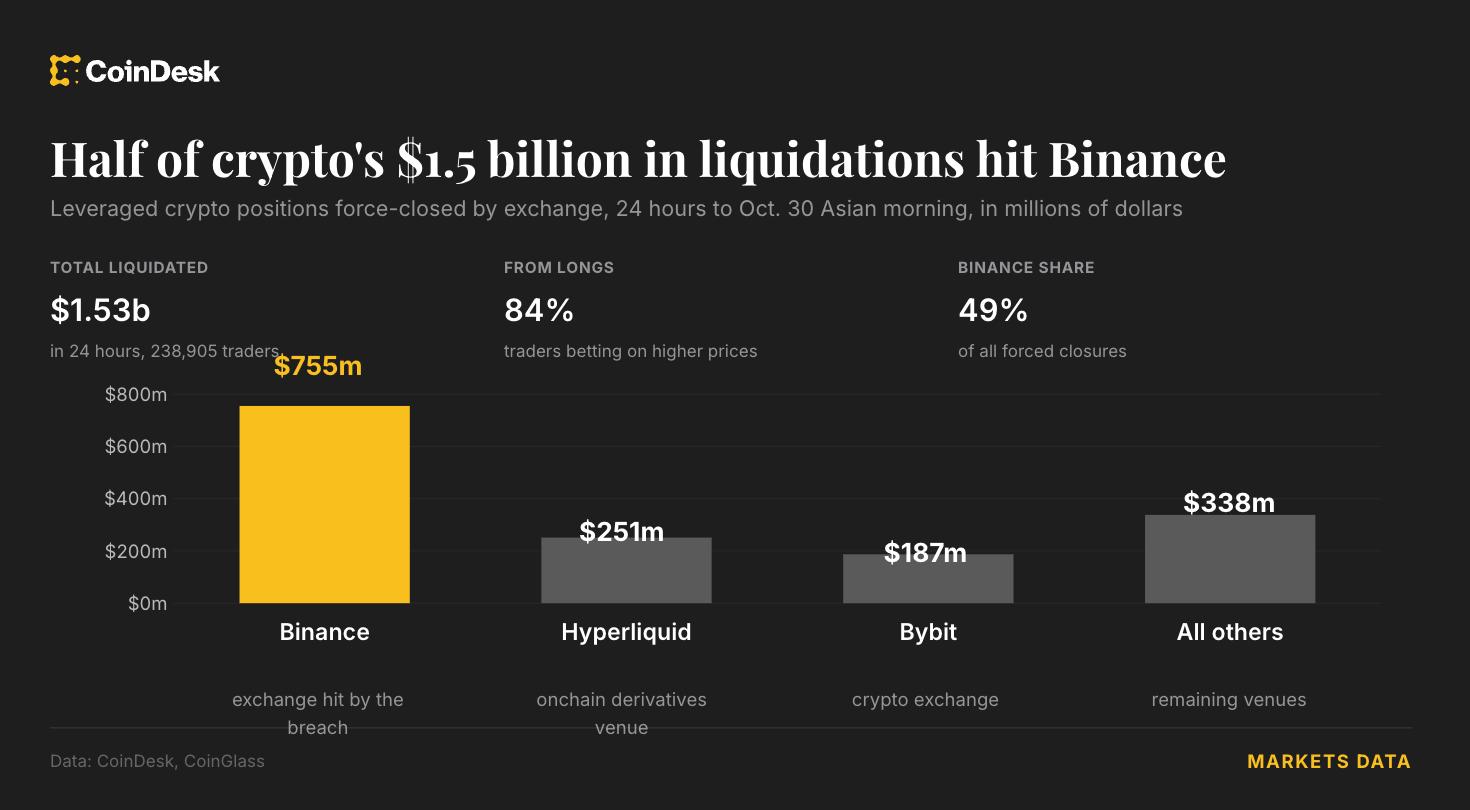
In March 2026, a sharp sell‑off in Bitcoin, Ether and XRP erased roughly $1.5 billion in leveraged positions. Nearly 84 % of the forced closures were on long (price‑rising) bets, and Binance alone accounted for almost half of the total liquidations. The market later recovered, catching many short sellers off guard and highlighting how quickly fortunes can reverse in a leveraged environment.
What it means for you
If you are considering leveraged trading to boost your crypto earnings, the example above shows two important takeaways:
- Leverage magnifies both gains and losses. A 10% price drop can erase a 100% leveraged position.
- Liquidity events—big price moves that trigger many liquidations—can cause rapid, cascading losses across the market.
Because platforms automatically close positions when your margin falls below the maintenance level, you may lose your entire investment in a single trade, even if you never intended to hold that amount of risk.
What to check / how to judge
- Maintenance margin requirements: Know the exact percentage your platform requires to keep a position open. Lower requirements mean higher liquidation risk.
- Leverage limits: Choose a modest leverage ratio (e.g., 2:1 or 3:1) until you fully understand how price swings affect your margin.
- Liquidation price calculator: Most exchanges provide a tool that shows the price at which your position will be liquidated. Use it before opening a trade.
- Risk management tools: Set stop‑loss orders to automatically exit a position before it reaches the liquidation point.
- Platform reputation and insurance: Verify that the exchange has clear policies for handling liquidations and, if possible, insurance funds that protect users in extreme market events.
FAQ
Can I lose more than my initial deposit?
On most regulated platforms, you cannot lose more than the margin you posted because the position is closed automatically. However, on some unregulated or peer‑to‑peer services, negative balances are possible, so always check the terms.
Is leveraged trading suitable for beginners?
Because leverage amplifies risk, it is generally recommended for experienced traders who understand margin calls, liquidation mechanics, and have a solid risk‑management plan.
How does short selling differ from going long with leverage?
Going long means you profit when the price rises; short selling means you profit when the price falls. Both can be leveraged, and both are subject to liquidation if the market moves against you.
What happens to my borrowed funds after liquidation?
When a position is liquidated, the platform sells the collateral to repay the loan. Any remaining margin is returned to you, but if the sale does not cover the loan, the platform may claim the shortfall according to its policies.
This article references reporting from coindesk.com.