
Ever wondered how a contract can be enforced when the parties are software agents rather than humans? This article explains the mechanics behind AI‑driven dispute resolution platforms, how they differ from traditional legal systems, and what you need to know before relying on them for earning online.
The plain explanation
An intelligent contract is a type of agreement that combines the code‑based execution of a traditional smart contract with the ability to interpret natural language, images, or other subjective data. Unlike a pure smart contract, which only follows deterministic rules, an intelligent contract can call on external judgment to decide whether a condition has been met.
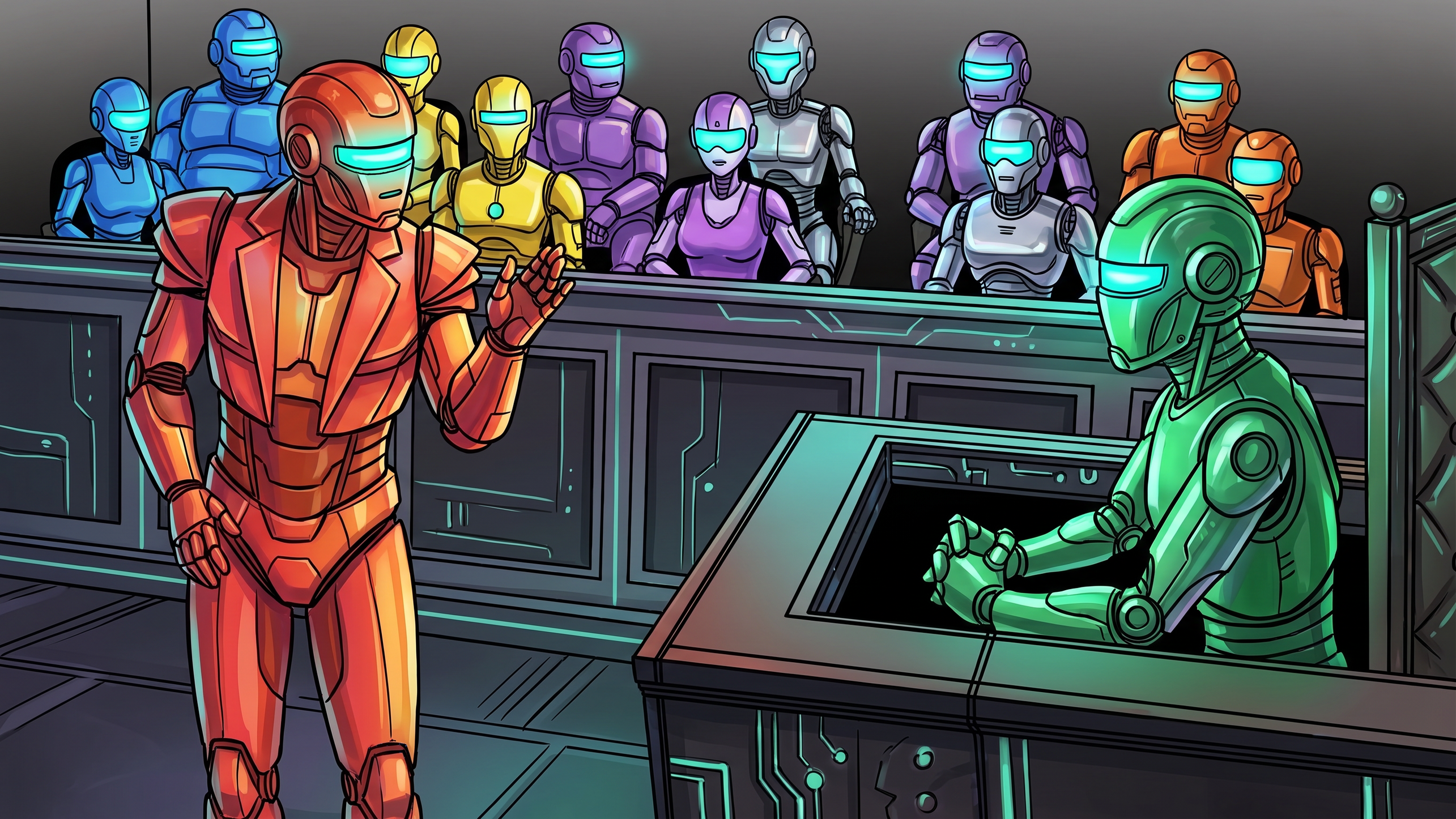
To provide that judgment, platforms use a decentralized court. The core idea is simple: a dispute is sent to a group of independent evaluators, each running a different AI model. Those evaluators—sometimes called validators—review the evidence, vote on the outcome, and return a decision to the contract. Because the validators are chosen at random from a large pool, no single AI can dominate the result, reducing the risk of systematic bias.
The process typically follows these steps:
- Escrow funding. When two parties create an agreement, they lock the funds that will be paid out once the contract is fulfilled.
- Triggering a dispute. If one side believes the terms were not met, it submits a claim to the decentralized court.
- Jury selection. The system randomly picks a small jury—often five validators—each running a distinct AI model (for example, Claude, Gemini, ChatGPT, or DeepSeek).
- Initial vote. The jurors analyze the submitted data (text, images, transaction logs, etc.) and cast a vote. A simple majority decides the first outcome.
- Escalation. Either party can appeal. The appeal expands the jury to a larger size (e.g., eleven, then twenty‑three, and so on) until a predefined limit is reached.
- Finality. Once the final jury votes, the escrowed funds are released to the winning side.
This model mirrors the classic “jury theorem” proposed by Nicolas de Condorcet: the probability of a correct decision rises as the number of independent, unbiased evaluators increases. By using many different AI models, the system aims to balance out individual model biases.
A real example
In November 2026, the startup GenLayer announced its “Internet Court” protocol, which already processes around 12,000 decisions per day in beta. The platform uses a delegated proof‑of‑stake network of validators that each run a different AI model. A typical dispute—such as a bot mistakenly buying “Bluebird‑brand frozen chips” instead of “blue chip stocks”—is sent to a randomly selected jury of five validators. An initial decision is reached within minutes, and parties can appeal to larger juries until the system’s limit of 1,500 validators, which may take up to three hours.
What it means for you
If you plan to earn online through automated services—whether you run a crypto‑trading bot, a freelance‑content platform, or a prediction market—intelligent contracts can automate payments while still protecting you from errors or bad actors. Instead of waiting weeks for a human court or paying high arbitration fees, you can lock funds in escrow and let the AI jury decide quickly.
For example, a content‑creation marketplace could pay a writer only after an AI jury judges the article’s quality as “acceptable.” A prediction market could settle bets on a political event within minutes rather than days of manual review. The speed and low cost make it attractive for high‑frequency or low‑value transactions where traditional legal recourse would be impractical.
What to check / how to judge
- Validator diversity. Verify that the platform uses a wide range of AI models from different providers. A homogeneous set can amplify shared biases.
- Escrow size and limits. Ensure the escrow amount is appropriate for the dispute. Some platforms cap the maximum escrow to protect against large, unexpected losses.
- Appeal mechanics. Understand how many appeal rounds are allowed and the cost of each escalation. More appeals increase security but also add time and fees.
- Transparency of decisions. Look for platforms that publish the evidence considered and the reasoning of each AI juror. This helps you audit the outcome if you disagree.
- Human fallback. Check whether the system allows a final appeal to a human arbitrator or a recognized decentralized arbitration service (e.g., Kleros, UMA). This safety net is crucial for high‑stakes contracts.
FAQ
Can I trust an AI jury to make fair decisions?
AI juries reduce individual model bias by aggregating many independent evaluations, but they are not infallible. Their accuracy depends on the quality of the underlying models and the data they are trained on. For low‑value or time‑sensitive contracts, the speed advantage often outweighs the risk.
What happens if the AI judges incorrectly?
Most platforms allow you to appeal to a larger jury or to a human arbitrator. If the final decision still seems wrong, you may need to accept the loss or pursue external legal action, depending on the contract’s terms.
Do I need to hold any specific tokens to use an AI court?
Many decentralized courts operate on a proof‑of‑stake model, meaning validators stake a native token to participate. As a user, you typically only need to pay a small fee in the platform’s token to cover the cost of the jury’s computation.
Are there any regulatory concerns?
Because AI courts automate judgment, regulators may view them as a form of alternative dispute resolution. Depending on your jurisdiction, you might need to disclose the use of such systems in contracts, especially for consumer‑facing services.
This article references reporting from cointelegraph.com.





